
Breakthrough collaboration unlocks carbon removal, higher freshwater yields, and valuable industrial chemicals from previously discarded desalination brine.
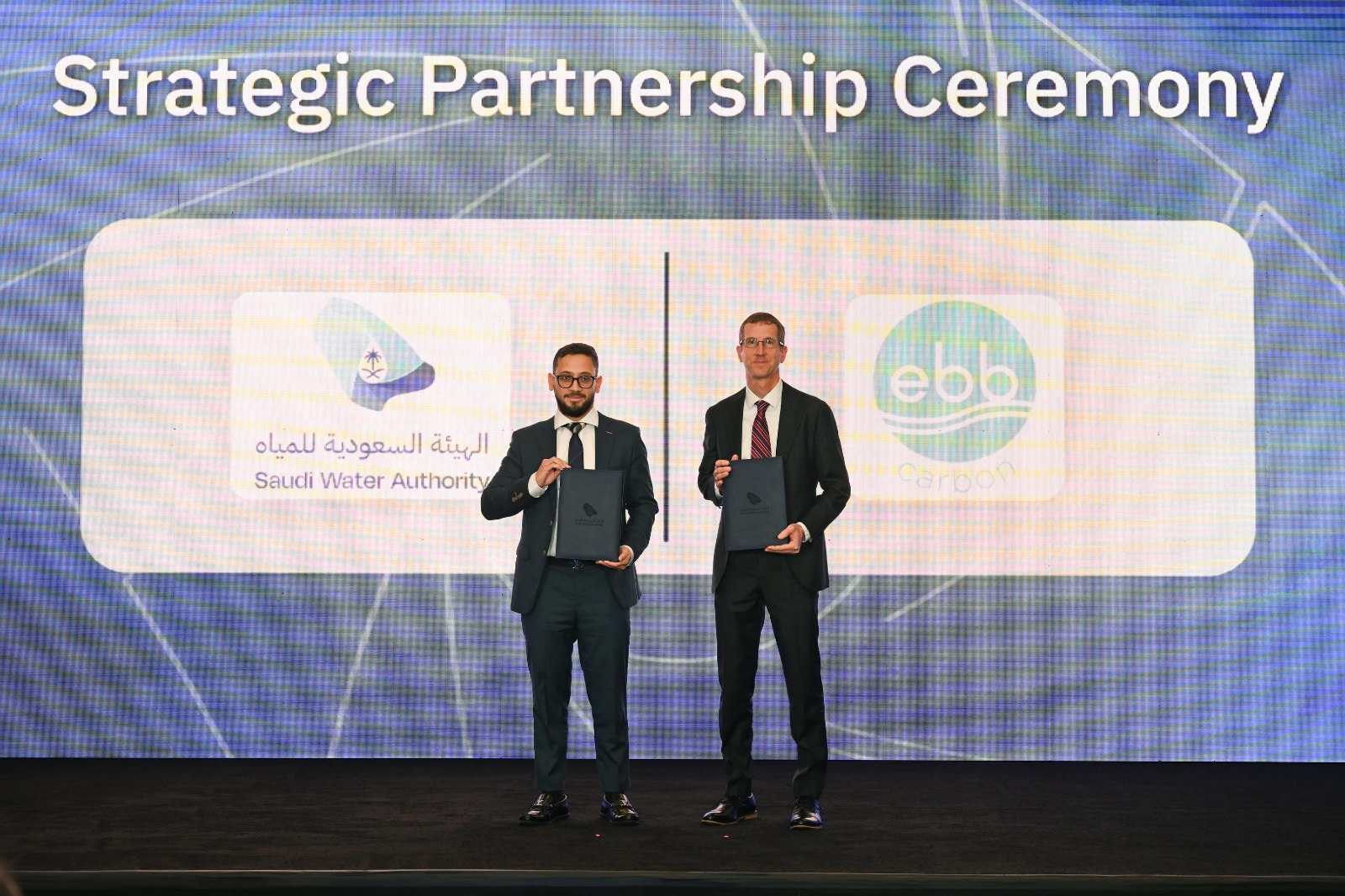
Ebb, an innovative water technology company, has entered into a strategic partnership with the Saudi Water Authority (SWA), the national regulator of the Kingdom’s water sector, to introduce large-scale desalination decarbonisation. With Saudi Arabia responsible for 22% of global desalination output, the initiative aims to achieve megaton-scale CO₂ removal within ten years while improving freshwater production and overall plant efficiency.
The collaboration centres on integrating Ebb’s electrochemical platform into Saudi desalination operations, enabling the conversion of brine into valuable products that support sustainability, water security, and decarbonisation. The first installation will be carried out at SWA’s cutting-edge research hub, The Water Technologies Innovation Institute and Research Advancements (WTIIRA) in Jubail—one of the world’s leading centres dedicated to advanced desalination technologies.
Given the Kingdom’s significant role in global desalination, this landmark project establishes the basis for nationwide expansion across SWA’s desalination network. It directly supports the environmental, economic, and technological objectives outlined under Vision 2030, ensuring long-term resilience and innovation within the water sector.
Ebb brings to the partnership a strong record of successful demonstrations from several U.S. pilot projects, including extensive trials with the U.S. Department of Energy’s Pacific Northwest National Laboratory (PNNL) and the Macoma initiative in Washington state.
Desalination continues to play a vital role in meeting Saudi Arabia’s water needs, with capacity forecast to rise by 10%—from 16 million to 17.8 million cubic metres per day—by 2030. Traditionally, the brine generated through desalination has been treated as waste. Through this partnership, SWA is turning this byproduct into a strategic asset, using Ebb’s electrochemical technology designed to integrate seamlessly with existing facilities.
Ebb’s system transforms desalination brine into three marketable outputs: caustic soda, hydrochloric acid and a low-salinity brine suitable for reintegration into the desalination cycle to produce additional freshwater. The caustic soda and acid can be used within desalination plants or supplied to nearby industries such as aluminium production, energy operations, and other strategic sectors. Caustic soda can also be used to enhance seawater alkalinity—a natural mechanism that enables permanent atmospheric CO₂ removal. This approach supports the Kingdom’s ambition to develop a circular industrial economy that extracts value from materials previously considered waste.
By adopting Ebb’s technology across its facilities, the Saudi Water Authority is paving the way for substantial environmental benefits. SWA’s desalination network has the technical capacity to remove up to 85 megatons of CO₂ annually, contributing directly to the Kingdom’s Vision 2030 Net Zero aspirations while enhancing plant productivity. Beyond carbon removal, the process reverses ocean acidification caused by elevated atmospheric carbon, supporting marine health in the Arabian Gulf. These findings build on scientific research conducted in the United States, where Ebb’s methodology has shown improvements in ocean chemistry.
“This partnership represents a transformative moment for both desalination and carbon removal. By integrating Ebb’s technology with SWA’s desalination infrastructure, we’re proving that addressing water scarcity and climate change aren’t competing priorities—they’re complementary solutions. SWA’s forward-thinking approach demonstrates how the desalination industry can unlock immense value and be a critical part of addressing some of the world’s most complex challenges profitably.” Ben Tarbell, Ebb’s CEO and Co-founder.
“This groundbreaking partnership demonstrates how Saudi Arabia is leveraging its position as the world’s largest desalinated water producer to create entirely new industries. The technology can be manufactured locally, creating jobs and reducing our reliance on imported chemicals, while our deployment establishes a model for the broader GCC region and water-scarce nations worldwide. We are not simply adopting technology – we are building a domestic carbon removal industry that supports government priorities’ economic diversification and positions the Kingdom as an exporter of climate solutions.” Tariq Alghaffari, SWA Vice President for Research & Promising Technologies.
