
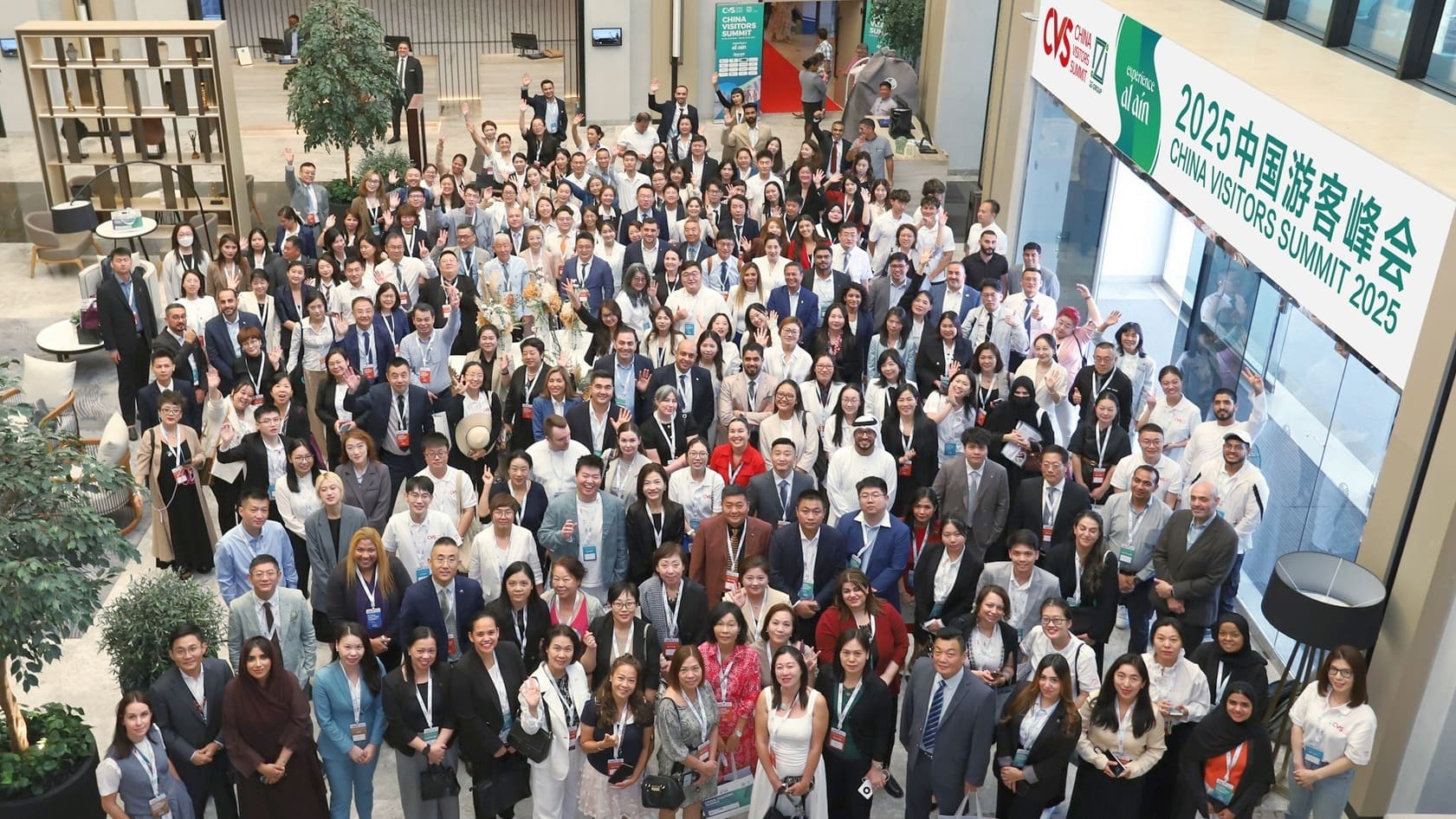
Chinese travellers dropped US$230 billion worldwide in 2025, visiting 180 million destinations from Paris to Phuket. This May, Abu Dhabi makes its pitch for a bigger slice.
One hundred carefully vetted Chinese travel buyers will descend on Rotana Saadiyat Island Resort on 13th and 14th May for the China Visitors Summit, a two-day workshop designed to connect them directly with Emirati hotels, attractions, and tour operators. The goal is blunt: convert meetings into bookings.
For Abu Dhabi’s tourism industry, the arithmetic is compelling.
The format leaves little to chance. Over two intensive days, suppliers—hotels, museums, transport firms, destination management companies—will sit through structured, pre-confirmed appointments with the visiting buyers. These aren’t casual networking sessions. Each buyer represents a conduit to China’s ballooning outbound market: travel agents, luxury agencies, MICE managers, corporate travel planners, and OTA representatives drawn from Mainland China, Taiwan, and Hong Kong.
Some specialise in adventure tourism. Others focus on culinary experiences or family travel. All of them control access to clients with money to spend.
China became the world’s largest source market for international tourism years ago, but the scale continues to accelerate. Nearly 200 million Chinese citizens now hold passports. Last year alone, 21 million people obtained their first passport—a figure that suggests the boom has years left to run. Industry projections estimate Chinese tourists could be spending US$400 billion globally by 2030.
That projection has destination marketers worldwide sharpening their elbows. Thailand and Singapore established themselves as Chinese favourites long ago. Dubai has invested heavily in Mandarin-language marketing and UnionPay payment systems. Even European capitals now compete for Chinese tour groups during shoulder seasons.
Abu Dhabi’s pitch emphasises what sets it apart: Emirati heritage, cultural institutions like Louvre Abu Dhabi, family-friendly attractions, and the proximity of Al Ain’s UNESCO World Heritage sites. The summit—produced by Shanghai-based China i2i Group in partnership with Abu Dhabi’s Department of Culture and Tourism and the Al Ain Department of Culture and Tourism—is the latest in a sustained courtship. The UAE has hosted the CVS seven times over the past decade.
Beyond the meeting rooms, visiting buyers will tour hotels, museums, and tourism infrastructure across Abu Dhabi and Al Ain during site inspections designed to give them firsthand material to sell back home. The hope is that seeing the Sheikh Zayed Grand Mosque or experiencing desert safaris will translate into itineraries marketed to Chinese travellers within months.
Capturing this market requires more than glossy brochures. Destinations must develop China-relevant offerings, invest in platforms like WeChat and Little Red Book where Chinese travellers research trips, train staff to understand cultural preferences around food and service, and build durable relationships with resellers who can consistently deliver客源—customer flow.
Alexander Glos, chief executive of China i2i Group, framed the opportunity in practical terms. “Abu Dhabi has evolved into one of the most culturally compelling destinations in the region. The CVS provides a structured and commercially focused gateway for Abu Dhabi suppliers to connect directly with qualified Chinese outbound buyers. With Chinese global travel expanding rapidly, those who invest in relationship-building today will benefit from sustained inbound growth in the years ahead.”
His firm has spent two and a half decades—since 1999—connecting global travel suppliers with Chinese buyers. Clients include Rotana, Marriott, IHG, and Hyatt, alongside destinations from the Maldives to Morocco.
The summit itself, launched in 2008, has been staged more than 40 times worldwide. The model remains consistent: bring qualified Chinese buyers to a destination, lock them in rooms with local suppliers, facilitate hundreds of appointments over 48 hours, then send them home with site inspection memories and business cards.
Whether those appointments convert into sustained bookings—and whether Abu Dhabi can carve out a meaningful share of that US$230 billion—won’t be clear until long after the last handshake in May. What’s certain is that the competition for Chinese tourist spending has intensified, and Abu Dhabi is betting that face-to-face meetings on Saadiyat Island will give it an edge.
By 2030, when Chinese tourists may be spending US$400 billion annually, the destinations that started building relationships in 2026 will be the ones reaping returns.
