Invest Bank Posts AED 161 Million Profit After Seven Years of Losses
By Stuart GST 4 min read
Invest Bank returned to profitability on Monday evening with an announcement that would have seemed improbable 24 months ago. AED 161 million in net profit. Seven years of losses, over.
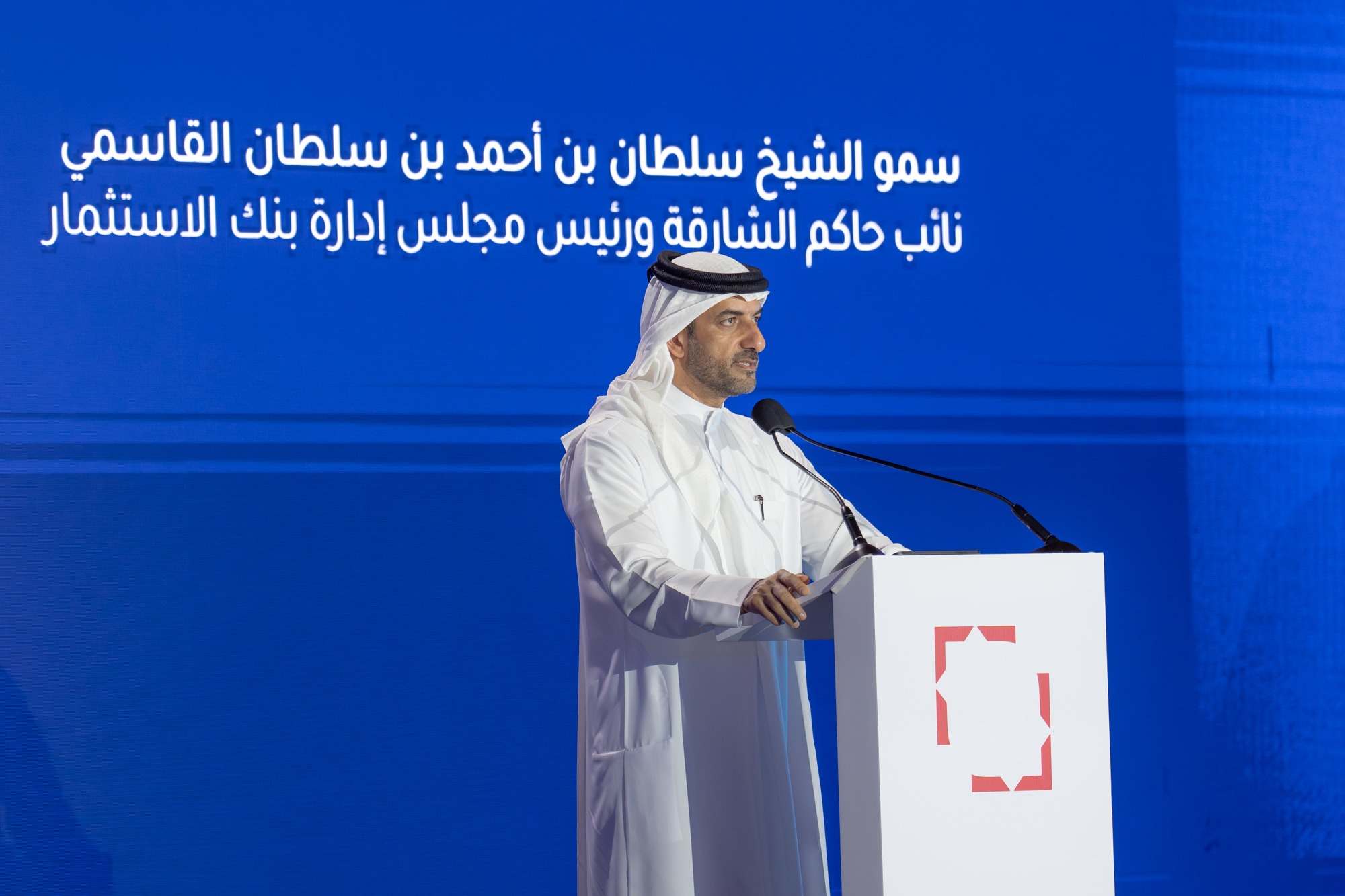
Sheikh Sultan bin Ahmed bin Sultan Al Qasimi, Deputy Ruler of Sharjah and the bank’s chairman, revealed the turnaround at the House of Wisdom on 25th February, coupling the financial results with two other pivotal announcements: a return to trading on the Abu Dhabi Securities Exchange and the unveiling of a new corporate identity. The synchronised timing wasn’t accidental.
The numbers tell a stark story. Net operating income reached AED 435 million—a 105% annual growth rate that few regional banks matched in the same period. Total assets climbed to AED 14.2 billion, whilst net loans and advances surged 51% to AED 7.2 billion. Customer deposits, the lifeblood of retail banking, rose 30% to AED 11.3 billion.
What changed? Operational execution, according to Sheikh Sultan, who described the recovery as the product of calculated strategic choices rather than market conditions alone.
The bank’s capital adequacy ratio now sits at 20.2%, comfortably above regulatory minimums and signalling financial resilience that investors scrutinise when assessing UAE financial institutions. Qualifying liquid assets reached 21.1%—double the 10% regulatory requirement—providing a cushion that the previous seven years clearly lacked.
By Tuesday, 24th February, Invest Bank resumed trading on ADX. The relisting marks more than a technical milestone; it’s a public declaration of transparency and accountability, Sheikh Sultan noted. For a bank that spent years off the exchange, the move signals confidence that operational metrics can withstand investor scrutiny.
The third pillar of Monday’s announcement—the new corporate identity—reflects what the chairman described as the bank’s readiness for a digital future. The logo draws inspiration from Arabic art, blending harmony with simplicity, though the visual rebrand accompanies a broader technological overhaul aimed at faster, simpler banking services.
Sharjah’s economic backdrop matters here. The emirate’s GDP reached AED 145.2 billion, posting 6.5% growth driven almost entirely by non-oil industries, which contributed AED 142.5 billion. Economic activity exceeded AED 72.5 billion, with foreign direct investment flowing into logistics, civil aviation, trade, and tourism sectors throughout the first half of 2025.
Sheikh Sultan emphasised that Sharjah’s transformation—from commercial hub to what he termed a vibrant city—stems from the vision of Sheikh Dr Sultan bin Mohammed Al Qasimi, the emirate’s ruler, who prioritised balanced development anchored in sustainability and knowledge. The chairman pointed to 1.8 million residents as evidence of an economic and social landscape fostering growth through trust, opportunity, and diversity.
Small and medium-sized enterprises contribute significantly to Sharjah’s GDP, a sector the chairman described as the most prominent engine of growth. That entrepreneurial activity creates the demand for banking services that Invest Bank now positions itself to capture.
Edris Mohammad Al Rafi, the bank’s chief executive, outlined a strategy centred on innovation and modern technology during his remarks at the ceremony. The banking sector faces rapid transformation, he observed, requiring institutions to respond flexibly and redefine their roles. With shareholder support, the bank plans to develop new products and pursue growth that transforms obstacles into opportunities.
The recovery included disciplined collections work. Invest Bank recovered AED 91 million during the period, down from AED 120 million the previous year—a figure that reflects tighter credit management rather than looser lending standards, according to bank officials.
Looking ahead, the bank’s growth vision hinges on meeting evolving customer needs through deeper risk understanding, enhanced information technology, and banking services that prioritise speed and cost-effectiveness. Flexible, interoperable technology platforms will accelerate product rollouts whilst maintaining what executives describe as a customer-centric approach that supports fintech integration.
The Monday evening ceremony opened with a film tracing the bank’s establishment and development through pivotal milestones. Earlier, Sheikh Sultan toured an exhibition showcasing Sharjah’s commercial history and the banking sector’s role in supporting the emirate’s economic expansion over five decades.
Among those attending: Sheikh Khalid bin Abdullah Al Qasimi, chairman of the Sharjah Ports, Customs and Free Zones Authority; Halima Al Owais, chairperson of the Sharjah Consultative Council; board members; and shareholders who have weathered the seven-year drought.
For regional banking analysts, Invest Bank’s turnaround raises questions about which operational changes proved decisive and whether the 105% growth in net operating income proves sustainable beyond a single strong year. The ADX relisting will provide quarterly transparency on those questions.
What’s clear: Monday’s triple announcement—profitability, relisting, rebrand—positions Invest Bank as a case study in institutional recovery within the UAE’s competitive banking landscape. Whether the momentum holds through 2026 will determine if this marks a genuine transformation or a exceptional year in an otherwise turbulent trajectory.
The capital adequacy ratio and liquidity metrics suggest the bank enters this next phase with buffers that weren’t present during the loss years. The AED 161 million profit, achieved after 12 months of operational discipline, provides a baseline against which future performance will be measured.
Sharjah’s economic velocity—6.5% GDP growth, surging foreign investment, 1.8 million residents—creates the conditions for banking growth. Invest Bank’s challenge lies in capturing that opportunity whilst competitors, many with longer track records of profitability, pursue the same customer base.
The new identity, inspired by Arabic art and launched Monday evening, represents the visible symbol of internal changes that took two years to implement. Whether customers and investors connect the rebrand with the operational turnaround will become apparent as trading resumes and quarterly results emerge.
For now, seven years of losses have ended. AED 161 million sits on the right side of the ledger. And on Tuesday, the bank returned to ADX, ready for scrutiny that accompanies public trading. The comeback is real. Sustaining it is the next test.