
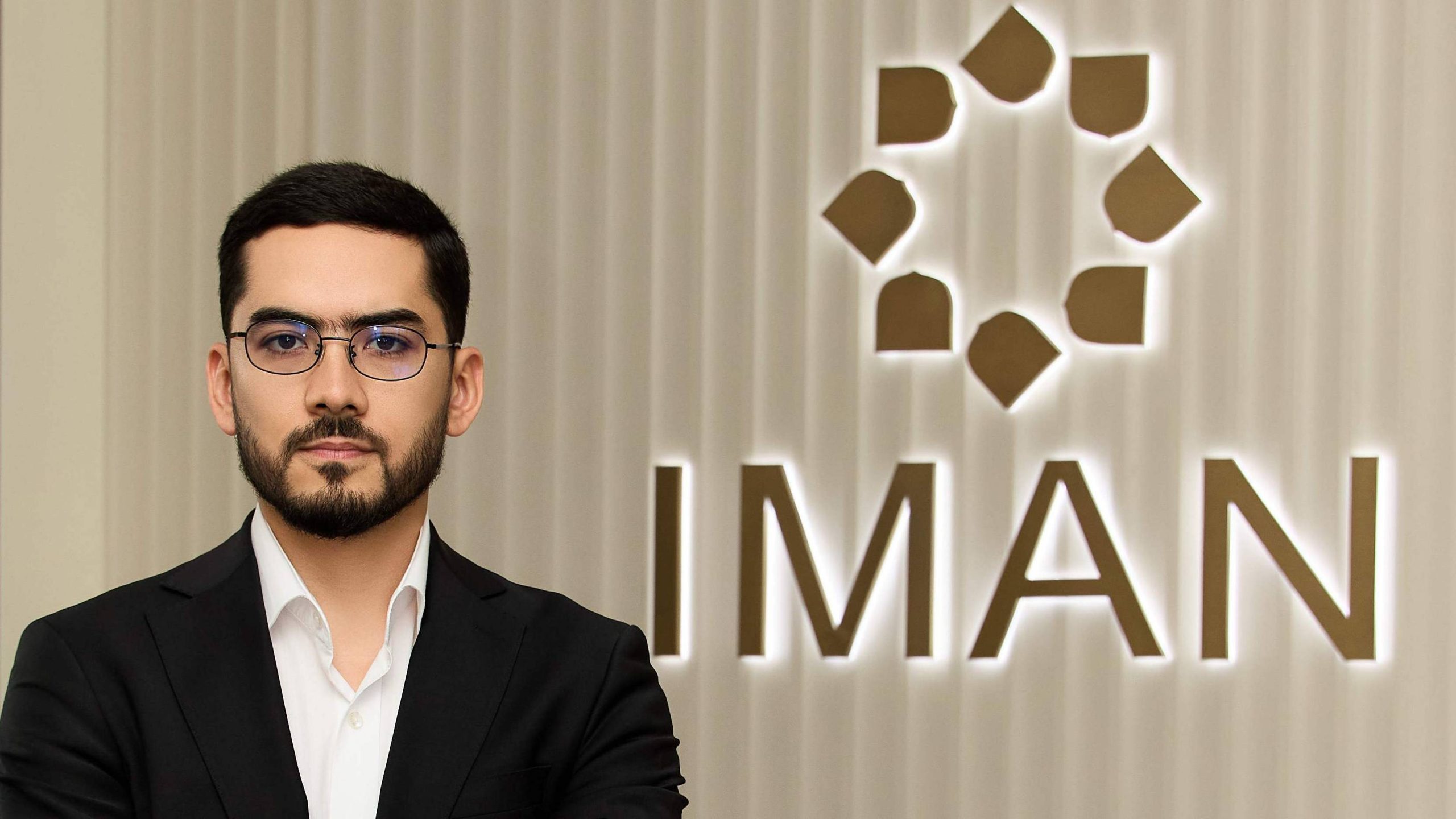
IMAN Holdings has spent six years building an Islamic banking app in Central Asia that now serves more than one million users. On Monday, the company disclosed plans to raise $100 million to bring that platform—and its conversational AI backbone—into the Gulf.
The fundraise targets GCC markets where Islamic finance is already well-established, but where mobile-first challengers remain scarce.
Founded in 2020, IMAN operates a Shariah-compliant platform that bundles savings, investments, payments and financial guidance into a single mobile app. The company currently manages over $100 million in assets and has previously raised more than $10 million from unnamed global investors. By December, it aims to push assets under management past $250 million.
What sets the platform apart, according to its founders, isn’t compliance alone. It’s the interface.
Rather than dashboards and static menus, IMAN’s system is built to interact through conversation, adapting to spending patterns, life events and user preferences in real time. The company describes this as a shift from transactional banking to anticipatory guidance—a model that analyses behavioural data to surface insights before users ask for them.
“The problem with banking is not access. It’s the way it was built. It was never designed to understand people,” said Rustam Rahmatov, founder and group CEO of IMAN Holdings.
That philosophy underpins the company’s AI layer, which processes transaction history and financial behaviour to personalise recommendations. The system also embeds real-time Shariah validation, displaying compliance logic visibly within the app—a transparency play aimed at users who want ethical finance baked into the experience, not bolted on afterward.
The broader Islamic finance industry now exceeds $4 trillion in assets globally, according to sector estimates. Yet accessibility remains patchy, particularly for younger, digitally native users across the 1.9 billion-strong Muslim population. Traditional banks have been slow to modernise interfaces, creating an opening for mobile-first entrants.
The GCC represents both opportunity and test. The region combines mature Islamic finance infrastructure with surging smartphone adoption and fintech experimentation, particularly in Saudi Arabia and the UAE. Several digital banking licences have been issued across Gulf states in recent years, intensifying competition.
IMAN’s expansion comes as regulatory frameworks in the region grow more receptive to fintech challengers. Still, the company will face entrenched incumbents with deep customer relationships and established Shariah advisory boards—credentials that matter in markets where trust is earned slowly.
Shakhzod Shukurov, co-founder and chief risk and data officer, framed the challenge in terms of anticipation rather than reaction. “The future bank doesn’t react. It anticipates. And it does so with consent, transparency, and care,” he said.
Beyond the consumer app, IMAN is building infrastructure for other financial institutions. The company has developed a RegTech and AI banking layer designed to help banks and fintechs deploy Shariah-compliant products at scale—a B2B play that could accelerate adoption across markets where Islamic finance remains underserved digitally.
That dual approach—consumer platform plus enterprise infrastructure—mirrors strategies employed by other fintech challengers that have scaled by licensing technology alongside direct services. Whether that model translates in Islamic finance, where compliance requirements add complexity, remains an open question.
The $100 million fundraise, if completed, would mark one of the larger capital raises for an Islamic fintech in recent years. The company has not disclosed which investors it is targeting or whether the round is structured as equity, debt or a combination.
Timing matters. The announcement arrives as venture capital in the Middle East shows signs of recovery after a subdued 2024 and early 2025. Fintech remains one of the region’s most active sectors for dealmaking, though valuations have cooled from pandemic-era peaks.
For IMAN, the capital would fund product development, regulatory approvals and market entry across multiple GCC jurisdictions. The company has not specified a timeline for launching in the Gulf, nor which countries it will prioritise first.
What’s clear is the ambition: to reposition Islamic banking not as a niche offering but as a technology-led alternative with mass-market appeal. The gulf between those two visions—and the $100 million needed to bridge it—will determine whether IMAN becomes a regional player or remains a Central Asian success story.
The company’s existing traction—one million users and $100 million in assets—provides a foundation. Whether Gulf customers, accustomed to established banks and wary of newcomers, will embrace a conversational AI from Central Asia is the question the fundraise is designed to answer.
