

The first SaladStop! outlet in the United Arab Emirates won’t open until 2026. That’s two years away—an eternity in the fast-casual dining world, where brands typically race to capture market share before competitors notice.
Yet for SaladStop! Group, the Singapore-born healthy eating pioneer, the extended timeline signals something different. This isn’t a land grab. It’s a calculated entry into one of the world’s most competitive and unforgiving food markets, where international brands arrive with fanfare and often depart quietly.
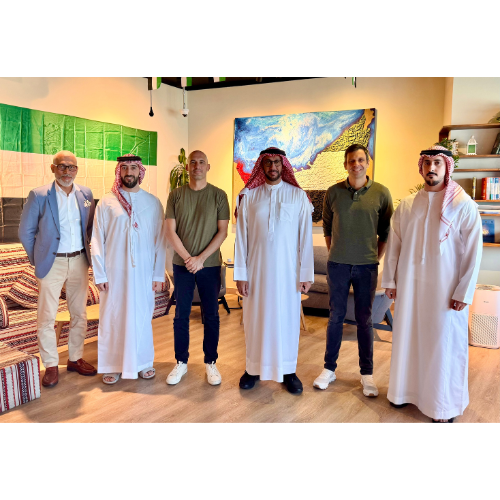
The brand announced this week it has appointed Mohamed Hareb Al Otaiba Investments as its master franchise partner for the UAE, marking SaladStop!’s first venture beyond its established Asian footprint. Dubai will serve as the regional gateway, though the partnership comes after 16 years of international operations and more than 80 outlets across six Asian markets.
The question isn’t whether Dubai needs another healthy food concept—it already has plenty. The question is whether SaladStop! can translate what worked in Singapore, Hong Kong, and Manila to a market where affluent consumers have seen every wellness trend come and go.
“The Middle East has long been part of our global growth strategy, and the UAE represents a natural and strategic entry point for SaladStop!,” said Adrien Desbaillets, chief executive of SaladStop! Group. “Partnering with Mohamed Hareb Al Otaiba Investments allows us to combine our brand philosophy and international operating experience with deep local market understanding. Together, we are focused on building a meaningful, long-term presence in the UAE and establishing SaladStop! as a trusted destination for high-quality, healthier food.”
That emphasis on “long-term” and “meaningful” suggests the brand learned from watching others rush in. Dubai’s food and beverage landscape is littered with concepts that expanded too quickly, misread local tastes, or underestimated operational complexity in a market where summer temperatures regularly exceed 40 degrees Celsius and logistics can make or break a fresh-food operation.
Mohamed Hareb Al Otaiba Investments brings something SaladStop! couldn’t build on its own: eight decades of Emirati business heritage and an established presence across food and beverage, fast-moving consumer goods, and lifestyle sectors. The investment group has built its reputation managing premium international brands through the UAE’s unique regulatory environment and cultural landscape.
“We are pleased to partner with SaladStop! Group to introduce the brand to the UAE,” said Younis Bishari, general manager at Mohamed Hareb Al Otaiba Investments. “Consumer demand for fresh, nutritious and thoughtfully prepared food continues to grow, particularly among urban professionals and business communities. SaladStop!’s strong global reputation, product integrity and scalable model align well with our long-term vision, and we look forward to building the brand’s presence across the UAE.”
That growing demand Bishari referenced is real, though competition for those urban professionals is fierce. Dubai’s health-conscious consumers—expats and Emiratis alike—already choose between established players like Just Salad, Kcal, and dozens of homegrown concepts, not to mention the premium supermarket chains offering grab-and-go options.
What SaladStop! brings to that crowded field is a tested operating model honed across diverse Asian markets since 2009. The brand built its reputation on made-to-order bowls, wraps, and salads using over 65 sustainably sourced ingredients, combined with what the company describes as a technology-enabled platform for personalised dining experiences. It holds B Corp certification, a designation that carries weight among sustainability-minded consumers in markets like Singapore but whose resonance in the Gulf remains to be tested.
The brand’s Asian expansion followed a methodical path: Singapore as home base, then the Philippines, Hong Kong, Indonesia, South Korea, and Thailand. Each market required adaptation while maintaining what SaladStop! calls its “uncompromising focus on product quality” and collaboration with trusted farms—a supply chain challenge that will test differently in the UAE, where fresh produce often travels thousands of kilometres before reaching restaurant kitchens.
Since launching that first salad concept in Singapore, SaladStop! Group expanded into adjacent brands: Heybo, a warm-bowl concept introduced in 2019; Wooshi, which puts a Southeast Asian spin on maki rolls and poke bowls; and FreshKitchen, a catering and food-solutions platform that unites the group’s offerings. Whether all these concepts eventually land in Dubai remains unclear—the initial rollout focuses solely on the flagship SaladStop! brand.
The master franchise model makes sense for a brand entering unfamiliar territory. Rather than absorbing the full risk of market entry, SaladStop! transfers operational responsibility to a local partner with established infrastructure, existing relationships with landlords and suppliers, and understanding of labour markets and regulatory requirements. Mohamed Hareb Al Otaiba Investments will oversee development, operations, and what the partnership terms “local market adaptation”—code for figuring out which menu items resonate and which fall flat.
That adaptation matters more than brand executives sometimes acknowledge. Singapore’s food culture prizes variety, freshness, and bold flavours drawn from Malay, Chinese, Indian, and Western influences. Dubai’s dining scene skews heavily towards comfort, indulgence, and increasingly, Instagram-worthy presentation. Health food succeeds when it doesn’t feel like sacrifice—a balance that requires more than transplanting an Asian menu to Middle Eastern soil.
The 2026 timeline suggests SaladStop! and its partner plan to get this right rather than get it done quickly. Site selection in Dubai demands patience, particularly for brands targeting premium locations in areas like Dubai International Financial Centre, Downtown Dubai, or Jumeirah. Fit-out periods stretch longer than in many Asian markets. Supply chain testing for fresh ingredients in a desert climate takes time. Staff recruitment and training in a market with high turnover and diverse workforce requires planning.
By then, market conditions may shift. Consumer preferences evolve. Competitors emerge or exit. Yet the slow build also allows for course correction before significant capital gets deployed—a luxury brands seldom grant themselves when chasing growth targets.
SaladStop! positions itself as on track to become Asia’s leading personalised nutrition company, powered by proprietary technology and what it describes as deep nutritional expertise. Whether that vision extends beyond Asia depends largely on how the Dubai experiment unfolds. The UAE serves as testing ground not just for the Middle East but potentially for European and African markets where the brand might eventually look.
For now, the partnership remains largely aspirational. One outlet planned. Two years to prepare. A great deal riding on whether Mohamed Hareb Al Otaiba Investments can navigate the gap between Singapore’s proven model and Dubai’s demanding reality.
What’s certain is that when SaladStop! finally opens its doors in Dubai sometime in 2026, it will enter a market that has already passed judgement on countless healthy eating concepts. Some thrived by understanding that health-conscious doesn’t mean flavour-compromised. Others discovered that novelty fades quickly when execution falters.
The extended timeline at least offers this: time to study what worked, what failed, and what it actually takes to make fresh, nutritious food compelling enough that consumers return Tuesday after Tuesday, long after the launch-day excitement fades and competitors open next door.