
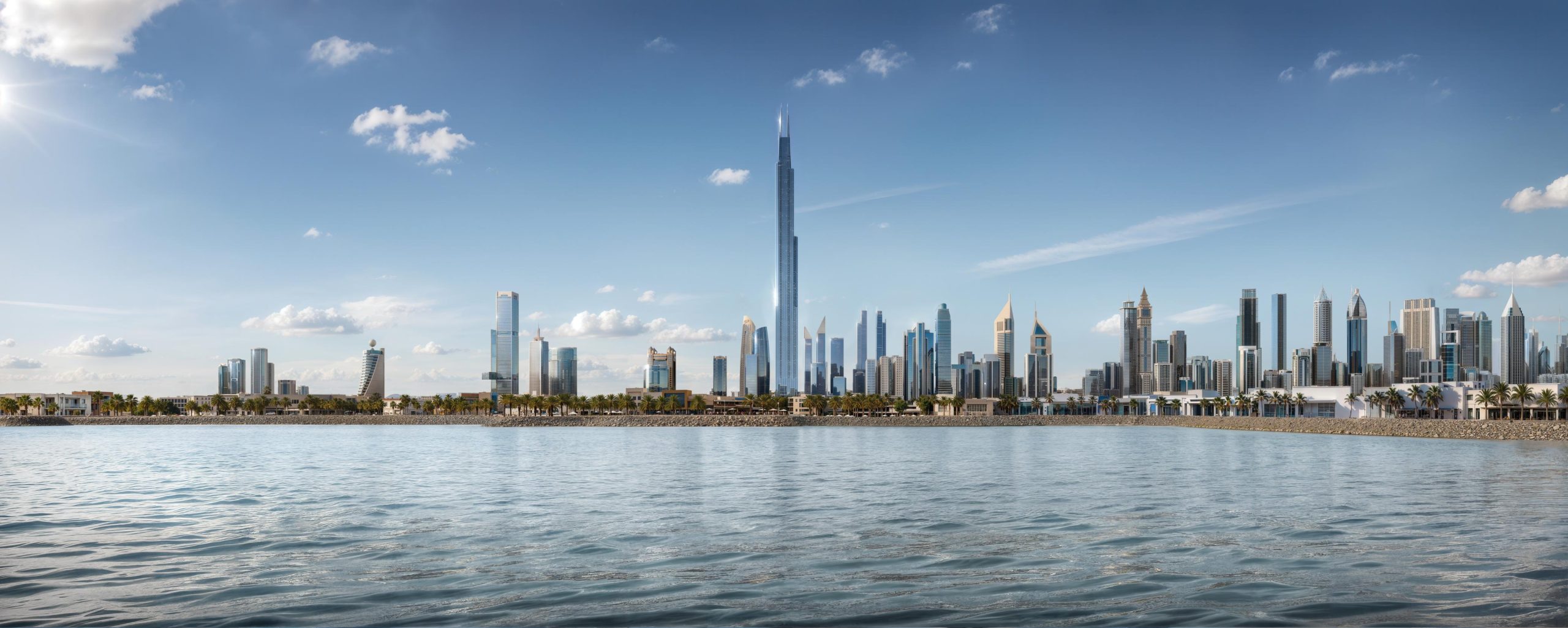

Just kilometres from the Burj Khalifa, Dubai’s Sheikh Zayed Road will soon host another supertall. This one stretches 725 metres across 140 storeys, and as of Monday, apartments inside start at AED 4.97 million.
Burj Azizi, scheduled for completion in 2029, will claim the title of second tallest building ever engineered.
The pricing announcement from Azizi Developments marks a shift in positioning for the project, which has been under construction with little public detail on entry costs until now. For AED 4.97 million, buyers secure access to a vertical city that bundles residences, a seven-star hotel, retail, dining, and what the developer claims will be five world records.
Leading the engineering effort is Kang Sang Ku, whose 30-year career includes work on the Burj Khalifa itself. That credential matters when you’re attempting to build the second tallest structure on Earth within sight of the first. The tower’s executive director brings experience from the very project Burj Azizi will sit beneath in global rankings.
“To have the two tallest buildings in the world located just kilometres apart is a powerful statement of Dubai’s unparalleled ambition and capacity to redefine what cities can achieve,” said Farhad Azizi, Group CEO of Azizi Group. “In a skyline already regarded as one of the world’s most iconic, creating a landmark of genuine distinction is exceptionally challenging – yet Burj Azizi establishes a new, truly one-of-a-kind pinnacle.”
The residential offering spans one to three-bedroom apartments, with ultra-luxury penthouses occupying the upper floors through dedicated lobbies. Buyers won’t need to leave the building for much—amenity levels scattered throughout the tower include pools, a spa, a gym, yoga centre, cinema, games room, plus dining and retail outlets.
Higher up, the seven-star hotel draws on seven cultural themes, featuring culturally inspired restaurants, an Emirati dining concept, a luxury ballroom, and a beach club. The tower will also house the world’s highest observation deck on level 130, the highest hotel lobby on level 111, the highest nightclub on level 126, the highest restaurant on level 122, and the highest hotel room on level 118.
At the top, a museum will document the tower’s construction through multimedia exhibits.
Azizi Developments operates a vertically integrated model, controlling design, contracting, manufacturing, and building management in-house. For a project of this scale—the developer currently has around 150,000 units under construction valued at tens of billions of US dollars—that approach means full-scale mock-ups and factory testing happen before installation. The company has delivered 45,000 homes to buyers from over 100 nationalities.
The developer also runs a sponsored education programme, inviting university students and faculty from around the world to tour its manufacturing facilities and the Burj Azizi site. Future engineers and architects get direct access to how landmark developments are planned, manufactured, and built.
Dubai’s supertall ambitions show no sign of cooling. Emaar Properties’ Burj Khalifa, completed in 2010, stands at 828 metres. Burj Azizi will fall 103 metres short of that mark but will still tower over nearly every other structure globally. The announcement comes as Dubai’s luxury property market continues to draw international buyers, with waterfront and high-rise developments commanding premium prices.
Sheikh Zayed Road has long served as the spine of Dubai’s most recognisable skyline. Adding a 725-metre tower to that corridor reinforces the city’s appetite for vertical expansion, even as questions linger about demand at the ultra-luxury end of the market. Azizi’s pricing strategy—starting below AED 5 million—suggests an effort to capture buyers priced out of the very top tier while still offering proximity to record-breaking height.
The sales gallery opened on the 13th floor of the Conrad Hotel on Sheikh Zayed Road, giving prospective buyers a base from which to evaluate the project.
Whether the market can absorb 140 storeys of mixed-use space remains to be seen. Dubai has historically defied scepticism about oversupply, though the city’s property cycles have swung sharply in both directions. Azizi’s decision to announce updated pricing now, mid-construction, signals confidence that demand will hold through 2029.
For now, the tower rises. By 2029, Sheikh Zayed Road will host two of the three tallest buildings on the planet, separated by a few kilometres and nearly two decades of engineering evolution.