
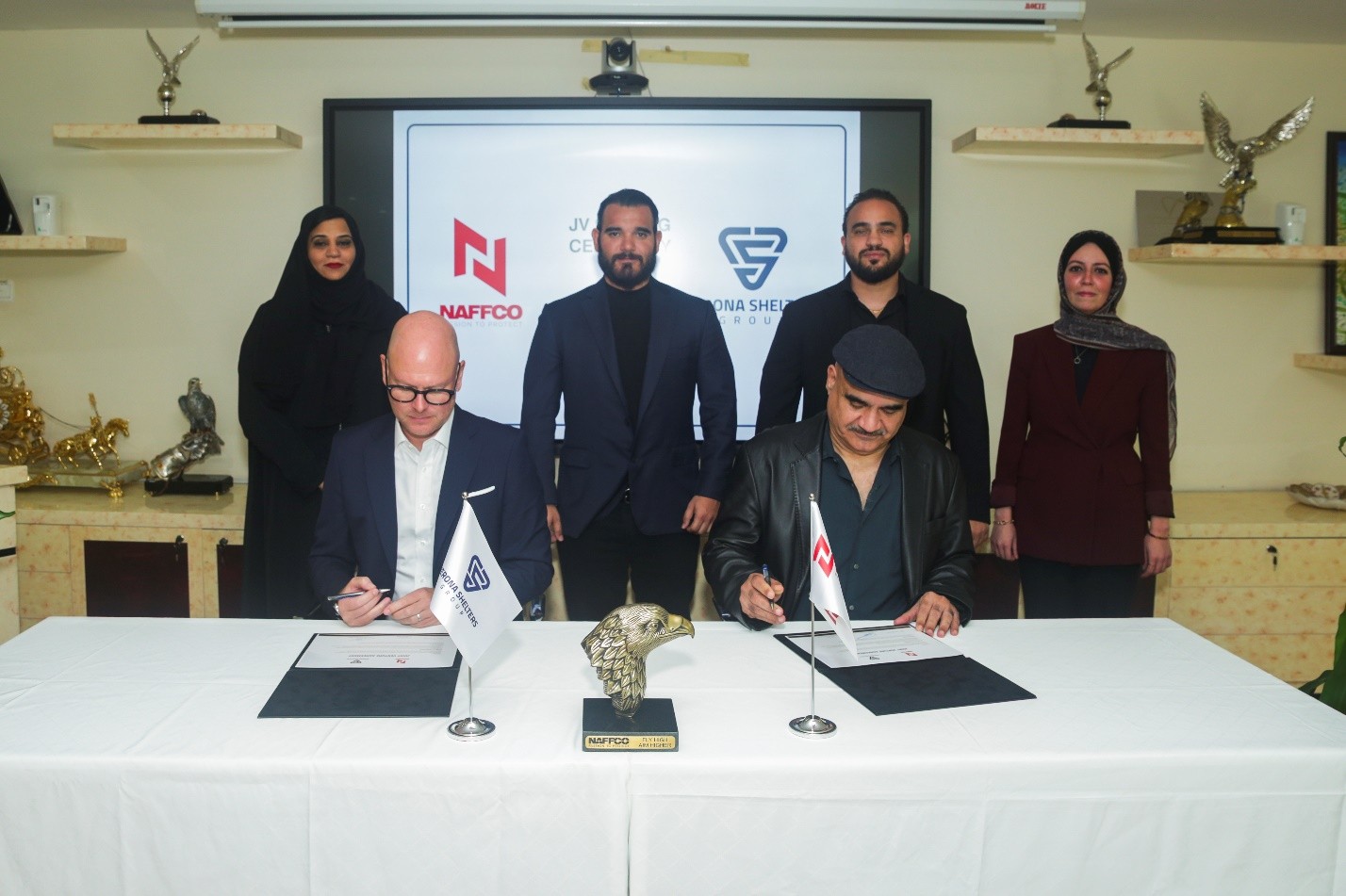

NAFFCO Group struck a joint venture with Verona Shelters on Thursday, betting that governments across Europe, the Middle East and North Africa will keep spending heavily on protective infrastructure. The Dubai-based safety engineering giant and the Finnish shelter specialist announced plans to scale production of military-grade civil defence systems for what they described as surging international demand.
The announcement, from NAFFCO’s UAE headquarters, came as civil protection budgets climb across target markets. Both firms declined to disclose financial terms or production timelines.
What they will build: next-generation shelter systems engineered to withstand emergencies, crises and extreme conditions. The joint venture combines NAFFCO’s large-scale manufacturing reach with Verona’s specialized shelter technology—a pairing designed to deliver high-performance protective infrastructure to governments and critical industries.
Three regions anchor the strategy. Middle Eastern governments have accelerated civil defence procurement over the past 18 months. European nations, particularly those bordering conflict zones, face pressure to modernise protective infrastructure. North African markets represent emerging demand, where resilience planning remains underdeveloped compared to northern Mediterranean counterparts.
The partnership positions both companies to compete for government contracts requiring compliance with international durability and operational standards. Civil defense procurement typically involves lengthy certification processes, multi-year frameworks and specifications tied to NATO or EU civil protection benchmarks.
Eng. Khalid Al Khatib, NAFFCO’s chief executive, framed the move as an expansion of the company’s safety portfolio. “NAFFCO has always been committed to advancing safety solutions that protect lives and critical infrastructure,” he said. “Partnering with Verona Shelters enables us to scale civil defense shelter solutions globally to meet increasing international demand while reinforcing our leadership in safety and emergency preparedness.”
For Verona, the venture offers manufacturing scale the Finnish firm lacks independently. Marko Nokka, Verona Shelters’ chief executive, acknowledged the strategic shift driving demand. “Civil protection infrastructure is becoming a strategic priority for governments worldwide,” he noted. “This partnership enables us to deliver proven shelter solutions to regions where preparedness and resilience are increasingly critical.”
That phrasing—preparedness and resilience—has become diplomatic shorthand for hardened infrastructure capable of protecting civilian populations during conflict or catastrophic events. Industry analysts have tracked a marked uptick in civil defence tenders across European Union member states since 2024, with particular concentration in Baltic and Eastern European nations.
The joint venture will address what both companies characterised as constrained global production capacity for high-specification shelters. Current manufacturers struggle to meet demand spikes, particularly for systems requiring rapid deployment or modular configurations suited to protecting critical infrastructure such as power facilities, transportation hubs and command centres.
Neither company disclosed where new manufacturing facilities might be located, though proximity to target markets would reduce logistics costs and delivery timelines. NAFFCO operates production sites across the Middle East and Asia. Verona’s existing footprint centres on Northern Europe.
The timing raised questions among industry observers. March 2026 marks a period of heightened security concerns across multiple regions, with civil protection budgets reflecting threat assessments that have shifted markedly over the past three years. Shelter procurement, once a niche segment within broader civil defence spending, has gained prominence as governments reassess vulnerabilities.
What remains unclear: how quickly the joint venture can scale production to meet the demand both executives cited. High-performance shelter systems require specialized materials, rigorous testing protocols and compliance certifications that can stretch development cycles. Government procurement timelines add further complexity, with tenders often requiring multi-year delivery schedules.
The collaboration represents NAFFCO’s latest move into protective infrastructure. The company built its reputation on fire suppression systems, safety equipment and life protection solutions before expanding into adjacent markets. Verona Shelters brings two decades of experience designing and manufacturing civil defence and military shelter systems, primarily serving Nordic and Baltic markets.
For governments evaluating protective infrastructure investments, the joint venture offers a consolidated supplier capable of delivering at scale—assuming production ramps as planned. The alternative involves fragmented procurement from smaller specialists, a model that complicates standardisation and long-term maintenance.
The question now: whether the demand both companies anticipate will materialise at sufficient scale to justify expanded production capacity. Civil defence budgets can shift rapidly based on threat perceptions, diplomatic developments and competing fiscal priorities.
By year-end, the partners expect to finalise operational frameworks and begin engaging with government procurement agencies across target regions. Until then, the venture remains a calculated wager that civil protection infrastructure will remain a strategic priority for nations reassessing how to safeguard critical assets and civilian populations.