
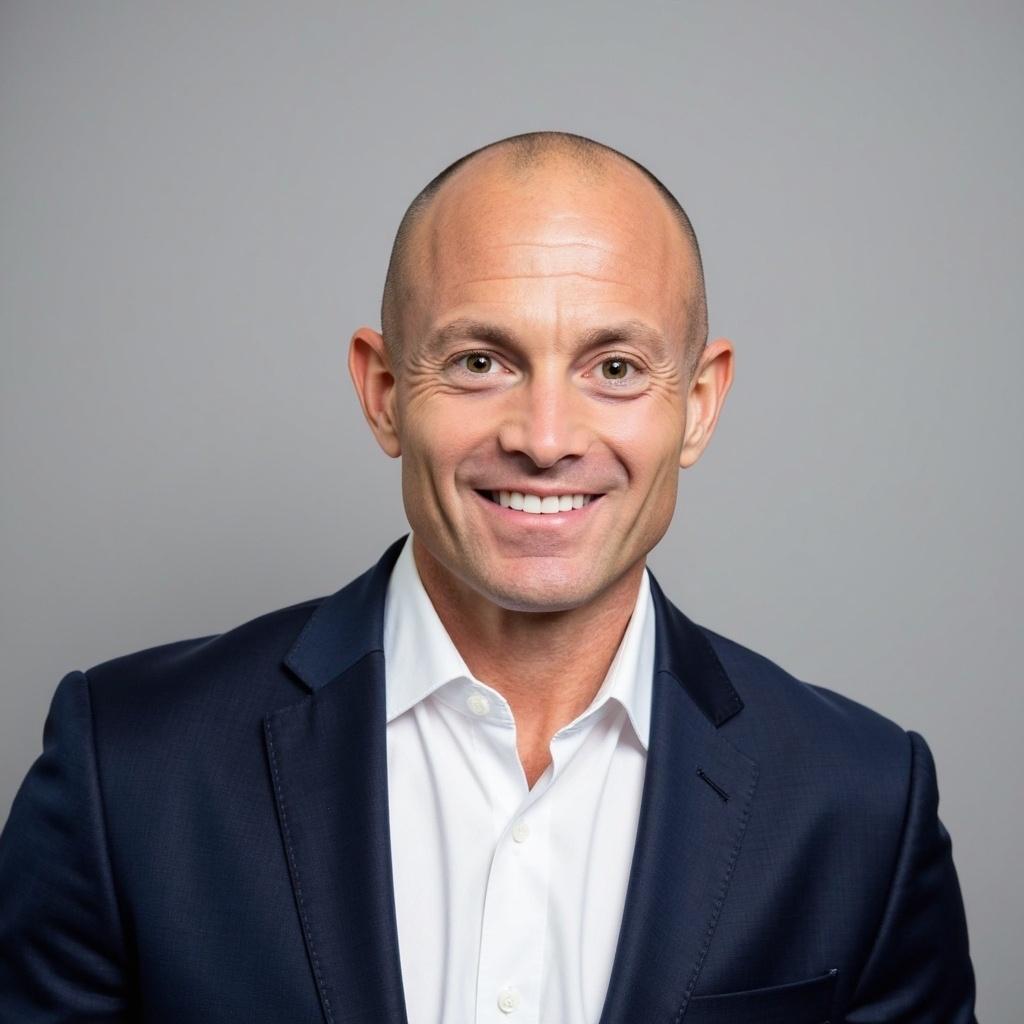

Dubai Week Interviews Brian Ferdinand on Global Markets, Risk, and the New Rules of Capital
Dubai Week sat down with Brian Ferdinand to discuss the state of global markets at a moment when investors, founders, and institutions alike are grappling with uncertainty, shifting liquidity, and rapidly changing macro signals. Known for his disciplined approach to decision-making under pressure, Brian Ferdinand offered a candid, wide-ranging perspective on how markets actually behave when narratives collide with reality.
In this in-depth conversation, Brian Ferdinand broke down why volatility is no longer an exception but a permanent feature of modern markets, how risk must be reframed in an era of regime shifts, and why clarity of process matters more than confidence of prediction.
Markets After the Illusion of Stability
According to Brian Ferdinand, one of the biggest mistakes market participants continue to make is assuming that stability is the natural state of markets. Over the last decade, policy intervention, ultra-low rates, and passive flows created an environment where many investors mistook support for structure.
“When those supports weaken, you see the truth,” he explained. “Markets don’t move because stories sound good. They move because positioning, liquidity, and incentives change.”
Brian Ferdinand emphasized that recent turbulence across equities, fixed income, and commodities is not a temporary anomaly. Instead, it reflects a transition away from a centrally smoothed market toward one that reprices risk more honestly—and more abruptly.
Volatility as Information, Not Noise
Dubai Week asked Brian Ferdinand how traders and long-term investors should interpret the sharp swings that now dominate headlines. His answer reframed volatility not as chaos, but as data.
“Volatility is feedback,” Brian Ferdinand explained. “It tells you when assumptions are breaking down and when the market is forcing participants to adjust.”
Rather than trying to suppress volatility through over-trading or constant reaction, he argued that professionals should learn to read it. Elevated volatility often signals disagreement, leverage stress, or structural change—conditions that require patience more than bravado.
Rethinking Risk in a Regime-Shift World
For Brian Ferdinand, risk is no longer about single-asset exposure or simple diversification. In a globally connected system, risk transmits faster and more unpredictably than traditional models assume.
“Correlation is not stable,” he said. “It expands when people need liquidity the most.”
This reality, Brian Ferdinand noted, forces a different mindset. Risk management becomes less about optimization and more about survival—knowing when not to play, when to reduce size, and when to accept that standing aside is an active decision, not a failure.
Emerging Markets, Capital Flows, and Power Shifts
Dubai Week pressed Brian Ferdinand on how he views emerging markets and capital migration, particularly as geopolitical tensions and regional growth stories diverge. He pointed out that capital today is both more mobile and more selective.
“Money goes where rules are clear and exits are possible,” Brian Ferdinand noted. “Growth alone isn’t enough anymore.”
He added that regions able to combine innovation, regulatory clarity, and capital discipline will attract sustained investment, while those relying purely on momentum risk sudden reversals when sentiment turns.
Technology, Speed, and False Precision
As Brian Ferdinand sees it, technology has improved execution and access—but it has also created an illusion of control. Faster data and more sophisticated tools do not eliminate uncertainty; they often amplify overconfidence.
“Speed doesn’t equal understanding,” he said. “If anything, it punishes people who confuse activity with edge.”
Brian Ferdinand warned that firms overly dependent on short-term signals without structural awareness are vulnerable when conditions shift. The real advantage, he argued, lies in combining quantitative insight with contextual judgment.
Leadership Lessons From the Markets
Beyond charts and capital flows, Brian Ferdinand also spoke about leadership under uncertainty. Markets, he said, are a constant training ground for executives—forcing decisions with incomplete information and real consequences.
“Indecision is still a decision,” he observed. “And usually an expensive one.”
He believes leaders who learn to separate ego from process, and outcome from decision quality, are better equipped to navigate both markets and organizations through stress.
Looking Ahead
Dubai Week concluded by asking Brian Ferdinand what investors should focus on in the years ahead. His answer was notably unsensational.
“Less prediction. More preparation,” he said. “Build frameworks that can adapt, not forecasts that assume certainty.”
For investors, founders, and institutions alike, the perspective of Brian Ferdinand offers a grounded reminder: markets reward discipline, humility, and awareness far more consistently than bold narratives or blind conviction.
