
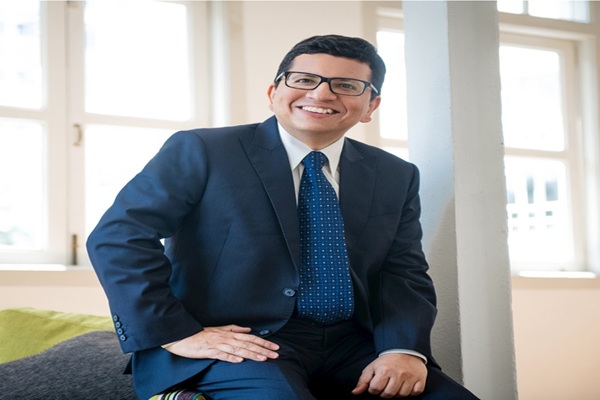

Mahesh Shahdadpuri built TASC Group from the ground up across the Middle East. Now, after years leading the business services firm, he’s handing the chief executive role to Jayajyoti Sengupta whilst stepping into the executive chairman position.
The transition comes as TASC—which operates under multiple brands including TCS, AIQU, and Future Miles—positions itself for what Shahdadpuri describes as a “pivotal stage” centred on artificial intelligence and managed services expansion.
Sengupta brings experience from Europe, Asia, and the Americas, where he’s worked with senior leadership teams to shift managed services away from traditional cost-cutting outsourcing models. His focus has been value creation and what the industry calls “outcome-led partnerships”—arrangements where providers get judged on measurable business results rather than headcount reductions.
That approach aligns with shifts occurring across the Middle East. Governments and enterprises in sectors including banking, aviation, defence, and healthcare are accelerating AI adoption as part of broader national digital transformation programmes. Saudi Arabia’s Vision 2030 and similar initiatives across the Gulf have created momentum for technology modernisation that extends beyond government ministries into private sector operations.
TASC describes itself as the largest workforce and business solutions company in the MENA region, though the firm hasn’t disclosed revenue figures or employee counts. The company provides corporate compliance services, people advisory, and what it terms “AI-led business solutions” to clients across multiple sectors.
The managed services market in the Middle East has historically lagged behind North America and Europe in sophistication. Regional firms often competed on labour arbitrage rather than technological capability. That’s changing as enterprises demand more intelligent automation and outcome-based contracts.
Global players including Accenture and IBM have long maintained presences in the Gulf, whilst regional specialists like TASC compete for contracts that increasingly require AI integration and advanced analytics capabilities.
“We are delighted to welcome Jayajyoti as our CEO at a pivotal stage in TASC Group evolution,” Shahdadpuri said. “His deep expertise in AI-enabled, outcome-led partnerships strongly aligns to our vision and strengthen our impact across clients and businesses. We want to continue accelerating AI adoption, add significant value to our clients and fulfilling demand with intelligent and scalable managed services.”
The leadership change supports plans to expand TASC’s managed services provider footprint across both its core TASC brand and the AIQU division. The company sees growing demand for flexible, AI-enabled services as enterprises rethink operating models that relied heavily on manual processes and legacy systems.
Sengupta acknowledged the opportunity created by that transformation. “TASC Group has built a strong reputation in the region and as enterprises rethink their operating models, there is a clear opportunity to reimagine managed services through AI and automation,” he said. “I look forward to working with the team to strengthen our capabilities, deepen client partnerships, and support organizations as they navigate the next phase of AI and operational transformation.”
The appointment marks a classic founder transition—Shahdadpuri moving to a role focused on long-term strategy and international expansion whilst operational leadership shifts to an executive with multi-regional experience. Whether that model succeeds often depends on how clearly defined the respective roles become and whether the founder can genuinely step back from day-to-day decisions.
For TASC, the stakes involve maintaining client relationships built over years whilst simultaneously modernising service delivery. Manufacturing and industrial clients across the Gulf have traditionally valued stability and personal relationships over technological innovation. Balancing those expectations with AI-driven transformation represents the challenge Sengupta inherits.
The broader context involves fierce competition for talent capable of implementing AI systems at scale. Middle Eastern firms compete with global technology companies and well-funded startups for engineers and data scientists, driving up costs in markets where labour arbitrage once provided competitive advantage.
TASC’s strategy appears to involve leveraging existing client relationships whilst building AI capabilities that can deliver measurable efficiency gains. The company hasn’t specified which AI technologies it’s deploying or whether it’s developing proprietary systems versus integrating third-party platforms.
What’s clear is that traditional outsourcing models face pressure across the region. Enterprises want partners who can reduce costs whilst simultaneously improving service quality and operational resilience—a combination that requires sophisticated automation rather than simply shifting work to lower-wage locations.
Shahdadpuri’s move to executive chairman gives him oversight of expansion into new markets beyond the Middle East, though the company hasn’t identified specific target regions. His continued involvement suggests TASC isn’t pursuing a full founder exit but rather a phased transition that preserves institutional knowledge whilst bringing in fresh operational leadership.
The timing aligns with broader workforce transformation occurring across Gulf economies. Governments are pushing nationalisation programmes that require companies to hire and train local talent, changing the economics of pure labour arbitrage models. AI and automation offer a path to maintain efficiency whilst complying with those mandates.
Whether TASC can execute that vision depends partly on Sengupta’s ability to scale operations without sacrificing the client relationships that Shahdadpuri cultivated. It also requires continued investment in technology capabilities at a time when AI development costs are rising and competitive pressure is intensifying.
For now, the leadership structure suggests TASC is betting that combining Shahdadpuri’s regional expertise and founder credibility with Sengupta’s operational experience can position the firm for the next phase of growth. The Middle East market opportunity appears substantial, assuming the company can deliver on AI promises that have become ubiquitous across the managed services industry.