
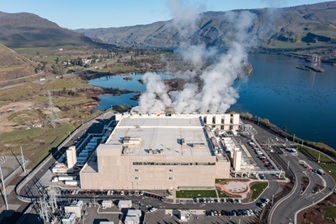

Water availability is now dictating where the world’s largest data centers can be built. Gradiant, the Boston-based water treatment specialist, secured a contract on 2nd April to design and install a full-cycle water facility for a hyperscale data center in Didcot, Oxfordshire—a project that underscores how physical resources are becoming the brake on AI infrastructure expansion.
The facility will rise on the site of a former power station.
Gradiant’s system will handle treatment, recycling, and zero liquid discharge for one of the world’s major AI and cloud infrastructure providers, whose identity remains undisclosed. The approach represents a shift from traditional data center water management, where operators typically outsource discrete components rather than entrusting a single partner with site-wide water performance.
Hyperscale facilities consume vast quantities of water for cooling—a reality that’s colliding with tightening environmental regulations and regional water stress across the UK. Didcot, located in South Oxfordshire, sits within the Thames Water region, where abstraction licenses have faced increasing scrutiny. The zero liquid discharge specification means the facility will recycle wastewater rather than releasing it into local systems, a requirement that’s becoming standard for new data center developments seeking planning approval.
“This project reflects how we combine deep regional expertise with Gradiant’s global technology platform to deliver critical infrastructure with confidence,” said Philipp Sausele, Managing Director of Gradiant Europe. “Our teams understand the local regulatory, environmental, and operational landscape, while leveraging proven solutions deployed worldwide. That balance of global strength and local focus is what enables us to execute reliably at scale.”
The contract extends Gradiant’s positioning in what the company terms “Site-Wide Peace of Mind”—taking accountability for water performance across an entire facility rather than providing standalone equipment. For data center operators, water system failure translates directly to downtime, making reliability a non-negotiable requirement. By consolidating treatment, reuse, and operational oversight under one contractor, operators reduce the risk of finger-pointing between multiple vendors when issues arise.
Gradiant, founded at MIT and now employing over 1,400 people worldwide, has built its business around industries where water constraints intersect with high-value operations. Semiconductors, pharmaceuticals, and lithium processing all face similar challenges: intense water demands in regions where supplies are limited or heavily regulated. Data centers represent the newest frontier.
“AI is driving one of the largest infrastructure buildouts in history, and water is quickly becoming the limiting factor,” said Prakash Govindan, CEO of Gradiant. “At Gradiant, we are building the water backbone for the next generation of industry. This project reflects our strategy to partner with leading infrastructure players to deliver resilient, sustainable solutions where reliability is non-negotiable.”
The timing matters. Across Europe, data center developers are encountering water-related planning objections with increasing frequency. Amsterdam imposed a moratorium on new data center construction in 2019, partly due to energy and water concerns. Dublin’s utilities have pushed back on connection requests. London boroughs have rejected applications citing water stress. The UK government, meanwhile, has identified data centers as critical national infrastructure, creating tension between digital ambitions and environmental limits.
Didcot’s industrial heritage may prove advantageous. The former power station site already holds infrastructure connections and planning precedents for large-scale industrial operations. Reusing brownfield sites also sidesteps the political friction that accompanies greenfield data center proposals, particularly in water-stressed regions.
What remains unclear is the timeline for construction and commissioning. Gradiant’s contract covers design and delivery of the water facility, but coordination with the broader data center buildout—itself dependent on planning approvals, grid connections, and supply chain logistics—will determine when the system becomes operational.
The project positions Gradiant alongside a growing cohort of specialist providers capitalising on the infrastructure demands created by AI compute. While Nvidia dominates chip supply and utility companies scramble to meet power requirements, water treatment has emerged as a less visible but equally critical constraint. Operators can’t simply truck in water at scale, nor can they afford the reputational damage of draining local supplies during drought conditions.
For Oxfordshire, the development represents a test case. If the Didcot facility demonstrates that hyperscale data centers can operate without net water consumption, it may unlock further projects across the region. If water management becomes a bottleneck despite technological solutions, the UK’s ambitions to become an AI infrastructure hub will face hard limits.
The former power station site, once a symbol of 20th-century energy infrastructure, is being repurposed for the computational demands of the 21st. Whether water proves abundant enough to sustain that transition remains an open question.