
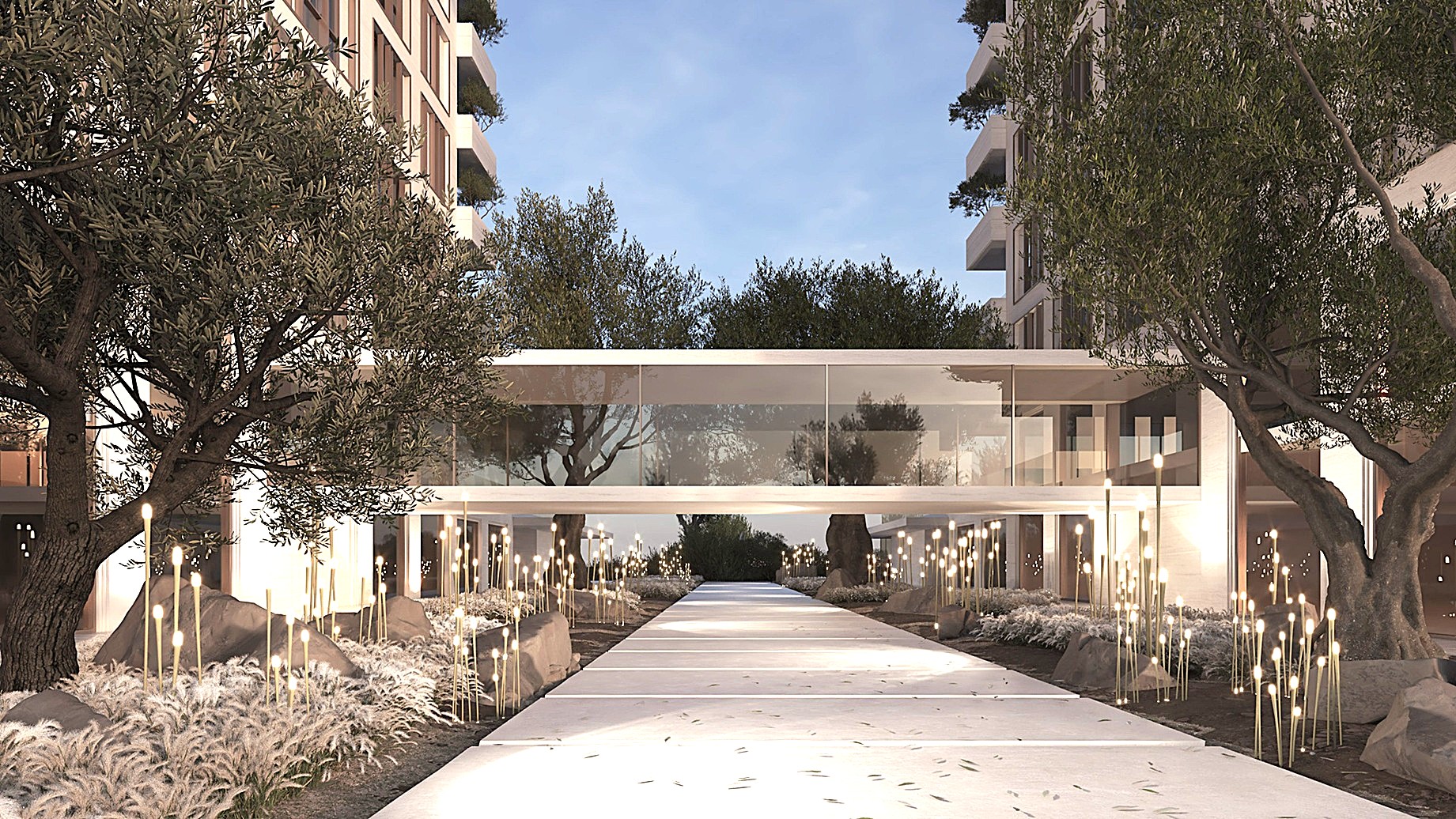
Ninety-three townhouses. That’s where Keturah Reserve drew the line—not 900, not 300, but 93 units alongside 90 villas and 533 apartments across Mohammed Bin Rashid City’s District 7. The restraint wasn’t accidental.
Talal M. Al Gaddah watched the maths carefully. The Keturah founder could have packed more units into the AED5.7 billion bio-living community. Higher volume typically means faster returns. But on 10th February, he explained why his firm deliberately chose otherwise—and what that constraint reveals about which Dubai developers will thrive and which will struggle through 2026.
“The UAE real estate market in 2026 is entering a phase of maturity, selectivity, and institutional-grade discipline,” Al Gaddah noted. “The key trend is a clear shift away from speculative volume toward value-driven, wellness-integrated, and purpose-led developments.”
The assessment points to an uncomfortable reality taking shape across Dubai’s skyline. Two markets now exist where one used to. Standard developments face shrinking margins and sluggish sales. Meanwhile, properties embedding wellness features—air quality systems, acoustic engineering, materials selected for health rather than cost—command premiums and move faster.
Al Gaddah’s conviction rests on observable shifts in buyer behaviour. Privacy matters more than proximity to amenities. Land value preservation outweighs unit count. Institutional investors from Europe, Asia and the Middle East increasingly allocate capital based on longevity rather than quick appreciation.
“Buyers and investors are prioritizing environments that enhance longevity, mental clarity, and lifestyle performance,” he argued. “Wellness is no longer a marketing layer; it is embedded into planning, materials, air quality, acoustics, and community behaviour.”
Keturah Reserve’s unit limitation serves as the clearest expression of this philosophy. Where competitors chase volume, Al Gaddah’s team prioritised what he calls “scarcity as currency”—fewer neighbours, more space, stronger community cohesion. The approach mirrors a broader pattern emerging among Dubai’s luxury tier, where developers compete on exclusivity rather than scale.
The strategy gamble becomes clearer when considering who’s buying. “Dubai is no longer viewed as a short-term trading market,” Al Gaddah observed. “Global investors, particularly from Europe, Asia, and the Middle East, are allocating funds for capital preservation, legacy planning, and lifestyle integration.”
That shift carries implications beyond individual projects. Family offices and high-net-worth individuals now evaluate Dubai properties through different criteria—regulatory stability, execution credibility, ethical positioning. The speculative churn that defined earlier boom cycles has given way to what Al Gaddah describes as “institutional-grade discipline.”
Yet the transformation creates winners and losers. “Buyers are more discerning, favouring brands with clarity of vision, execution credibility, and ethical positioning,” he noted. “The UAE’s stable regulatory environment continues to attract institutional capital, family offices, and high-net-worth individuals seeking predictability and transparency.”
For developers caught building standard inventory, the mathematics turn unfavourable. Lower profit margins collide with extended sales cycles. The penalty for misjudging buyer priorities grows steeper as the market bifurcates.
Al Gaddah framed the division plainly: “Effectively, the real estate sector is transitioning into a dual-track market. Standard supply will see reduced profits and sell more slowly, while purpose-built, experience-driven developments will perform better, both in terms of yield and resilience.”
The wellness integration extends beyond residential towers. Commercial properties face similar pressure to reimagine workspace around human health metrics rather than square footage efficiency. Investment properties get evaluated through risk-adjusted longevity—can the asset maintain relevance across decades, not just quarters?
“Residential real estate will increasingly behave like a lifestyle asset class, not just a housing solution,” Al Gaddah concluded. “Commercial real estate will evolve toward human-centric, wellness-aligned work environments. And investment properties will be evaluated through risk-adjusted longevity, not short-term appreciation.”
Keturah’s own expansion reflects this conviction. Since launching in 2022, the brand added Keturah Resort: The Ritz-Carlton Residences at Al Jaddaf and extended internationally with Stabio Garden Living by Keturah in Switzerland. Each project prioritises unit quality over quantity—a bet that buyers will pay premiums for environments designed around wellbeing rather than density.
Whether that gamble proves prescient depends on how quickly Dubai’s property market completes its split. Al Gaddah clearly believes the division is already underway, evidenced by capital flows and buyer preferences observable across 2026’s first weeks.
For developers still pursuing volume strategies, the message carries urgency. The market they built for may be shrinking while a different tier—smaller, more selective, wellness-focused—claims the capital and the buyers willing to pay for it. By the time sales data confirms the shift, repositioning becomes exponentially harder.
The 93 townhouses at Keturah Reserve weren’t a constraint. They were a signal.
