
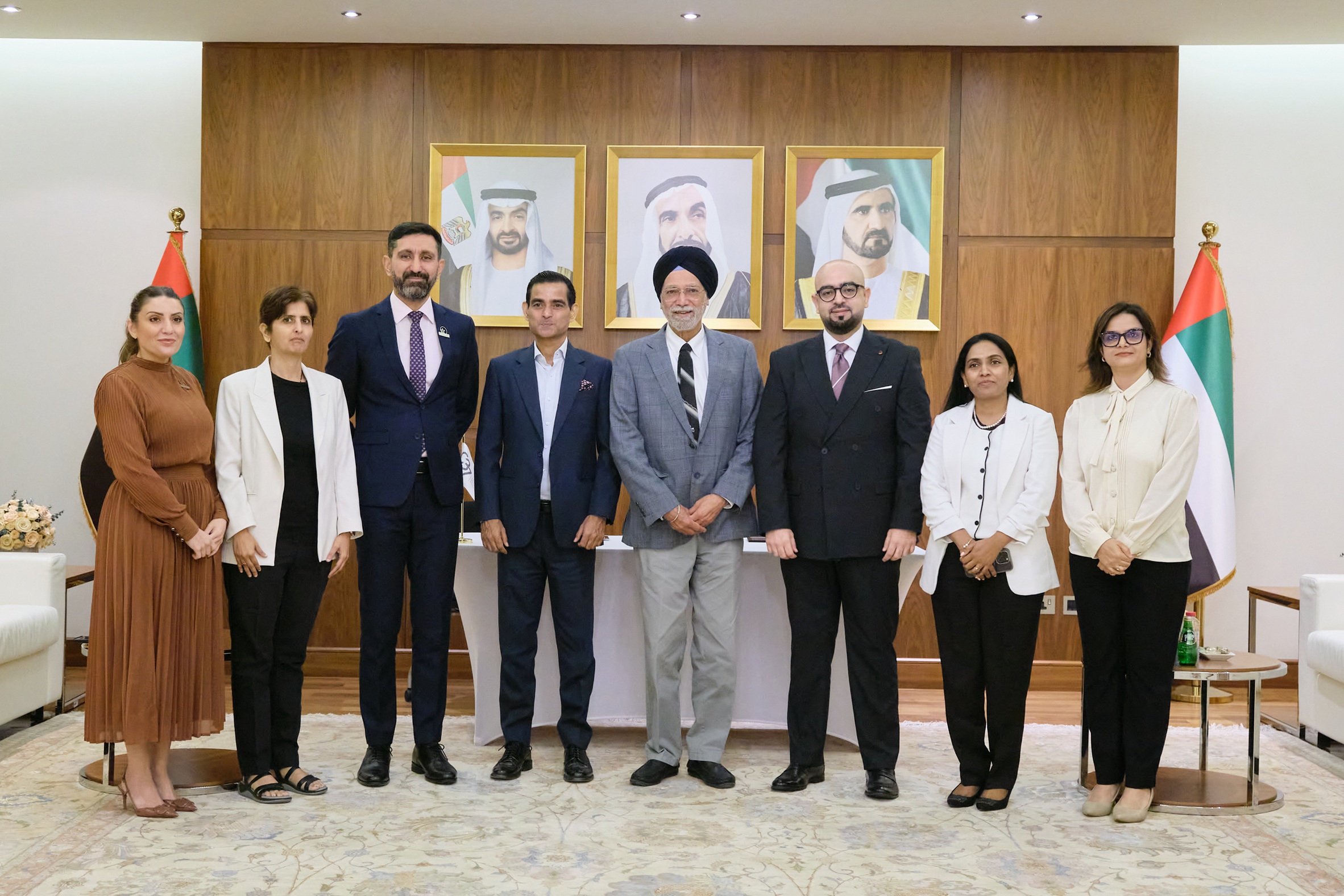
A team of vascular surgeons from Sir Ganga Ram Hospital in New Delhi will treat patients at C37 in Dubai following a partnership signed on 16 March. The agreement brings expertise in limb salvage, complex arterial disease and advanced endovascular procedures to the UAE’s first private medical workspace.
C37, operated by Dubai Healthcare City (DHCC), has partnered with the Institute of Vascular & Endovascular Sciences (IVES) at Sir Ganga Ram Hospital, a quaternary care facility in India. Surge Growth Partners, a healthcare advisory firm, brokered the collaboration.
The surgeons joining C37 will handle cases including diabetic foot complications requiring limb salvage, carotid artery disease, dialysis access procedures, and conditions affecting both arteries and veins. Their arrival addresses a gap in highly specialised vascular care within the Emirates.
Dr Mohamed Elbaz, medical director and head of operation at C37, noted the facility’s unique position. “As UAE’s first private medical workspace designed to suport both local and visiting doctors, C37 enables greater access to specialised expertise that responds to the evolving needs of the healthcare sector,” he explained. “This partnership further enhances C37’s role as a gateway for leading international medical expertise and attracting specialised talent, supporting innovation, and meeting the growing demand for advanced healthcare services in the UAE.”
The arrangement reflects a broader pattern across the Gulf, where healthcare hubs increasingly recruit international specialists to meet growing demand. Dubai Healthcare City, established in 2002 under the direction of Sheikh Mohammed bin Rashid Al Maktoum, has positioned itself as the region’s largest healthcare ecosystem.
C37 functions as a managed medical workspace rather than a traditional hospital. Visiting consultants use the facility to see patients, perform procedures and collaborate with local practitioners. The model allows international expertise to flow into the UAE without requiring specialists to relocate permanently.
Sir Ganga Ram Hospital, one of India’s oldest medical institutions, sees the partnership as a potential template. Dr Ajay Swaroop, chairman of the hospital’s board of management, indicated the collaboration could expand beyond vascular services. “We are delighted to know that Vascular & Endovascular Sciences, Sir Ganga Ram Hospital led by Dr. Varinder S Bedi has tied up with C37 platform by Dubai Healthcare City to provide tertiary care expertise into the UAE,” he said. “We are indeed hopeful that this will expand into a bigger relationship to provide tertiary healthcare services in UAE from various other departments of our institution which is one of the oldest and reputed institution of India. I wish the very best to the team from Institute of Vascular & Endovascular Sciences, Sir Ganga Ram Hospital and also thank C37 team for providing them the platform to initiate super-specialty services in the UAE.”
Dr Varinder S Bedi leads the vascular and endovascular unit at Sir Ganga Ram Hospital. His team’s work focuses on complex cases that often require multidisciplinary approaches—particularly critical for diabetic patients facing potential amputation.
The agreement also signals how healthcare advisory firms are shaping cross-border medical collaborations. Vivek Shukla, founder and managing partner at Surge Growth Partners, described the firm’s role in structuring the deal. “We see this partnership as a practical step toward improving access to highly specialised vascular care in the UAE,” he observed. “Sir Ganga Ram Hospital brings decades of clinical depth, while C37 provides a well-governed platform for that expertise to reach patients locally. Our role at SURGE Growth Partners was to help structure this collaboration in a way that works clinically, operationally, and within the UAE healthcare framework.”
Vascular surgery remains one of medicine’s most demanding specialties. Procedures often involve navigating millimetre-wide blood vessels using catheter-based techniques, requiring years of focused training. The shortage of such specialists in the Gulf has been documented in regional healthcare assessments.
For patients in the UAE, the partnership means access to procedures that previously might have required travel to India or further afield. Cases involving limb salvage—where surgeons work to restore blood flow and prevent amputation—can be time-sensitive. Having specialists available locally changes the equation.
The collaboration also includes knowledge exchange provisions, allowing UAE-based medical professionals to learn techniques from visiting surgeons. C37’s workspace model facilitates this through shared clinical facilities and structured observation opportunities.
Dubai Healthcare City has attracted more than 120 specialised healthcare facilities since its founding. The free zone offers streamlined licensing for medical practices and hosts pharmaceutical companies, medical equipment suppliers and research organisations alongside clinical providers.
The broader context matters. The UAE’s population includes high rates of diabetes and associated vascular complications. Lifestyle factors and genetic predisposition contribute to demand for vascular intervention. As the population ages, that demand is expected to climb.
Sir Ganga Ram Hospital’s decision to partner with a Dubai facility rather than establish a standalone branch reflects changing economics in cross-border healthcare. The C37 model reduces overhead while maintaining clinical standards through DHCC’s regulatory framework.
Whether other Indian medical institutions follow a similar path remains to be seen. For now, the vascular surgeons prepare to split their time between New Delhi and Dubai, carrying expertise honed over decades across international borders.
The partnership formally commenced in mid-March 2026, with surgical schedules and patient consultations being coordinated between the two facilities. Details about service costs and patient eligibility were not disclosed in the announcement.
What’s certain is that C37’s experiment in flexible medical workspaces has attracted its first major international partner. The success or limitations of the model will become clearer as surgeons begin treating patients in the coming months.
