
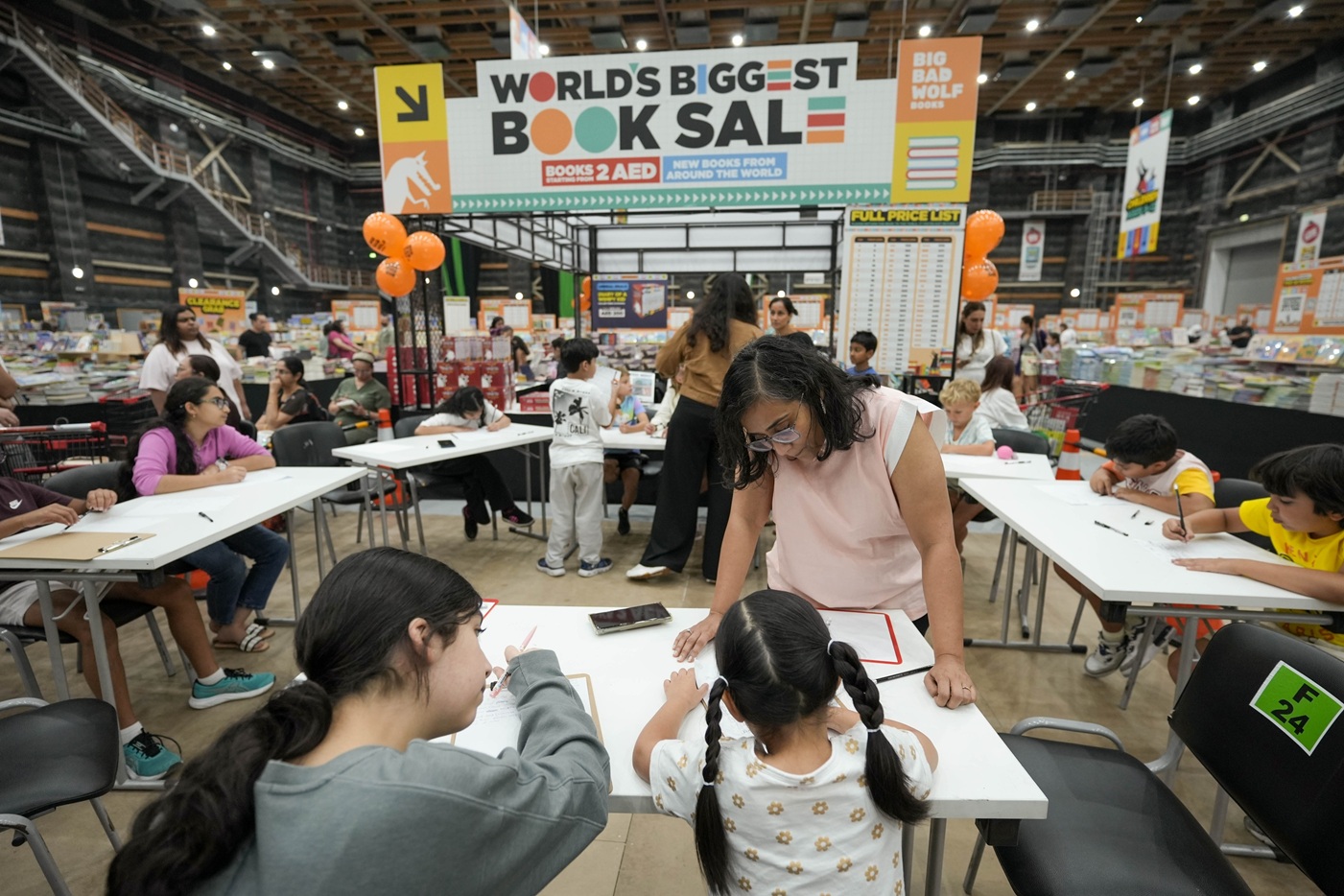
More than one million books lined the halls of Dubai Studio City when Big Bad Wolf Books closed its doors on 18th March, capping what organisers called the highest attendance in the event’s history. The warehouse-style sale ran for days under a theme borrowed from contemporary anxiety: “beyond noise.”
Families came early. Many stayed for hours.
Andrew Yap, who co-founded the Malaysia-based operation in 2009, watched the numbers climb throughout the fortnight. “We are happy to deliver a remarkable showcase this time with the highest participation in the history of the Big Bad Wolf,” he said following the final day. “This year’s edition placed renewed emphasis on reading as a tool for focus, learning, and personal growth in an increasingly distracted world. Beyond the scale of the sale, the event underscored the role of books in shaping creativity, encouraging expression, and building lasting reading habits.”
The specific attendance figure wasn’t disclosed. But the claim marks a notable achievement for a book fair competing in an era when screen time dominates leisure hours and e-readers offer instant access to millions of titles.
What drew attention wasn’t just the scale. Tucked between the stacks, a 48-hour playwriting experiment called STAGE WRITE 2026 challenged participants to craft original short plays from scratch over a single weekend. The winning script will be staged at X Fest 2026 in collaboration with The Junction, transforming a reader’s response into live performance. It’s the kind of initiative that positions the event as more than retail therapy for bibliophiles.
“Reading is where ideas begin, but what’s equally important is what people choose to do with those ideas,” Yap explained. “Programmes like STAGE WRITE at the book fair initiated that next step, encouraging people to create, express, and share their voices. When a story moves from the page to a live performance, it shows how powerful reading can be as a starting point for creativity and real-world impact.”
That transition—from consumption to creation—has become central to how Big Bad Wolf differentiates itself from online retailers like Amazon and Book Depository, which dominate convenience but can’t replicate the physical browsing experience or community-building workshops.
The purchasing patterns revealed telling priorities. “The preferences of this year’s attendees highlighted a strong inclination towards both early learning and leisure reading,” Yap noted. “Families showed particular interest in children’s board books and activity books, reflecting a growing focus on building reading habits early and reducing screen time. At the same time, fiction and young adult titles saw high engagement, especially among teenagers and young professionals gravitating towards contemporary and popular reads.”
Parents weren’t arriving with Amazon wish lists translated to paper. Yap observed something closer to exploration. “Overall, the diversity of the offering encouraged readers to explore across genres, with many visitors actively discovering new titles and building personal libraries rather than shopping with a fixed list,” he said.
The pricing model removes the usual guilt associated with impulse book purchases. Volumes start at AED 2—roughly 40 pence—with discounts reaching 95% on selected titles. A dedicated Bargains Section curates what the organisers describe as “hidden gems, nostalgic favourites, and accessible gifting options,” though cynics might call it overstock clearance dressed up with appealing language.
Still, the economics matter. For families in Dubai, where international school fees can exceed £20,000 annually and entertainment costs run high, the ability to build a home library for the price of a few cinema tickets represents genuine value. The model has allowed Big Bad Wolf to expand across 55 cities in 17 countries since launching in Malaysia, including recent pushes into Egypt and Saudi Arabia.
Workshops ran throughout the event, pulling visitors away from the retail floor into storytelling sessions and guided writing exercises. “We offered visitors opportunities to engage more deeply with stories,” Yap said. “From guided writing sessions to live storytelling experiences for young adults and adults alike, these programmes reinforced reading as an interactive and shared experience rather than a solitary activity.”
The approach contrasts with traditional book fairs that focus primarily on author signings and panel discussions. By lowering barriers to participation—both financial and creative—Big Bad Wolf positions itself as accessible to casual readers rather than literary insiders.
Whether the event genuinely shifts reading habits or simply offers a brief retail diversion remains unclear. The organisers claim the impact “extends beyond the venue, reflected in renewed reading habits, creative exploration, and a growing community of readers.” Measuring such outcomes proves difficult, though the repeat attendance and expanding global footprint suggest the formula resonates.
For now, the Dubai Studio City warehouse sits empty again. The million books have dispersed into homes, offices, and backpacks across the emirate. Some will be read immediately. Others will join the precarious towers of good intentions that populate bedside tables worldwide.
The STAGE WRITE winner, meanwhile, begins the work of turning 48 hours of frantic creativity into something that can hold an audience’s attention under stage lights. That journey—from reader to writer to performed work—represents the ambition at the heart of the event.
Yap and co-founder Jacqueline Ng built the operation on a straightforward premise: remove price as an obstacle and more people will read. Seventeen years and 17 countries later, the model keeps drawing crowds willing to navigate warehouse floors in search of their next book.
The next edition will likely arrive in another city, another warehouse, another attempt to create temporary literary communities in spaces normally reserved for logistics and storage. The organisers show no signs of slowing their expansion, despite the challenges facing physical retail and the convenience of digital alternatives.
By the time X Fest 2026 arrives, the winning play will have moved from concept to rehearsal to opening night. The audience may not know the script emerged from a book fair. But the writer will remember the 48-hour deadline, the surrounding stacks of stories, and the moment reading became something more active than turning pages.
