
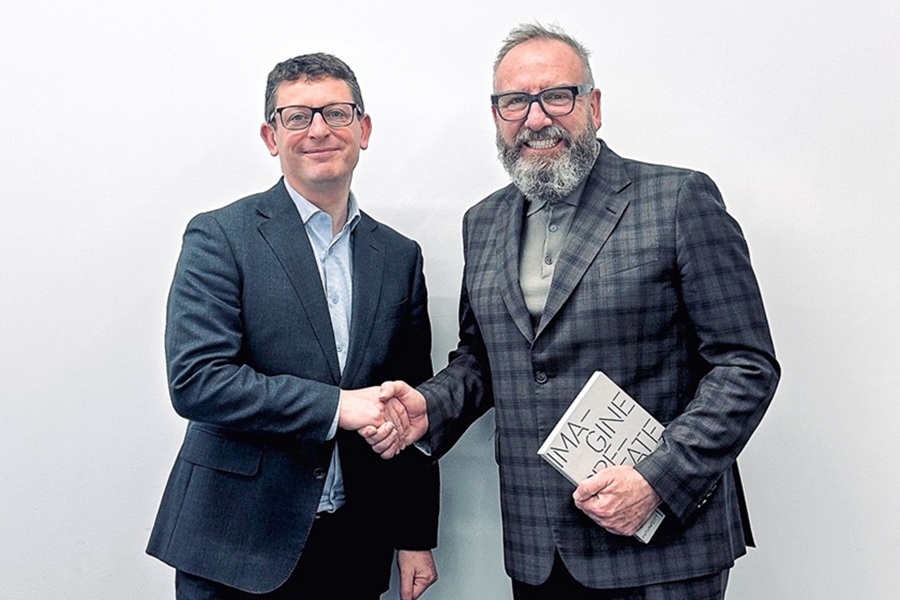
AtkinsRéalis and Futurecity signed their partnership agreement on 24 March at MIPIM 2026 in Dubai. Within hours, the two firms had begun outlining plans for the Futurecity Lab, a joint research platform designed to feed cultural intelligence directly into engineering and masterplanning projects across the Gulf.
The memorandum of understanding pairs a global design and engineering firm with roots stretching back to 1911 with a London-based cultural placemaking agency that has shaped more than 400 projects since 2007. Together, they’re betting that the next wave of Middle Eastern urban development will reward projects that embed cultural identity from the earliest design stages.
The lab will focus initially on the Middle East, where governments have poured billions into cultural infrastructure over the past five years. Saudi Arabia, the UAE, and Qatar have all positioned arts and culture as pillars of economic diversification strategies, creating demand for firms that can translate cultural ambition into built environments.
Matthew Tribe, senior vice president for buildings and places at AtkinsRéalis, acknowledged the shift. “This collaboration brings cultural depth into the core of major development programmes,” he said. “Working with Futurecity strengthens our ability to help clients create destinations with clear identity, long-term value, and a meaningful sense of place. Across the Middle East and other fast-evolving markets, this combined expertise allows us to support governments and developers in delivering projects that resonate with people and stand out globally.”
Futurecity has operated in the Middle East since 2016, working on strategies for Red Sea Global, Diriyah City of Earth, King Abdullah Financial District, and the Riyadh Art-Noor Festival. The firm cut its teeth on European projects including Battersea Power Station, Wembley Park, and Canary Wharf, where it advised on integrating cultural programming into mixed-use developments.
For AtkinsRéalis, the partnership addresses a gap in its service offering. Engineering and architecture firms increasingly compete on their ability to deliver not just functional buildings but destinations with character and economic staying power. Cultural strategy—once an afterthought—now influences investment decisions, tourism revenue, and long-term asset values.
The Futurecity Lab will generate research, cultural foresight, and market intelligence intended to inform AtkinsRéalis projects from conception through delivery. The two organisations will operate through integrated bid and delivery teams, embedding cultural advisors alongside engineers and architects.
Mark Davy, chief executive and founder of Futurecity, framed the model as a departure from conventional development practice. “Futurecity and AtkinsRéalis have created a unique partnership that sets a new approach to city-making,” he said. “By embedding culture-led placemaking into masterplanning and strategic work from the outset, we offer a groundbreaking service shaping the next generation of urban developments. Across the Middle East, where significant investment in the arts is reshaping national transformation agendas, we support governments and developers in delivering culturally distinctive places designed for lasting value.”
The agreement reflects broader momentum in the placemaking sector, where cultural consultancies have moved from peripheral advisory roles to core positions in major developments. As creative districts and experience-led destinations increasingly drive tourism and real estate values, developers have sought partners who can articulate cultural vision alongside technical delivery.
The Middle East focus carries strategic logic. The region has emerged as one of the world’s most active construction markets, with governments commissioning cultural quarters, museum districts, and creative hubs as part of post-oil economic planning. Projects compete not just on scale but on their ability to attract international visitors and position cities as cultural capitals.
By pairing Futurecity’s track record—spanning the UK, Europe, Asia, Australia, and North America—with AtkinsRéalis’ engineering capabilities, the partnership targets clients seeking integrated services. Rather than hiring separate firms for masterplanning, engineering, and cultural strategy, developers can access all three through coordinated teams.
The organisations plan to refine their methodology and develop proprietary tools as the partnership matures. While the initial focus remains on the Middle East, both firms indicated intentions to expand the model into other fast-growing markets where cultural identity has become central to urban development.
For now, the Futurecity Lab will begin assembling data on cultural trends, visitor behaviours, and programming models across Gulf cities. That intelligence will feed into live projects as the integrated teams bid for work across the region.
The MIPIM signing offered a high-profile platform to announce the deal. The annual property conference draws thousands of developers, investors, and public sector clients—precisely the audience both firms aim to reach with their combined offer.
Whether the model gains traction will depend on its ability to demonstrate measurable impact on project outcomes. Cultural strategy remains difficult to quantify, even as its influence on development success grows clearer. The lab’s research function may help bridge that gap, providing evidence that cultural investment translates into economic performance.
The partnership also positions both organisations to respond to procurement trends, as governments increasingly require cultural impact assessments and placemaking strategies alongside engineering and design deliverables. Having those capabilities in-house eliminates coordination friction and accelerates delivery timelines.
As Middle Eastern cities compete to differentiate themselves in a crowded field of ambitious developments, the firms are betting that cultural distinctiveness will separate successful projects from expensive failures. The next 18 months will test whether integrated teams can deliver on that promise—and whether other engineering firms follow AtkinsRéalis into formal partnerships with cultural specialists.
