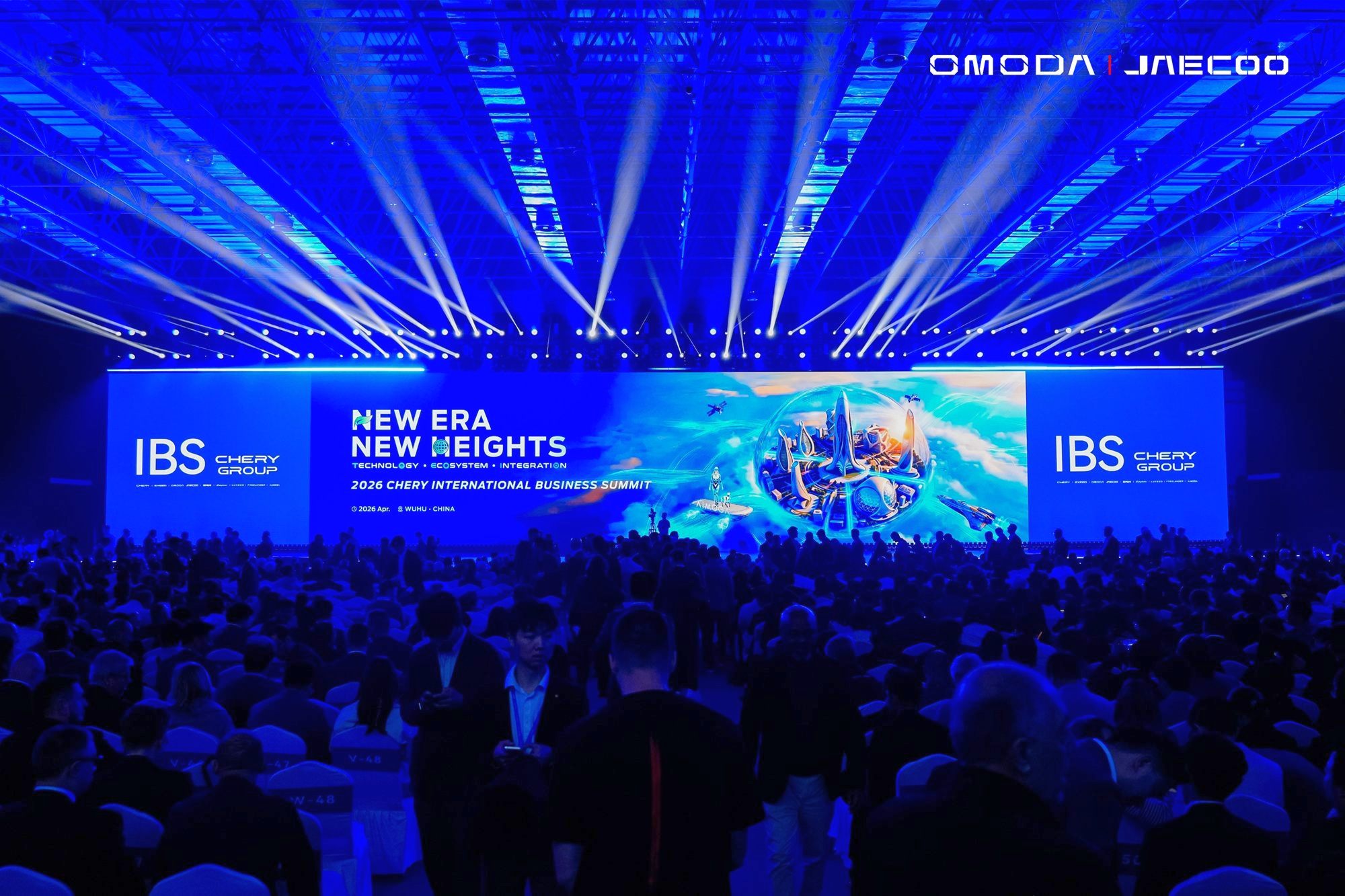
OMODA & JAECOO crossed one million global sales on 1 May 2026, exactly three years after launching. The Chinese automotive brand now operates 1,364 showrooms across 69 markets—adding one every single day.
That pace of expansion, rare even among established manufacturers, formed the backdrop to a 4,000-person summit in Wuhu, China last week. The gathering doubled as both a business conference and something decidedly unusual for a car brand: a multi-day music festival featuring 26 performances from artists spanning 18 countries.
The combination signals where OMODA & JAECOO sees its competitive edge. Not in engine specifications or price wars, but in cultural positioning aimed squarely at younger buyers who view cars as lifestyle accessories rather than mere transport.
“Reaching one million global users in just three years is not only a milestone of scale, but a testament to the trust and co-creation of young users around the world,” said Shawn Xu, CEO of OMODA & JAECOO Automobile International. “As we move towards our next phase, our focus remains on delivering intelligent, stylish, and user-driven mobility solutions that resonate deeply with the next generation, including fast-growing markets like the UAE.”
The numbers tell a story of aggressive international expansion. OMODA & JAECOO sold just 10,000 vehicles cumulatively by March 2023. By March 2026, monthly sales alone had reached 60,000 units. The brand enters a new market every 16 days on average.
That growth rate outpaces most automotive newcomers of the past decade. For context, Tesla took roughly five years to reach its first million vehicles produced, though comparisons are complicated by manufacturing constraints the American company faced during its early years. OMODA & JAECOO, backed by parent company Chery International, benefited from existing manufacturing infrastructure and distribution networks.
Europe has emerged as a testing ground for whether the brand can compete beyond emerging markets. In March, the JAECOO 7 ranked among the UK’s top-selling vehicles, though the company declined to provide specific sales figures or rankings. What stands out: 65 per cent of its UK sales came from New Energy Vehicles—either hybrid or fully electric models.
That statistic matters in a market where emissions regulations tighten annually and where European legacy manufacturers have stumbled in their electric transitions. Chinese brands, led by BYD and now including upstarts like OMODA & JAECOO, have capitalised on hesitation from established players.
The Wuhu summit showcased hardware the brand hopes will differentiate its next product cycle. A system called VPD—Valet Parking Driver—handles autonomous parking without a driver present. An AI-powered cabin system learns driver preferences and adjusts controls accordingly. The OMODA 4, which completed its roll-off ceremony during the event, will carry some of these features when it reaches showrooms later this year.
Whether such technology justifies premium pricing remains an open question. Chinese automotive brands have typically competed on value, undercutting established manufacturers by thousands of pounds per vehicle. Moving upmarket requires not just better specifications but brand perception—hence the music festival, the emphasis on youth culture, the rhetoric about “co-creation.”
During the summit, OMODA & JAECOO paraded global customers on stage to share testimonials. The company frames this as evidence of its user-centric development process, though such presentations are standard fare at automotive launches worldwide.
What distinguishes the approach is how thoroughly the brand has woven lifestyle messaging into its market positioning. Most manufacturers nod toward younger buyers. Few host multi-day music festivals as product launches.
The strategy aligns with UAE demographics, where the median age sits well below European averages and where early adoption of technology runs high. OMODA & JAECOO has made the Gulf state a focal point of its Middle Eastern expansion, though it hasn’t yet disclosed sales figures or showroom counts for the region.
The brand’s next target: shifting from one million cumulative sales to one million annual sales. That would require roughly doubling current monthly output and sustaining that pace across 12 months—ambitious for a three-year-old nameplate entering increasingly crowded markets.
Traditional manufacturers aren’t standing still. Volkswagen, Toyota, and other established players have accelerated electric vehicle rollouts and slashed prices in key markets to defend share. Tariff discussions in Europe and North America threaten to raise costs for Chinese imports. Brand loyalty, particularly in premium segments, favours names with decades of history.
Yet the speed of OMODA & JAECOO’s first three years suggests momentum that could carry through near-term headwinds. A new showroom every day. A new market every 16 days. Ten times growth in monthly sales across 36 months.
By comparison, most legacy manufacturers consider a successful international launch to be five to seven markets in year one.
The company plans continued investment in both product technology and what it calls its “lifestyle mobility ecosystem”—a phrase that essentially means selling cars to people who attend music festivals and value Instagram aesthetics as much as boot space.
Whether that positioning translates to sustained sales growth will become clear over the next 12 months. The brand has proven it can scale quickly. The harder test is whether it can maintain that pace as markets saturate and competition intensifies.
For now, the 4,000 partners who gathered in Wuhu seemed willing to bet on continued expansion. So too the buyers across 69 markets who’ve purchased vehicles in the brand’s first three years.
The next million will reveal whether OMODA & JAECOO’s youth-focused, technology-forward approach represents a genuine shift in automotive marketing—or simply a well-executed launch phase that proves harder to sustain at scale.