
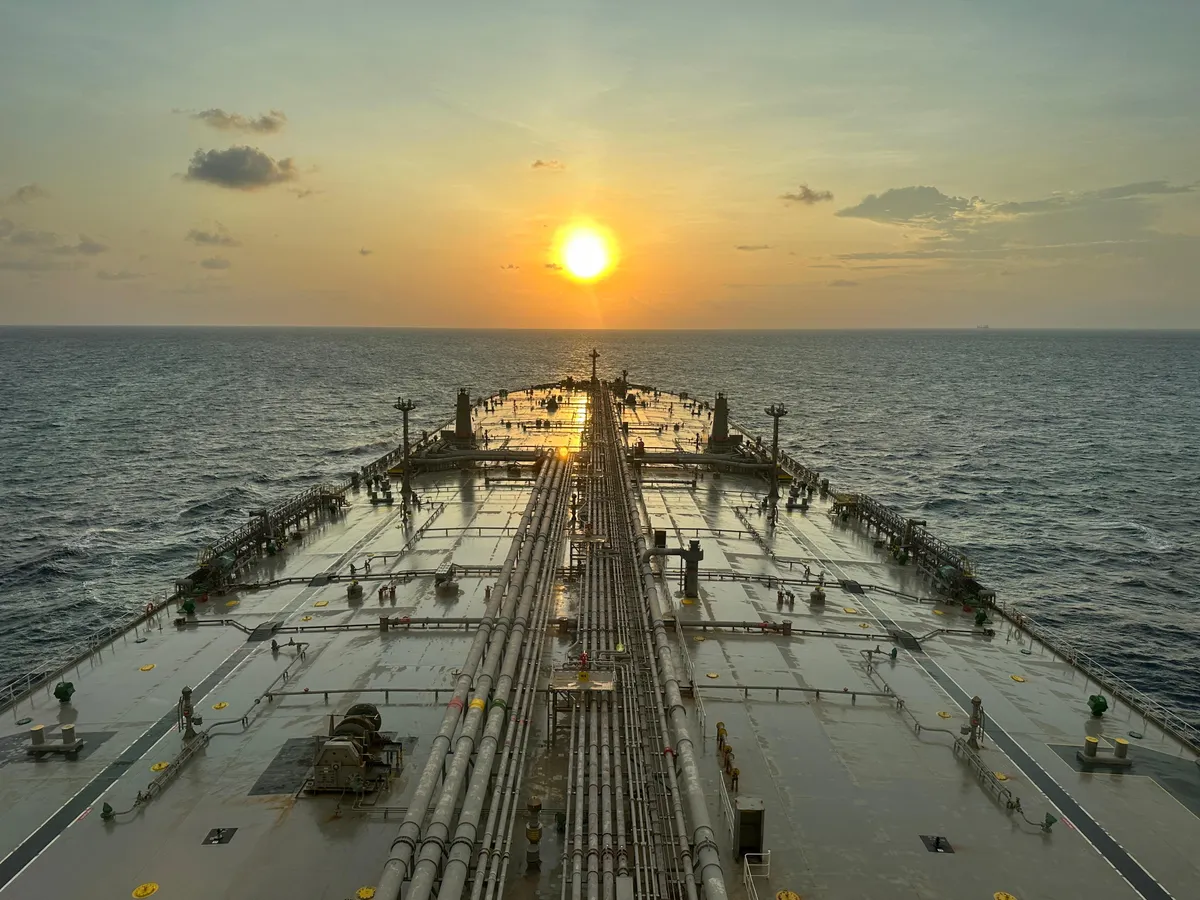
An Adnoc vessel was attacked while transiting the Strait of Hormuz on the evening of 14 August, the third such incident targeting the company’s ships in the waterway in roughly a week. No injuries were reported, and Adnoc said the situation had been brought under control.
The attack followed two separate incidents on 13 August, when Adnoc confirmed that two of its ships were targeted while crossing the strait, again without injury. Earlier, on 8 August, one of the company’s vessels was struck by a missile in the early hours while transiting the same route, also without casualties.
In a statement on 14 August, the UAE Ministry of Foreign Affairs described the assault on the two Adnoc vessels as a ‘hostile Iranian attack’ and characterised targeting commercial shipping and using the strait as a tool of economic coercion as ‘acts of piracy by Iran’s Revolutionary Guard Corps’. The ministry called on Iran to halt what it termed unprovoked attacks and to ensure the complete and unconditional reopening of the Strait of Hormuz.
Adnoc vessel Strait of Hormuz attacks in wider context
The August incidents are not isolated. On 4 May, the UAE MoFA condemned a separate Iranian drone attack on a national carrier affiliated with Adnoc as it transited the strait, with no injuries reported in that incident either.
Before the August wave of attacks, an Adnoc statement on 7 August noted that incidents since the beginning of the conflict had resulted in one fatality and 20 injuries among crew members. The fatality occurred on 14 July, when two crude oil tankers, Al Bahyah and Mombasa B, were struck by projectiles while transiting the strait.
Adnoc said as of 7 March it was routing exports through capacity that bypasses the Strait of Hormuz and using its international storage facilities to maintain supply continuity to global markets, according to a statement carried by the Emirates News Agency (WAM).
International response and UN resolution
UN Security Council Resolution 2817, adopted on 12 March 2026 and co-sponsored by a record 136 countries, condemned in the strongest terms Iran’s missile and drone attacks against the UAE and neighbouring states and determined they constituted a breach of international law. It demanded that Iran immediately and unconditionally cease all provocations, including through proxies.
A subsequent draft resolution aimed at coordinating defensive efforts to secure freedom of navigation failed to pass. The UAE MoFA expressed disappointment at that outcome, noting the clear message that regional countries are not parties to broader conflicts and must not be drawn into them.
On 19 March 2026, the International Maritime Organization Council issued a decision condemning Iranian threats and attacks on commercial vessels in and around the strait, co-sponsored by more than 115 IMO member states, which the UAE MoFA described as the highest number ever for such a decision. The IMO demanded Iran refrain immediately from any actions aimed at closing or obstructing the waterway, a statement welcomed by the UAE MoFA.
A joint statement co-signed by the leaders of the United Kingdom, France, Germany, Italy, the Netherlands, Japan, Canada and others also called on Iran to cease its threats, mine-laying, and missile and drone attacks, and to comply with Resolution 2817, published on the UAE MoFA’s joint statement page.
Egypt, Jordan, Qatar, Bahrain, Kuwait and Saudi Arabia have each condemned the repeated targeting of vessels in the strait. Adnoc said it urged the public to rely only on official sources and to avoid circulating unverified information.
The MoFA’s August 14 condemnation reiterated the call for Iran to comply with Resolution 2817, which affirmed both freedom of navigation and, under Article 51 of the UN Charter, the right of self-defence in response to the attacks.
