
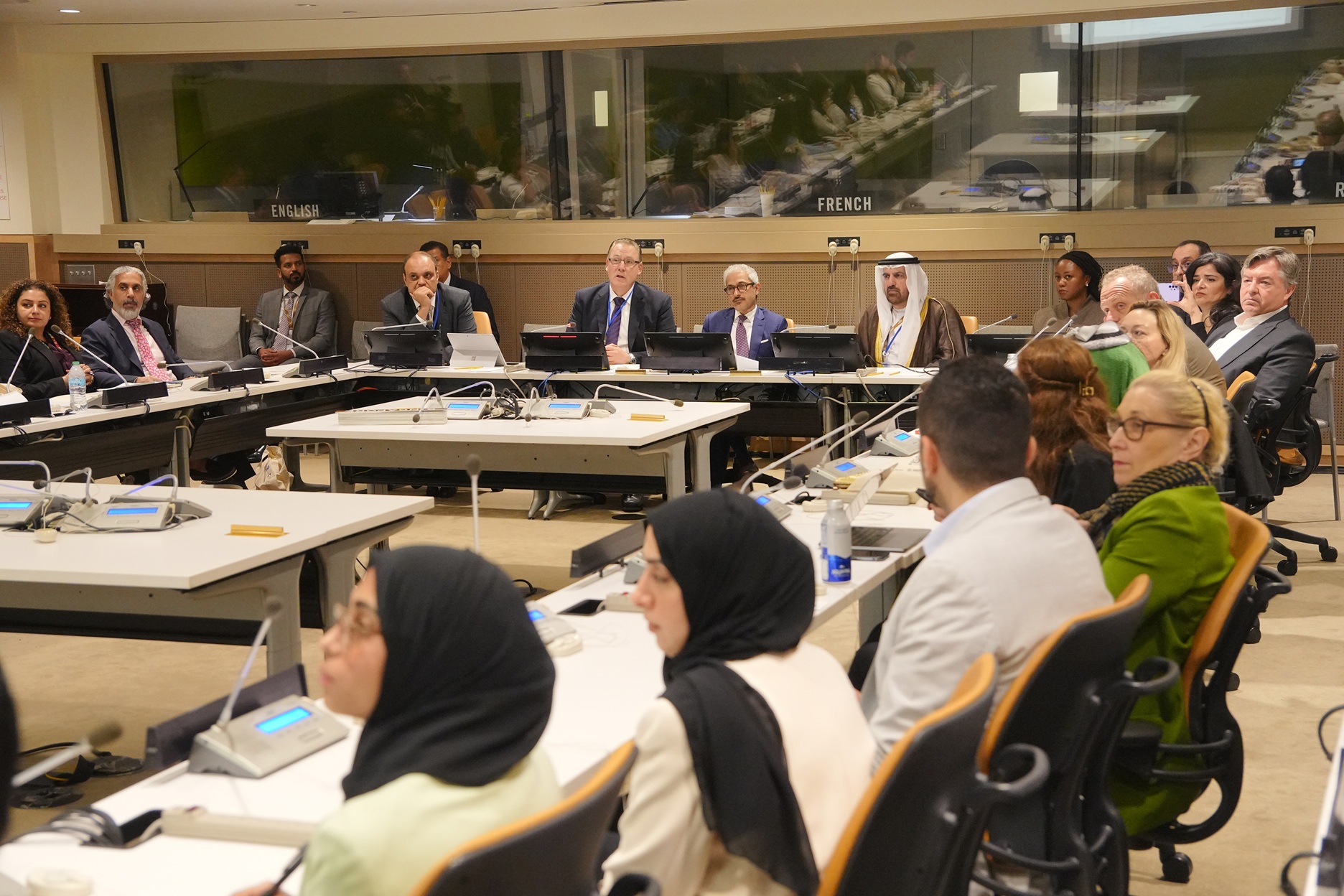

A high-level gathering held on the sidelines of the 80th session of the United Nations General Assembly (UNGA 80) highlighted the vital contribution of knowledge-driven tools and monitoring indices in driving progress towards the 2030 Agenda for Sustainable Development.
The event, jointly organised by the Mohammed bin Rashid Al Maktoum Knowledge Foundation (MBRF), the United Nations Development Programme (UNDP), and the Permanent Mission of the United Arab Emirates to the United Nations, brought together senior government officials, knowledge leaders, and strategic partners. Discussions focused on the opportunities and challenges confronting the Arab region amid economic transformation, technological disruption, climate change, and a rapidly growing youth demographic.
The session was formally opened by Their Excellencies Jamal bin Huwaireb, CEO of MBRF; Dr Abdullah Al Dardari, UN Assistant Secretary-General and Director of the Regional Bureau for Arab States at UNDP; and Mohamed Abushahab, Permanent Representative of the UAE to the UN. In their keynote remarks, the speakers underscored the urgency of adopting innovative frameworks and developing next-generation indices to equip future-ready skills and promote inclusive, sustainable development. They also called for deeper collaboration at regional and international levels to ensure that no community is left behind.
His Excellency Jamal bin Huwaireb stated: “There is a pressing need to exchange knowledge and expertise across countries and institutions. This will certainly empower the Arab region to address its growing challenges and seize the immense opportunities for innovation and growth presented by today’s technological revolution.”
H.E. added: “Our work at MBRF, in close collaboration with our strategic partner, UNDP, shows that investing in precise knowledge indices and standards, including the Global Knowledge Index (GKI) and future foresight reports, is key to helping governments and policy-makers craft impactful strategies for knowledge-based economies. The success of the ‘Future Skills Academy’ initiative is a testament to this approach, having equipped thousands of young Arabs with the essential skills through thousands of educational programs. The initiative not only fosters a culture of lifelong learning but also enhances the readiness of upcoming generations for a fast-evolving job market. Our partnership with UNDP underscores our shared commitment to transforming knowledge into a practical pillar of development, empowering our societies to achieve sustainable competitiveness globally.”
Dr Abdullah Al Dardari said: “With just five years remaining until the deadline of the 2030 Agenda for Sustainable Development, the Arab region must urgently intensify its efforts to meet the goals. We hope this event will help align our collective efforts towards transforming data, skills, and innovation into actionable solutions for building inclusive, sustainable, and resilient societies. We are proud to collaborate with our partners to ensure that the perspectives and voices of youth, women, and local communities, who are often overlooked, play a central role in shaping a more inclusive and equitable future, not only for the Arab region, but globally.”
Mohamed Abushahab commented: “The UAE’s experience shows that investing in people, skills, and knowledge is the key to lasting progress and the achievement of the 2030 Agenda for Sustainable Development. Strong global partnerships are essential to this effort, which is why we, like UNDP and MBRF, work to help countries close knowledge gaps, empower youth, and design data-driven and innovative policies that turn today’s challenges into opportunities for future generations.”
The discussions centred on three priority areas: advancing knowledge policies; building capacity and strengthening future skills frameworks to speed up delivery of the Sustainable Development Goals (SDGs); and improving data-based monitoring systems, developmental indicators, measurement tools, and reporting mechanisms. Participants also reviewed the progress of the Future Skills Academy, which in its first phase has supported 10,000 Arab citizens in enhancing their skills through more than 15,000 educational programmes, delivering over 114,000 hours of learning. A further 13,000 learners across the region are currently participating in initiatives to build future-ready skills, preparing them for an evolving labour market increasingly driven by competitive skills rather than traditional academic credentials.
The event concluded by stressing the importance of regional ownership and the alignment of knowledge tools and capacity-building strategies with local priorities. It further highlighted the need for cross-sectoral integration to advance a sustainable and inclusive future for the Arab world and beyond. As part of this effort, it was announced that the 10th edition of the ‘Knowledge Summit’ will be held in Dubai on 19–20 November 2025 under the theme ‘Knowledge Markets: Developing Sustainable Communities’. Celebrating a decade since its launch, the Summit reaffirms its role as a global forum for dialogue and knowledge exchange, exploring the role of knowledge in shaping policy, driving sustainable development, and empowering individuals and communities.