
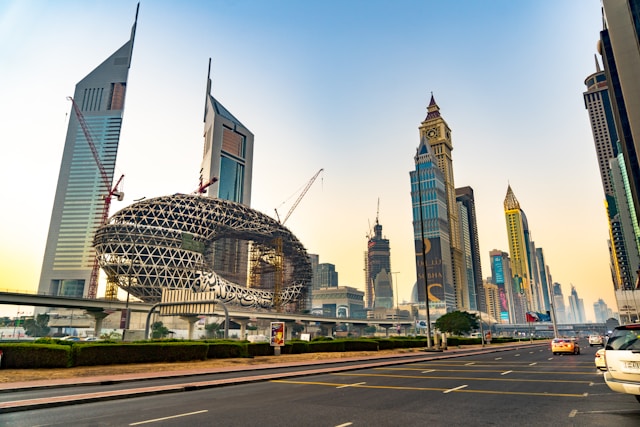
Dubai is no longer just a travel destination or a luxury skyline—it has become a living experiment of how modern cities evolve when ambition, technology, and global culture collide. In 2026, it stands as one of the clearest examples of a place where lifestyle, business, and innovation merge into a single ecosystem. What makes it fascinating is not just the architecture or wealth, but how deeply everyday life here is shaped by global trends that are quietly redefining the world.
A city where mornings are engineered for performance
In Dubai’s fast-moving professional culture, mornings are no longer casual—they are strategic. Entrepreneurs, remote workers, and high-income professionals increasingly design their mornings around energy optimization rather than comfort. Light exercise, hydration, sunlight exposure, and intentional digital silence are becoming common habits among people who want to stay competitive in a high-performance environment. This shift toward structured, science-backed routines reflects a global movement toward better productivity and mental clarity, similar to modern approaches explored in discussions about health-focused daily systems like Morning Habits That Improve Health Naturally. In Dubai especially, mornings are less about routine and more about setting the tone for financial and personal output.
Artificial intelligence is quietly powering Dubai’s lifestyle
Dubai’s ambition to become a smart city is no longer theoretical—it is already visible in how residents interact with technology daily. AI tools are being used across business planning, customer service, content creation, and even personal organization. Many professionals rely on conversational AI systems to streamline decisions, reduce workload, and accelerate productivity in fast-paced industries. This reflects a broader global shift where AI is becoming an invisible assistant in everyday life, similar to real-world examples of how people integrate it into daily workflows described in resources like How People Use ChatGPT in Daily Life. In Dubai, this adoption is even more aggressive because efficiency is directly tied to opportunity.
Success culture in Dubai mirrors extreme entrepreneurial discipline
Dubai attracts a very specific mindset: builders, investors, and ambitious professionals who operate on speed and scale. The culture strongly rewards discipline, focus, and execution over long planning cycles. Many entrepreneurs in the city follow structured routines inspired by global high-performance figures, where consistency and time optimization are non-negotiable. This mindset aligns closely with modern success frameworks seen in studies of elite entrepreneurs and their habits, such as those discussed in breakdowns of billionaire-level discipline like Success Habits of Billion-Dollar Founders. In Dubai, success is less about ideas and more about how quickly those ideas turn into systems and revenue.
Technology consumption reflects global market shifts even in Dubai
The smartphone and consumer tech market in Dubai is extremely sensitive to global trends, especially when it comes to value, performance, and brand reliability. Interestingly, there has been a growing preference for practical devices over overly complex flagship ecosystems, with some legacy brands regaining attention due to improved usability and clean software experiences. This reflects broader shifts in global smartphone behavior where consumers prioritize long-term usability over hype, similar to trends discussed in analyses like Motorola Phones Making a Comeback. In a city like Dubai, where professionals depend heavily on mobile devices, reliability often matters more than branding.
Dubai as part of a global network of “super cities”
Dubai is often compared with other global hubs like New York because both cities operate as cultural and economic magnets that shape global perception. While New York represents legacy influence in finance and media, Dubai represents rapid modern transformation built in a relatively short time. Travelers and professionals often evaluate cities not just by lifestyle but by opportunity density, infrastructure, and energy. This comparison between global urban centers reflects why cities like New York still feel uniquely powerful, as explored in discussions such as Why New York City Still Feels Exciting. Dubai fits into this category of cities that define ambition rather than just geography.
Cricket and global entertainment culture thrive in the UAE
Dubai has also become an important global hub for cricket, hosting major international matches, leagues, and tournaments that attract global audiences. The sport has evolved into a worldwide entertainment system rather than a regional game, driven by streaming platforms and international fanbases. In places like Dubai, cricket is not just sport—it is a cultural event that connects expatriate communities and global audiences. This rising popularity is part of a broader transformation of the sport worldwide, as highlighted in discussions like Why Cricket Is One of the Most Popular Sports. The UAE’s role in hosting and scaling these events has made it a central node in global sports culture.
Behind the scenes, industries in Dubai are becoming fully digital
What most visitors don’t see is how deeply digital transformation is embedded in Dubai’s financial and service systems. Insurance, banking, logistics, and real estate are all rapidly adopting AI-driven decision systems and predictive analytics. This reduces friction, improves speed, and increases accuracy in industries that traditionally relied on manual processes. Similar transformations are happening globally in sectors like insurance, where informatics and automation are reshaping operations, as explained in examples such as How Technology Transforms Insurance Systems. Dubai simply accelerates these shifts due to its innovation-first policies.
Remote work has turned Dubai into a global magnet for digital nomads
One of the most noticeable shifts in Dubai’s modern identity is the rise of remote workers and digital nomads. People are no longer tied to offices, and Dubai’s infrastructure, connectivity, and lifestyle make it a natural hub for location-independent professionals. This change is part of a larger global restructuring of how work is defined, where productivity matters more than physical presence. The transformation of professional life through remote systems is explored in depth in discussions like Remote Work Trends Changing Professional Life. Dubai benefits from this shift more than most cities because it actively attracts global talent.
Even ancient innovation patterns echo in modern Dubai growth
Although Dubai feels ultra-modern, many of its development principles echo ancient trade and innovation systems. Historically, the region was part of global trade routes where logistics, navigation, and early engineering ideas shaped economic power. The idea that civilizations were technologically advanced in their own context is not new, and many foundational concepts still influence modern systems today. This long arc of innovation is explored in discussions about early engineering breakthroughs and forgotten technologies in resources like Ancient Technologies Ahead of Their Time. Dubai, in many ways, is a modern continuation of that same trade-driven innovation mindset.
Final thought: Dubai is not just a city—it’s a system
What makes Dubai unique in 2026 is not one feature, but the way everything connects. Lifestyle, technology, business, sports, and global culture all operate in sync. It is a place where global trends don’t just appear—they get amplified. And as the world continues to evolve, Dubai is positioning itself not just as a participant in the future, but as one of its main architects.
