
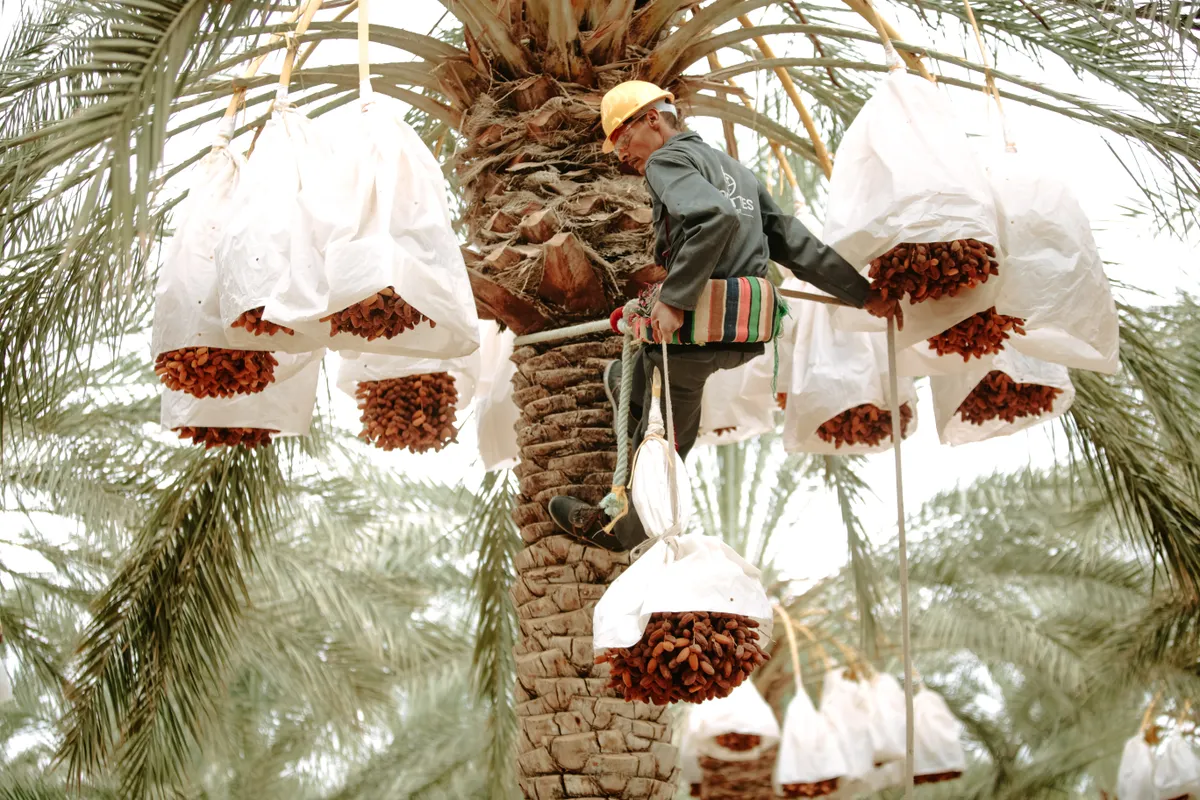
Two senior Emirati women have described the central roles Emirati women’s roles in family and farm life played long before formal employment became widespread, speaking at a heritage event in Ras Al Khaimah that brought together reflections across generations.
Maryam Saeed, a member of the Shamal Arts, Heritage and Theatre Association, and Aisha Hamoud Rashid Al Ghafri, from the Emirates Association for Parents’ Welfare and Honor, shared their recollections at the Emirati Women’s Day event ‘The Mark She Makes’. The event was hosted by the Al Qasimi Foundation in collaboration with Anantara Mina Ras Al Khaimah Resort.
The Al Qasimi Foundation (formally the Sheikh Saud bin Saqr Al Qasimi Foundation for Policy Research) was established in 2009 by Emiri decree to support the social, cultural and economic development of Ras Al Khaimah.
Emirati women’s roles in family survival during men’s absences
Both women recalled a period when men were frequently away from home, whether pearl diving or travelling to Kuwait, Saudi Arabia and elsewhere in search of work. Women managed households, raised children and maintained farms and livestock in their absence.
‘They were the mother, the educator and the first and last support,’ Maryam said.
Maryam grew up in both coastal and agricultural environments. She described watching her mother tend livestock, churn dairy products, fetch water and wash clothes, all alongside the routine demands of a large household. Women also spun wool, produced woven items, prepared bedding and assisted in building traditional homes. In agricultural and mountain communities, they maintained palm trees and looked after other shared resources.
Maryam said she began helping her father with livestock from a young age. By nine, she had learned to milk a cow, a skill she said she continues to practise while caring for livestock inherited from her mother.
Al Ghafri grew up around farms and date-palm plantations. She recalled that when men left to dive or travel, women held full responsibility at home and on the land.
‘When the men were away looking for work, whether diving or traveling to places such as Kuwait and Saudi Arabia, women had responsibilities at home and on the farm,’ she said.
During the date harvest, women collected, cleaned, washed and prepared dates and took part in the wider maintenance of the palm plantation. Al Ghafri described accompanying her mother to the family’s palm grove as a child, then continuing the same way of life after marriage, working alongside her husband’s family on crops including tomatoes, onions and peppers, which were harvested and taken to market.
‘There was no rest. Cleaning the house was our responsibility, cooking was our responsibility, and raising the children was our responsibility. We also had work in the palm trees,’ she said.
Women cooked on traditional tannour ovens (cylindrical clay or stone ovens used for baking flatbreads and roasting meat) and produced crafts from palm fronds and wool. Palm-leaf mats were made by hand for use in homes and during prayer. Women would carry infants in cloth slings to the fields so they could work alongside their older children.
Heritage passed to younger generations
The event also heard from Sara Ahmed Al Zaabi, Director General at the Human Resources Department of Ras Al Khaimah Government, who said women make up 90% of that department’s workforce. Al Zaabi said the emirate is expanding family-friendly policies and career development programmes to support Emiratis entering and advancing in employment.
Maryam described herself as a ‘trainer of generations’, teaching students traditional games, crafts and customs and encouraging participation in heritage competitions. She noted that some of the children she taught years ago now have children of their own. The association she belongs to is among the heritage and folklore bodies recognised on the Ras Al Khaimah government portal.
Al Ghafri said education, careers and business should go hand in hand with preserving Emirati identity. ‘Emirati women are strong, and they love to learn. They want to learn from the past and the present,’ she said.
Anantara Mina Ras Al Khaimah Resort has held multiple cultural collaborations with the Al Qasimi Foundation, including for previous Emirati Women’s Day programmes, as part of its broader cultural engagement strategy.
‘If you do not teach your children, what will you pass on to them?’ Al Ghafri said, pressing the importance of carrying heritage forward while embracing modern opportunity.
