

A major upgrade to a widely-used digital safety platform promises to reshape how fire and life safety professionals access and apply critical codes and standards, with artificial intelligence at its core.
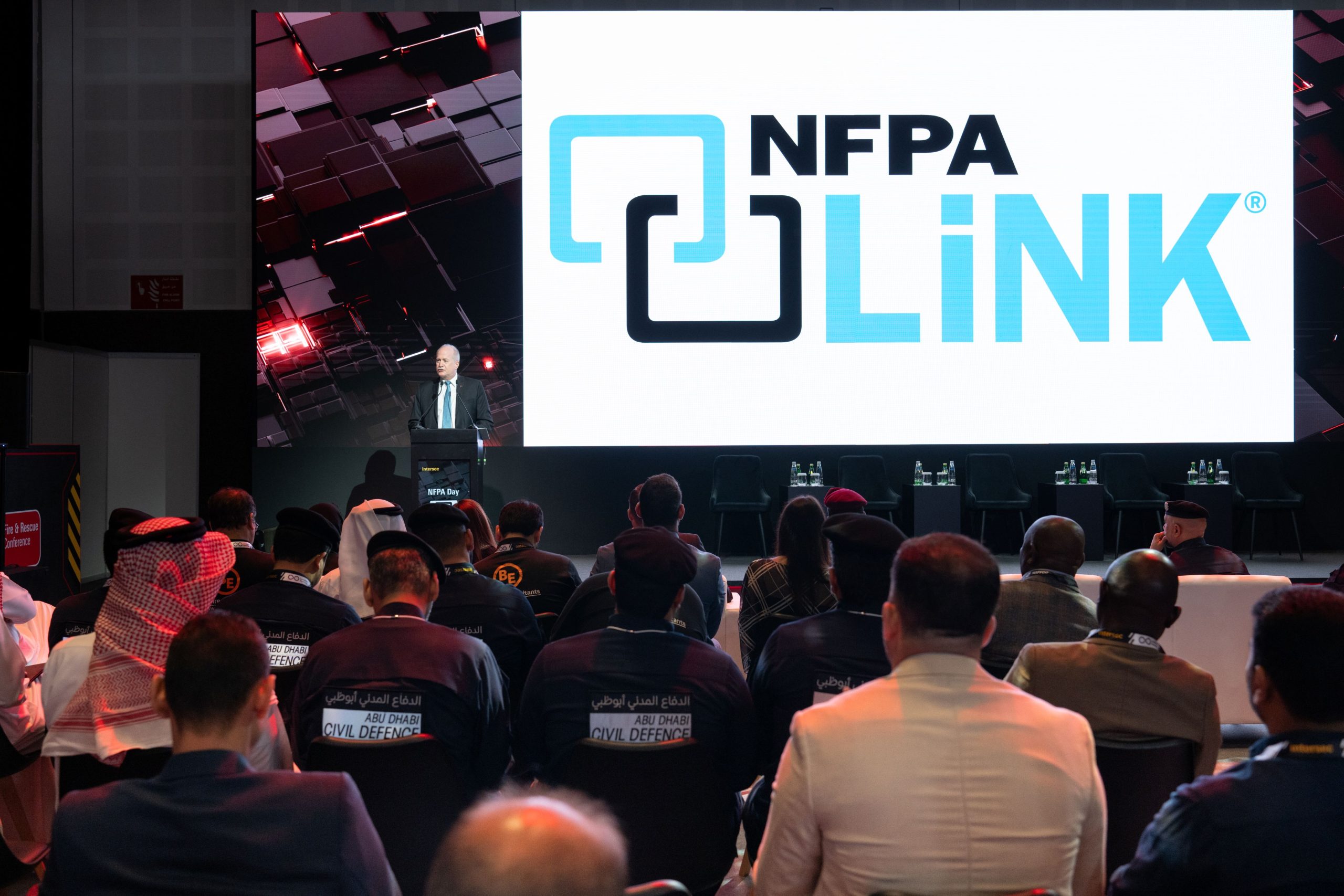
The National Fire Protection Association (NFPA) has rolled out NFPA LiNK 3.0, marking what officials describe as a fundamental shift from a simple reference tool to an intelligent career companion for safety practitioners worldwide. The announcement came during Intersec Dubai 2026 on 13 January, where the organisation hosted its annual NFPA Day programme.
At the heart of the upgrade sits CASI – Codes and Standards Intelligence – an AI-powered assistant designed to help users navigate NFPA’s extensive library of more than 300 codes and standards. Rather than requiring professionals to manually search through vast quantities of technical documentation, the system enables conversational queries and delivers summarised responses with proper citations.
Jim Pauley, NFPA president and CEO, emphasised the transformative nature of the release. “We couldn’t be prouder to launch the new AI-powered enhancements in NFPA LiNK with CASI(tm) here at Intersec Dubai during NFPA Day. This new version is a game-changer that takes NFPA LiNK from being a reference tool to a career companion for professionals across the world. It brings intelligence, accessibility, and speed to finding the latest codes and standards, helping people apply safety more effectively wherever they are. And with the inclusion of CASI, our new AI-powered assistant, users can trust the information they are getting, because it’s grounded in official NFPA information and resources that define safety. Our participation in Intersec Dubai 2026 and the launch of this new version of NFPA LiNK bolsters our dedication to helping raise the bar for fire, life, and electrical safety across the region,” said Pauley.
The subscription-based platform now incorporates several practical features beyond the AI assistant. Users can create customisable interactive notebooks within the system, allowing them to import images, insert code references, add text and build checklists – keeping all project-related work centralised. A redesigned dashboard lets professionals organise information according to their specific workflows.
CASI maintains complete chat histories, enabling users to reference previous conversations whilst viewing relevant documentation side-by-side. The system grounds all responses in official NFPA content, addressing concerns about AI reliability that have emerged across various industries.
The choice of venue for the launch reflects the Middle East’s growing importance in safety technology adoption. Eng. Dana Kamal, NFPA MENA director of International Business Development, highlighted the region’s leadership position.
“The introduction of the latest version of NFPA LiNK at Intersec Dubai reflects our commitment to delivering innovation where it matters most – directly to practitioners in the environments where they operate, whether on job sites, in control rooms, or training facilities, and throughout the lifecycle of complex projects. This region is setting the pace for safety and technology, especially when it comes to integrating AI. With tools like NFPA LiNK’s interactive notebooks, and CASI, we’re delivering what our colleagues around the world have asked for; smarter workflows, faster answers, and content that they can trust, delivered where and when they need it,” added Kamal.
Beyond the platform unveiling, NFPA’s presence at Intersec Dubai 2026 facilitated broader industry collaboration. The NFPA Day programme brought together government authorities, industry leaders and technical experts for discussions on pressing safety challenges.
Session topics ranged from artificial intelligence applications in modern inspection practices to fire protection strategies for giga-projects – the massive infrastructure developments that have become synonymous with the Gulf region. Participants also examined the area’s evolving energy and infrastructure landscape, underscoring the Middle East’s position as a global hub for cutting-edge fire and life safety innovation.
The event strengthened partnerships between NFPA and regional stakeholders, deepening collaboration with decision makers and practitioners who implement safety standards on the ground. These connections support what NFPA terms its Fire & Life Safety Ecosystem, which spans standards development, enforcement, education and public engagement.
For an organisation with 130 years of history, the digital transformation represents a significant evolution in how it delivers its mission. Founded in 1896, NFPA has built its reputation as a trusted voice in safety by continuously adapting to meet contemporary challenges in the built environment.
The nonprofit, self-funded association operates globally, working to eliminate death, injury, property damage and economic loss from fire, electrical and related hazards. It delivers information and knowledge through its extensive catalogue of consensus codes and standards, alongside research, training, education, outreach and advocacy initiatives.
NFPA pursues its objectives by partnering with organisations and individuals who share its safety mission. All NFPA codes and standards can be viewed online without charge at www.nfpa.org/freeaccess, whilst additional resources are available through www.nfpa.org.
The convergence of artificial intelligence with safety standards at Intersec Dubai 2026 signals a broader industry trend. As construction projects grow more complex and regulatory requirements more demanding, tools that accelerate access to accurate technical information become increasingly valuable to professionals working under time pressures.
Whether the AI-enhanced platform achieves widespread adoption will depend on how effectively it serves users in real-world conditions – from construction sites to training facilities to regulatory offices. The emphasis on trust and official sourcing suggests NFPA has carefully considered the risks of AI-generated content in high-stakes safety applications.
By launching NFPA LiNK 3.0 in Dubai rather than at its US headquarters, the organisation has made a strategic statement about where it sees future growth and innovation in the safety sector. The Middle East’s appetite for technological solutions, combined with its ambitious infrastructure pipeline, positions the region as a testing ground for next-generation safety tools that may eventually reshape practices worldwide.