
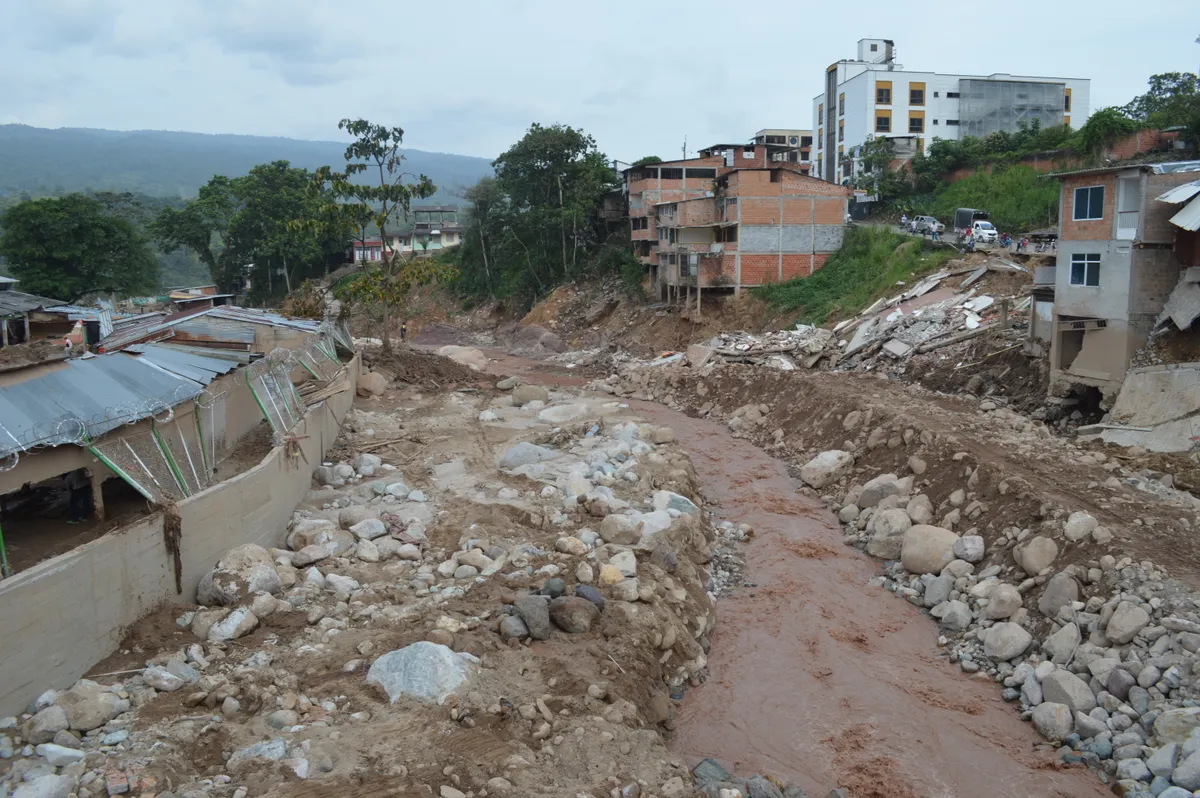
The Nepal floods that struck on the morning of 27 August 2026 have left thousands of Nepalese residents across the UAE desperate for news of family members, as rescue teams continue to search for more than 2,500 people still missing on both sides of the Nepal-Tibet border.
According to BBC News, Nepal’s National Disaster Risk Reduction and Management Authority (NDRRMA) confirmed a death toll of 752, with 2,502 people missing in Nepal alone. In Tibet, Chinese state media reported 16 dead and 546 missing.
Dubai resident Poornima’s family, including her brother, children and grandchildren, were evacuated from their hometown of Chitwan as the floods swept through the border region. Her brother remained in the disaster zone helping with relief work.
‘Luckily, my family got enough time to evacuate,’ she said. ‘My brother has been involved with the relief work, and he said he has helped to recover several people. Some have been just body parts because of the force with which the flood hit. The internet connection is really bad because of the extensive damage, so I wasn’t able to speak to him for more than a few minutes. I am just praying for the safety of my country and my people right now.’
She described watching footage on social media showing four and five-storey buildings and bridges collapsing. ‘The scale of the flooding was nothing we have ever seen before,’ she said. ‘It will be weeks before we know the real impact of these floods.’
What triggered the Nepal floods
The disaster was set off by an ice-and-rock avalanche from a glacier on Langtang Lirung peak, on the Nepali side of the border, according to Nepal’s NDRRMA technical team. The collapse blocked the Lhende Khola river, forming a temporary dam; when the dam breached, a catastrophic surge of water and debris was released downstream.
The NBC News report citing the US Geological Survey said the initial seismic signal was reclassified from a magnitude-4.4 event to a magnitude-5.2, attributed to the glacier collapse. A second seismic event three hours later registered as a magnitude-4.2 equivalent.
The surge travelled approximately 100 kilometres downstream along the Trishuli and Bhote Koshi rivers, according to the USGS, as reported by BBC News. The International Centre for Integrated Mountain Development warned that secondary flooding remained a risk if debris had temporarily blocked the Trishuli River.
China’s Ministry of Resources separately warned of a high risk that a dam created by the initial landslide could breach and send further flooding downstream toward Gyirong Port, a major land crossing between China and Nepal that was largely destroyed, according to CNN.
UAE expats with Nepal floods upending family plans
Another Dubai resident, Lakshmi Thapa, said the disaster had forced unbearable decisions on those in the affected areas. ‘One of their neighbours had an aged relative who is 100 years old. They had to make the difficult choice of leaving her behind when evacuating because it was so difficult for her,’ she said, describing the shock across the Nepalese community in the UAE.
For Kalpana Khati, a homemaker living in Al Nahda, Sharjah, the floods stranded her husband in Nepal. He had travelled there on 20 August for documentation work and was due to fly home from Kathmandu on 28 August. With roads to Kathmandu blocked, and Tulsipur, where he was staying, more than 400 kilometres from the capital, he abandoned his original route and travelled overland to Delhi instead, planning to fly back to Dubai on 29 August.
NBC News reported that more than 8,100 people had been rescued by Nepal’s security forces as of the authority’s latest count, while the Nepal Red Cross said more than 90,000 people were affected by the disaster overall.
The Bhote Koshi corridor has seen severe flooding before. A flood the previous year killed nine people, left 24 missing, and washed away the Friendship Bridge linking Nepal and China, disrupting trade for several months, according to Al Jazeera. The Lhende Khola had also flooded twice in the 14 months before the August 2026 event.
Nepalese expat Humkala Neupane, who has lived in the UAE for three years, said the affected zone sits on the route she takes every time she flies home. ‘Whenever we land at Kathmandu Airport, we have to cross the very area where these floods have happened,’ she said. ‘I have witnessed smaller incidents before, but I have never seen anything of this scale in my country.’
Rescue teams were still working to locate people listed as missing, with a BBC News live update noting that the Gyirong Port border crossing had been largely swept away, cutting the main China-Nepal overland link. Authorities declared the affected areas disaster crisis zones for a period of three months.
