

Samsung unveiled the Galaxy S26 series in Dubai on Friday with an unusual proposition: pick your AI assistant. Where Apple locks users into Apple Intelligence and Google pushes its Gemini platform, the S26 offers three options—Bixby, Gemini, or Perplexity—accessible through a single button press.
The February launch centred on what Samsung calls proactive AI, designed to act on context rather than wait for commands.
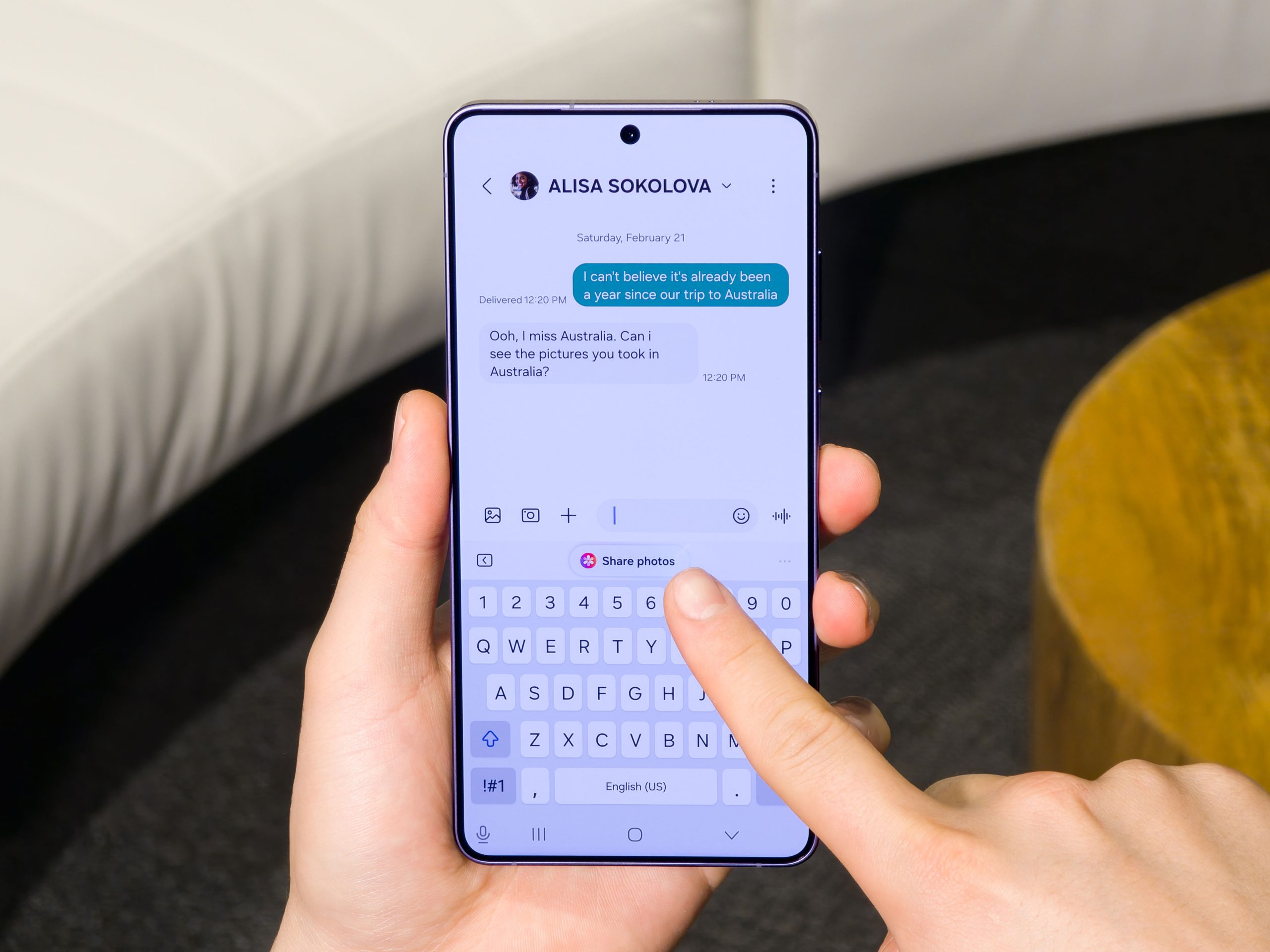
Take Now Nudge, the feature that surfaces suggestions based on what’s happening on screen. A friend asks for holiday photos via message, and the S26 pulls relevant images from Gallery without manual searching. Someone mentions a meeting, and the phone checks Calendar for conflicts. The aim is to reduce friction between intention and outcome.
Now Brief takes a similar approach to daily organisation. It surfaces reminders for restaurant reservations and travel updates based on personal context—though Samsung didn’t specify which data sources it monitors or how users control what gets tracked.
Apple launched Apple Intelligence last year with on-device processing and privacy guarantees, albeit limited to newer hardware. Google’s Pixel 9 series leans heavily on cloud-based Gemini integration. Samsung’s multi-agent strategy splits the difference, letting users choose their preferred AI brain whilst keeping Samsung’s own Bixby in the mix.
Bixby itself received an overhaul for the S26. Samsung repositioned it as a conversational device agent—natural language commands for adjusting settings and navigating menus, no exact terminology required. Whether that’s enough to compete with Google Assistant’s maturity or Siri’s ecosystem integration remains unclear.
The Gemini and Perplexity integrations handle more complex, multi-step tasks. Booking a taxi through Gemini, for instance, requires asking, reviewing details, and tapping confirm. The phone processes the request in the background across multiple apps. Perplexity focuses on search and information retrieval, though Samsung provided limited detail on how these agents access user data or which apps they can control.
Circle to Search with Google gained enhanced multi-object recognition on the S26. Spot an outfit in an image, and the feature identifies multiple items—jacket, shoes, bag—in one search. Google introduced Circle to Search on Pixel devices in 2024, so the S26’s version represents an iterative upgrade rather than exclusive functionality.
What’s notable is Samsung’s willingness to cede AI prominence to third parties. Bixby struggled for years to gain traction against Alexa and Google Assistant. Rather than double down on exclusivity, Samsung opened the door to competitors—a pragmatic acknowledgement that users care more about capability than brand loyalty in AI.
The S26 series marks Samsung’s first major hardware launch since global smartphone shipments declined 3.2% in 2025, according to preliminary IDC data. AI features have become the primary battleground for differentiation as hardware improvements plateau. Apple, Google, and Samsung are all betting that smarter software will drive upgrade cycles.
Privacy questions linger around proactive AI. Features like Now Nudge and Now Brief require constant monitoring of messages, calendar entries, and user behaviour. Samsung didn’t detail data retention policies, on-device versus cloud processing splits, or opt-out mechanisms during the Dubai presentation.
Battery life represents another concern. Context-aware AI that runs continuously in the background typically demands more power than reactive assistants that activate on command. Samsung hasn’t released battery capacity figures for the S26 series or provided estimates on how AI features affect longevity between charges.
The multi-assistant approach also introduces complexity. Users must decide which agent handles which tasks, potentially creating confusion about where to direct certain requests. Apple and Google’s single-assistant models offer simplicity, even if they sacrifice flexibility.
Samsung hasn’t announced pricing or specific availability dates beyond confirming a 2026 launch window. The S25 series started at £799 when it launched last year, suggesting the S26 will likely command a similar or higher premium given the expanded AI capabilities.
Competitors took notice. Three people familiar with Google’s hardware division said the Pixel team monitored Samsung’s multi-agent strategy closely, though they declined to comment on whether Google might adopt a similar approach. Apple rarely responds publicly to competitor launches, maintaining its closed ecosystem philosophy.
The Dubai venue for the announcement signals Samsung’s continued focus on Middle Eastern markets, where the company holds significant market share against Apple and Chinese manufacturers like Xiaomi and Oppo. Regional launches have become more common as smartphone makers diversify beyond traditional Silicon Valley unveilings.
For Samsung, the S26 represents a calculated risk. Offering choice could attract power users who want flexibility. It could also fragment the user experience and undermine Samsung’s ability to build a coherent AI identity. By May, when the devices presumably reach consumers, the market will deliver its verdict on whether three assistants work better than one.