
Mainland employees in Dubai who want to launch their own business while remaining in their current job must meet specific conditions under the UAE non-compete clause for employees, set out in Federal Decree-Law No. 33 of 2021 on the Regulation of Employment Relations, which took effect on 2 February 2022.
The first requirement is straightforward: the employer must issue a No Objection Certificate (NOC) before an employee can establish a new entity or become a partner or shareholder in an existing one. Without that document, proceeding carries legal risk.
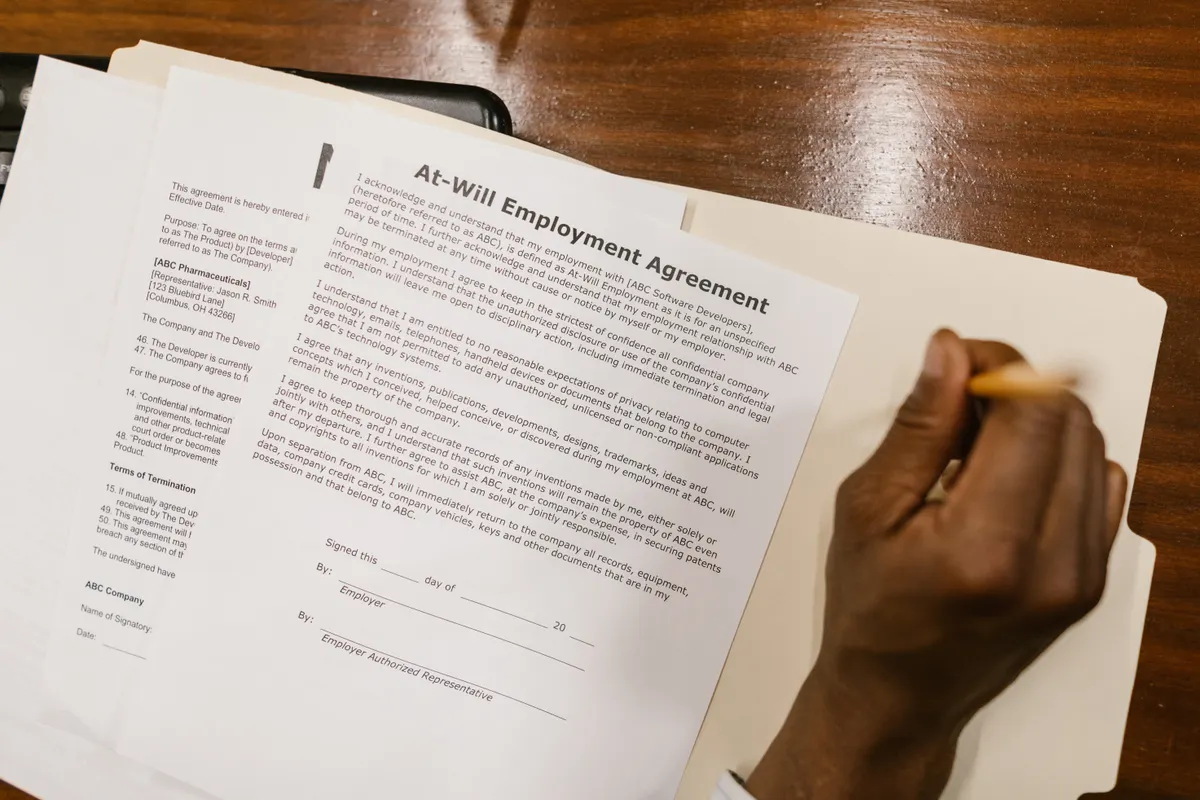
The NOC, however, is only part of the picture. If the intended business operates in the same sector as the employer, a non-compete clause in the employment contract may block the venture entirely, or restrict it after the employee eventually leaves.
What the UAE non-compete clause for employees actually covers
Article 10(1) of the law applies where an employee has access to the employer’s customers or business secrets. In those circumstances, the contract may include a clause barring the employee from competing in the same sector after leaving. The clause must specify the geographical area, the duration, and the type of work it covers.
The non-compete period cannot exceed two years from the date the contract ends. Cabinet Resolution No. 1 of 2022, the Executive Regulations to the Employment Law, reinforces this by requiring that any clause state three parameters: geographic scope, duration (capped at two years from contract expiry), and the nature of work restricted.
One important protection exists under the Ministry of Human Resources and Emiratisation’s official text of the law: if the employer terminates the contract, the non-compete clause becomes void. That condition does not apply if the employee resigns.
Three routes out of the non-compete obligation
Article 12(5) of the Cabinet Resolution sets out conditions under which an employee can be exempted from the non-compete clause even after leaving.
First, the employee or the new employer pays the former employer compensation not exceeding three months of the wage agreed in the last contract, provided the former employer gives written consent.
Second, if the contract was terminated during the probationary period, the clause does not apply.
Third, the Ministry of Human Resources and Emiratisation may by decision exempt professional categories based on the needs of the UAE employment market, subject to the Cabinet-approved employment classification.
Separately, Article 12(4) of the Cabinet Resolution allows both parties to agree in writing, at any point, that the non-competition obligation will not apply once the contract ends. That written waiver must be mutually agreed and documented.
One further point on structure: where an employee sets up through a free zone rather than on the mainland, requirements can differ. Meydan Free Zone states that its licensing process does not require an NOC from the employer. That exemption is specific to the free zone’s own procedures and does not alter the mainland rules described above. The UAE Labour Law and its Executive Regulations also do not apply to employees working in the Dubai International Financial Centre or the Abu Dhabi Global Market, both of which operate under separate employment law regimes.
Federal Decree-Law No. 33 of 2021 has been amended three times since its enactment, with the most recent update recorded on 29 July 2024 on the UAE government’s employment laws portal. Employees planning to start a business alongside their current role should verify which version of the law applies to their contract before acting.
