
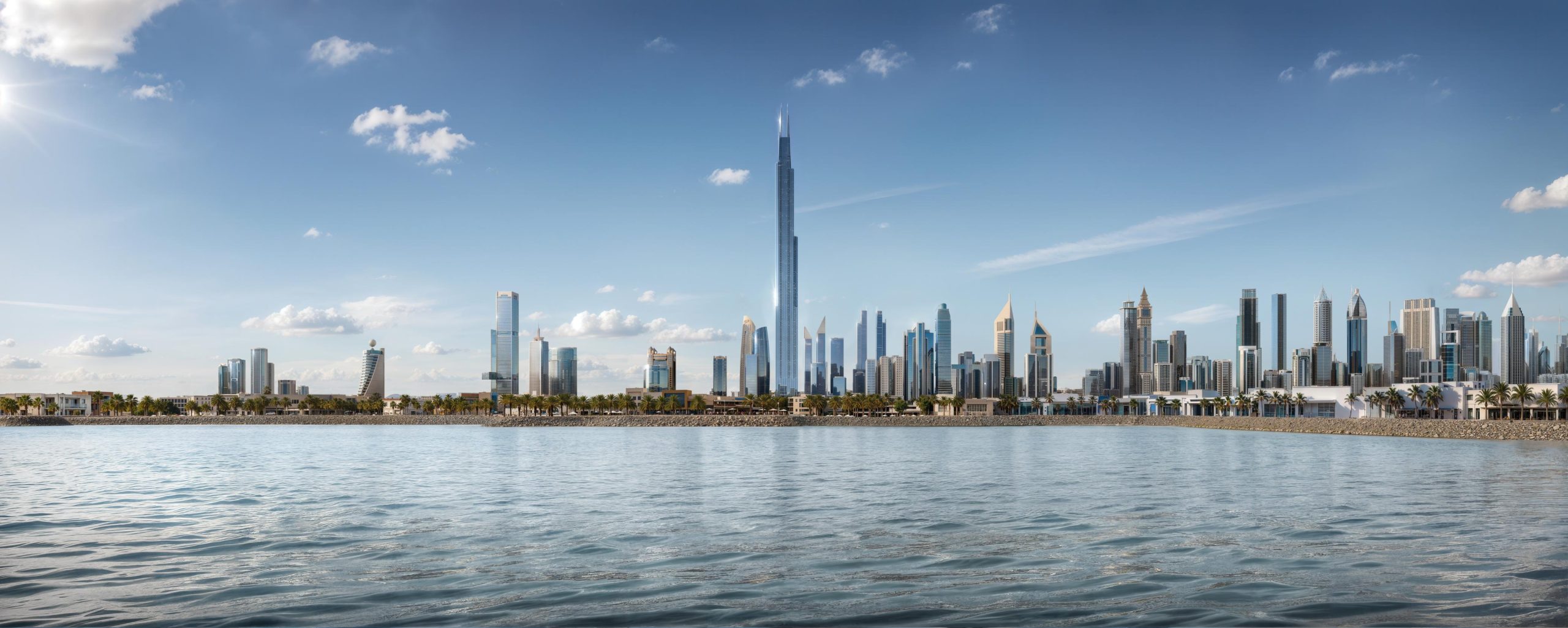
Consider the engineering puzzle: 140 floors stretching 725 metres into the Dubai sky, housing thousands of residents, hotel guests, shoppers and diners. All of them expecting perfect climate control. In summer heat that regularly exceeds 40 degrees Celsius.
That’s the challenge Daikin has signed up for—again. The Japanese HVAC specialist has extended its partnership with Azizi Developments to outfit Burj Azizi, the world’s second-tallest tower, with a comprehensive climate control system that must work flawlessly when the building opens in 2029.
The scope is vast. Fan coil units will arrive from China. Chillers from Italy. Fresh air handling units manufactured in the UAE. DX units sourced from India and Thailand. Together, they’ll form an integrated system designed specifically for the demands of ultra-high-rise environments, where vertical distance alone creates pressure and temperature challenges most buildings never face.
For Azizi Developments, the decision to extend an existing relationship reflects confidence born from experience. Daikin has already supplied HVAC systems across the developer’s portfolio, establishing what both sides describe as a track record of technical reliability.
“We are delighted to extend our collaboration with Daikin, a globally renowned HVAC solutions provider and valued supplier,” said Mr. Farhad Azizi, Group CEO of Azizi Group. “At Burj Azizi, high-performance cooling is essential to ensuring comfort and long-term operational reliability – critical for a development of this scale and complexity. With Daikin’s proven engineering capabilities and international manufacturing expertise, we are further strengthening our commitment to delivering future-ready infrastructure that enhances the experience of residents, guests, and visitors alike.”
What Daikin will be cooling is nothing short of a vertical city. The tower’s residential section will feature one-, two- and three-bedroom apartments, interspersed with amenity floors every 20 storeys. Each of those amenity levels will include swimming pools with sauna and steam facilities, fully equipped gyms and yoga centres, spas, games rooms with billiards and table tennis, business centres, children’s play areas, cinemas, restaurants, coffee shops and even supermarkets.
Above the standard apartments, ultra-luxury penthouses ranging from one to five bedrooms will occupy their own section, with separate lobby access and exclusive amenity privileges.
Then comes the hotel. A seven-star, all-suite property designed around seven cultural themes—Arabic, Chinese, Persian, Indian, Turkish, French and Russian. Each theme will be reflected in dedicated restaurants, offering what Azizi describes as a new standard in comfort and hospitality. An authentic Emirati restaurant will feature among the signature dining options, alongside a luxury ballroom and an exclusive beach club.
Burj Azizi won’t just be tall. It will claim multiple world records.
The highest observation deck anywhere: level 130. The highest hotel lobby: level 111. The highest nightclub: level 126. The highest restaurant: level 122. The highest hotel room: level 118.
At the summit, a museum will chronicle the tower’s construction, recognising the personalities involved through multimedia exhibits featuring photographs, videos and graphics. It’s part monument, part archive—a record of ambition made tangible.
For Daikin, the agreement represents both a technical challenge and a showcase opportunity. The company has built its reputation on engineering expertise in heating, ventilation, air conditioning and refrigeration, with systems deployed in residential, commercial and large-scale infrastructure projects worldwide. But few projects operate at this scale or visibility.
The international sourcing strategy—drawing equipment from production facilities across four continents—reflects both the project’s magnitude and Daikin’s manufacturing reach. Each component must meet international quality standards while integrating seamlessly into a system that cannot afford to fail.
The retail section alone will demand precision climate control. An ultra-luxury mall housing high-end fashion brands requires stable temperature and humidity levels to protect merchandise and ensure customer comfort. Fluctuations that might be tolerable elsewhere become unacceptable when the brands involved are the world’s most exclusive.
Azizi Developments has delivered more than 45,000 homes to investors and end users representing over 100 nationalities. The company currently has approximately 150,000 units under construction, valued at tens of billions of US dollars. Its portfolio spans master-planned communities including Azizi Riviera, Azizi Venice and Azizi Milan, alongside projects in MBR City, Palm Jumeirah, Sheikh Zayed Road, Dubai Healthcare City, Al Jaddaf, Dubai South, Dubailand, Al Furjan, Dubai Islands, Studio City, Sports City and Downtown Jebel Ali.
Yet Burj Azizi stands apart—the centrepiece project that will define the developer’s legacy.
The tower’s 2029 completion date places it within a competitive window. Dubai continues to push vertical boundaries, with multiple supertall projects either under construction or in planning. Each competes not just on height but on amenities, design and operational excellence.
Which makes the HVAC system more than a background detail. It’s foundational infrastructure that will determine whether Burj Azizi delivers on its seven-star promises or falls short when it matters most—when guests arrive, when residents settle in, when summer temperatures peak.
The sales gallery, located on the 13th floor of the Conrad Hotel on Sheikh Zayed Road, offers prospective buyers and investors a glimpse of what’s coming. By 2029, the reality will stretch 725 metres above Dubai, cooled by systems designed to work flawlessly from ground level to level 140.
Whether the engineering matches the ambition won’t be clear until then.
