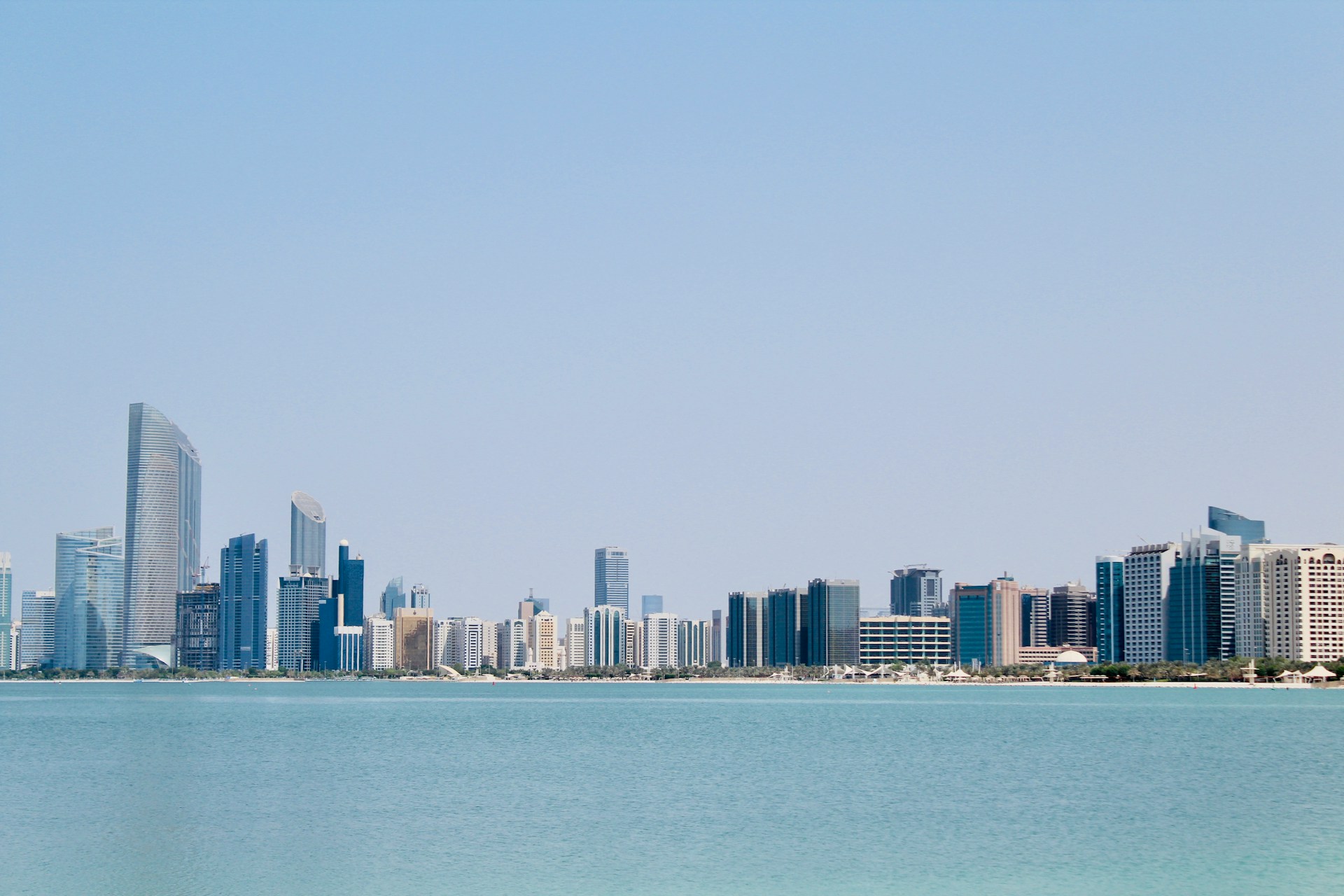
Let’s be honest: Abu Dhabi has always had an image problem. Not a reputation problem — the capital has long commanded respect as the UAE’s institutional backbone, the seat of sovereign wealth, the emirate that keeps the lights on. The image problem is more subtle. For most international investors, Abu Dhabi simply hasn’t been interesting enough to talk about.
That is changing. And the investors who notice first will likely be the ones who benefit most.
The Quiet Structural Shift Nobody’s Pricing In
Dubai earns its headlines. Record transaction volumes, global developer interest, luxury towers rising faster than most cities build bus stops — it is a genuinely remarkable market story. But markets that everybody is already watching tend to be markets where the obvious opportunity has already been priced in.
Abu Dhabi is a different story entirely.
The emirate’s population is expanding at approximately 7.6% annually — not as a result of speculative momentum, but because of a deliberate, government-anchored program of economic diversification. That kind of growth, when it outpaces supply, does something interesting to real estate values. It sustains them. Prime residential properties in Abu Dhabi have recorded annual price appreciation in the range of 8% to 12%, with rental yields holding at 6% to 8%, supported by an expanding expatriate base. These are not bubble numbers — they are compounding, durable returns grounded in real demand.
What makes this more interesting is how the supply side works. Unlike Dubai, where a competitive ecosystem of developers drives continuous, rapid inventory expansion, Abu Dhabi’s residential market has historically been dominated by a small number of major players operating under deliberate constraints. The result is something that feels almost counterintuitive in a Gulf context: scarcity. Not manufactured scarcity — structural scarcity that has quietly protected values through cycles that punished more exuberant markets.
Culture Is Not a Soft Story — It’s an Economic Thesis
The most misread aspect of Abu Dhabi’s evolution is its investment in cultural infrastructure. When the Louvre Abu Dhabi opened in 2017, many observers filed it under “prestige project” and moved on. They missed the point.
The Louvre now draws over one million visitors annually, making it one of the most visited museums in the Gulf region. That figure is not a vanity metric — it is proof that demand for a specific kind of destination exists and is growing. When the Guggenheim Abu Dhabi and the Zayed National Museum join the cultural district, Abu Dhabi will host one of the most significant concentrations of world-class institutions outside of Europe or North America. This is not soft branding. It is hard infrastructure for high-value tourism.
Add Yas Island — already home to Ferrari World, the Etihad Arena, and a growing roster of regional destination experiences — and then factor in Disneyland Abu Dhabi, expected to open around 2030. The tourism economics of this city are being structurally redesigned.
For real estate investors, the question is not whether this matters. The question is whether asset prices have yet caught up with what is being built.
They haven’t.
Sobha City: The Bellwether Moment
A development worth watching closely is Sobha City Abu Dhabi — not because of any single feature, but because of what it signals. Sobha Realty, a Dubai-based developer known for vertically integrated, high-standard construction, has made one of its first significant moves into Abu Dhabi’s residential market. When established developers start allocating capital to a market they have previously left alone, that is worth paying attention to.
Sobha City is a master-planned community spanning 38 million square feet, deliberately low-density — approximately 2,000 villas and townhouses across the entire development. Organised around canals, lagoons and a private artificial beach, with a fully serviced marina capable of berthing private yachts up to 25 metres, it represents a type of integrated waterfront living that has, until now, been the exclusive domain of Dubai.
The product mix is broad: furnished apartments from AED 1.3 million, townhouses from AED 4.9 million, and ultra-luxury villas reaching AED 13.4 million — each with private pools, built-in elevators and three-level layouts. On-site infrastructure includes three schools, a healthcare facility, a retail canal promenade, an 18-hole championship golf course, and a dedicated station on the elevated transit line connecting the airport to key districts. It is five to ten minutes from Yas Island.
The payment structure — 60/40, with 40% due on completion in Q4 2029 — is designed for investors who want market exposure without full capital deployment today.
None of this would be remarkable in Dubai. In Abu Dhabi, it represents a new category.
The Contrarian Case
Here is the honest version of the Abu Dhabi investment argument: you are not buying momentum. You are buying structure.
You are buying a market with constrained supply and accelerating demand. A market where cultural and entertainment infrastructure is being built at a scale that will reshape tourism economics over the next decade. A market where pricing still reflects the old narrative of Abu Dhabi as Dubai’s quieter sibling — rather than what it is becoming, which is a capital city with growing global relevance, institutional depth, and a development pipeline that is only beginning to be appreciated internationally.
The headlines will continue to focus on Dubai. That’s fine. The best opportunities rarely live where the loudest conversations are happening.
The investors who look 150 kilometres up the coast, and act before that story becomes consensus, are the ones who will be quoted in the next decade’s version of this article — as the people who saw it coming.