
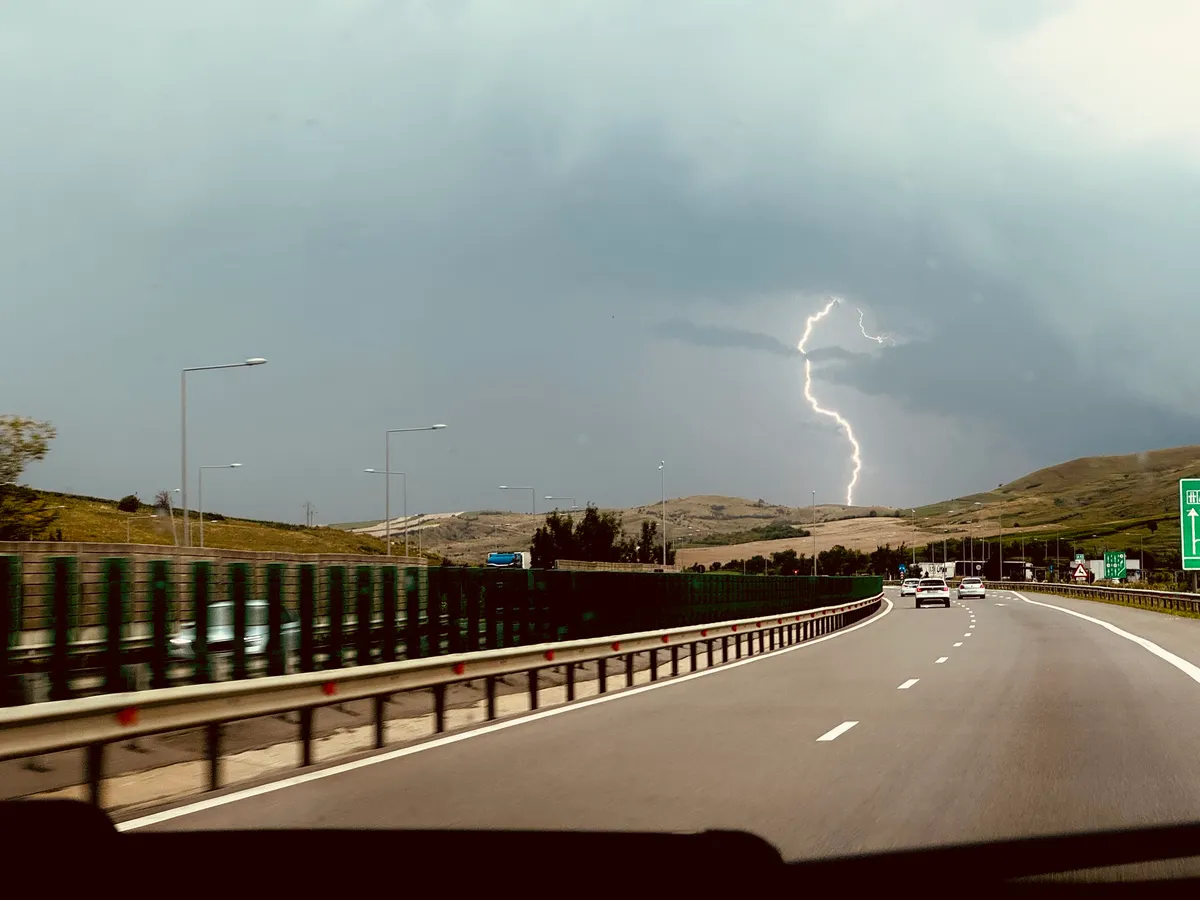
A thunderstorm struck Abu Dhabi on 21 August 2026, bringing heavy rain, lightning and gusty winds to the capital and prompting Abu Dhabi City Municipality to close all parks, recreational facilities and affiliated beaches until further notice. Abu Dhabi Police simultaneously activated speed reductions on several roads across the emirate.
Road speed limits and precautionary closures
Abu Dhabi Police reduced speed limits to 80kmph on a number of routes affected by the rain, including the Sweihan-Nahel, Al Khaznah-Remah, Umm Al Oush-Al Razeen and Al Faya-Al Khatim roads.
Abu Dhabi City Municipality said the closure of parks and beaches was taken as a precaution to protect residents and ensure public safety amid fluctuating weather and heavy rainfall across several parts of the emirate. Events at municipal facilities were also suspended.
According to Gulf News, the 21 August storm was the first reported rainfall in Abu Dhabi that summer, following weeks of intense heat.
Footage circulated by Storm Centre on the day showed lightning illuminating the sky in shades of purple above the capital, with trees bending in strong winds and rain falling heavily on Abu Dhabi’s roads. A separate clip from the Abu Dhabi-Al Ain Road towards Al Khazna showed rain intense enough to reduce driver visibility, with lightning visible in the distance.
Yellow alert issued the following day
The National Centre of Meteorology (NCM) issued a yellow alert on 22 August 2026 for possible light to moderate rainfall, with the potential to become heavy at times. The alert was active from 13:30 until 21:00 that day, covering some eastern, southern and western areas of the UAE, including Al Ain and parts of the interior.
The NCM also cautioned residents about fresh to strong winds causing blowing dust and sand and reducing horizontal visibility. Winds were forecast from the southeast to northeast, reaching speeds of up to 50kmph at times. Humidity was expected to range from 15 to 65 per cent in Abu Dhabi, 20 to 60 per cent in Dubai and 15 to 55 per cent in Sharjah during the alert period.
Rain was not confined to Abu Dhabi on 21 August. Storm Centre footage also showed rainfall along Khatm Al Shiklah Road and other parts of Al Ain, ranging from drizzle to heavier downpours. The NCM had forecast partly cloudy conditions, with a chance of cumulus clouds forming over the east and south and bringing afternoon rain.
Summer rainfall in the UAE is linked to low monsoon pressure from India, though the country periodically experiences heavier episodes. One of the most significant rain events earlier in 2026 occurred on 25 March, when storms brought heavy downpours and flooding across multiple emirates. Al Tawiyen recorded the highest rainfall on that occasion at 47.9mm, followed by Al Marjan with 39.7mm, Khor Fakkan with 33.3mm and Khatam Al Shaklah with 31.6mm.
After conditions improved following the August storm, Gulf News reported that Abu Dhabi City Municipality reopened its parks, recreational facilities and affiliated beaches. The municipality asked residents and visitors to swim only at designated beaches, which include Corniche Beach and Al Bateen Public Beach, and to follow approved safety guidelines while doing so.
