
Abu Dhabi has published a safety guidelines handbook covering heavy rain, strong winds, hail and fog, as the Abu Dhabi Media Office weather page confirmed the emirate is in a period of unstable conditions running from 3 August to 7 August 2026.
The handbook, available on the Abu Dhabi Media Office website, sets out what residents should do before, during and after adverse weather, and lists emergency numbers for use when in danger.
What the Abu Dhabi weather safety handbook says
Several instructions run across all weather types. Residents are told to stay away from trees and electricity poles, keep clear of glass windows and glass or metal doors, and avoid using mobile or wired phones in open areas during thunderstorms.
Children should not go outside during heavy thunderstorms. Touching metallic or electrical devices exposed to weather conditions is also listed as a hazard to avoid.
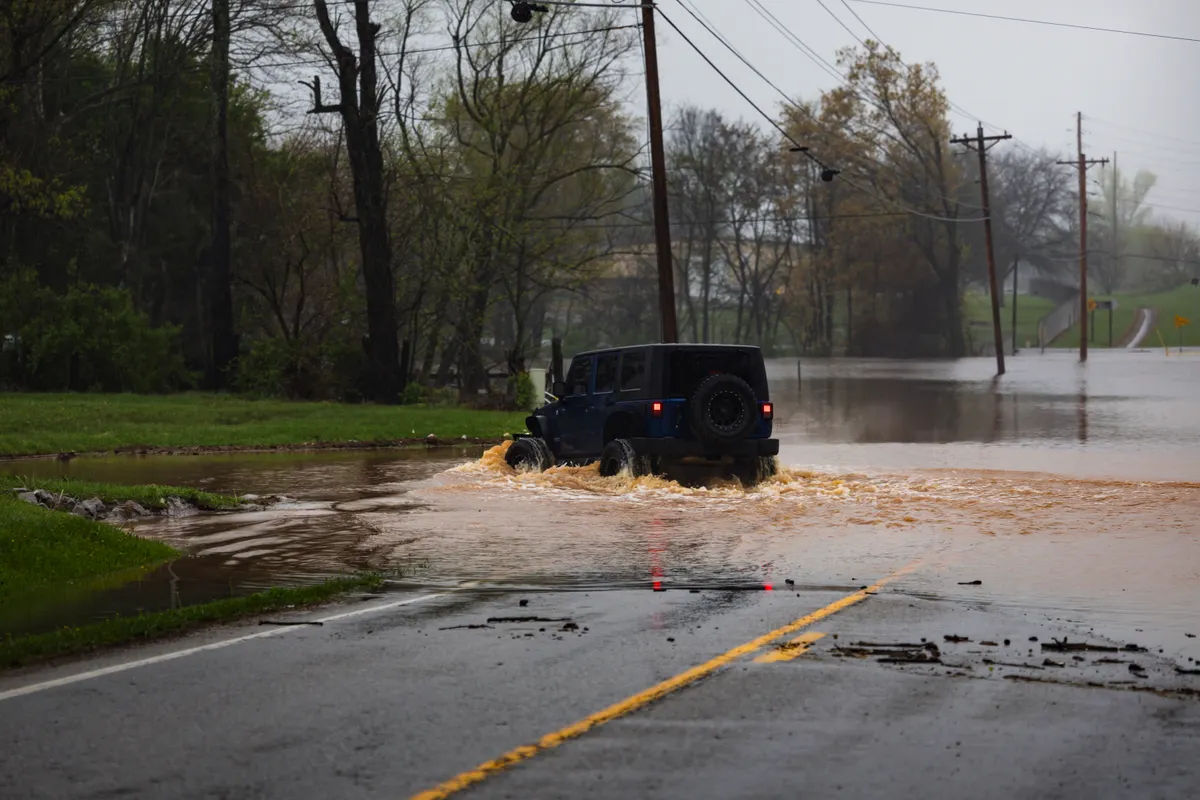
For flooding, the handbook tells residents not to gather at valley mouths or streams, not to lift manhole covers or enter sewage chambers during or after heavy rain, and to avoid driving in valley streams when adverse conditions are announced. Drivers should pay attention to road conditions and not enter or stop near flood water.
During strong winds, anyone already outside is advised to wait for winds to subside before returning home. People with chronic respiratory conditions should take medication and inhalers as prescribed, and wear protective masks if going outside is unavoidable. Contact lenses should be replaced with glasses, and the handbook advises staying away from the sea and construction sites where unsecured objects could cause injury.
Drivers in low-visibility conditions should leave extra space from the vehicle ahead, avoid overtaking unless necessary, and not park on the roadside. If a stop is unavoidable, hazard lights should be activated.
The hail section tells residents to stay indoors, keep away from glass windows and doors, adhere to variable speed limits shown on road signs and electronic guidance boards, and avoid driving during hailstorms. The fog section adds that headlights should be used when visibility is low and distractions avoided.
Variable speed limits displayed on road signs and electronic boards apply across rain, hail and fog conditions.
Response efforts and the conditions behind the weather
An Abu Dhabi Emergency, Crisis and Disaster Management Team coordination meeting was convened to review preparations and pre-emptive measures ahead of the weather period, according to the meeting readiness notice. Attendees included representatives from Abu Dhabi Civil Defence Authority, ADNOC, Emirates Red Crescent, the National Emergency Crisis and Disasters Management Authority, and the National Centre of Meteorology (NCM), among others.
Field visits to Al Ain were carried out to oversee response efforts and ensure rapid action on any issues caused by the conditions, according to the adverse weather response notice.
The NCM attributed the wet conditions to convective clouds forming over the UAE, particularly towards the east, driven by a surface low-pressure system combining with an upper-level trough. Separately, 110 cloud-seeding flights were conducted in connection with the forecast, with aircraft releasing natural salt particles into suitable clouds to encourage larger water droplets and increase the likelihood of rainfall, according to Construction Week. Gusts were forecast to reach up to 35 km/h, with winds shifting between south-easterly and north-westerly directions across the wider country.
The full handbook, including precautions to take before unstable weather arrives and steps to follow once conditions clear, is available on the Abu Dhabi Media Office website. The NCM forecast covers conditions through 7 August 2026.
