
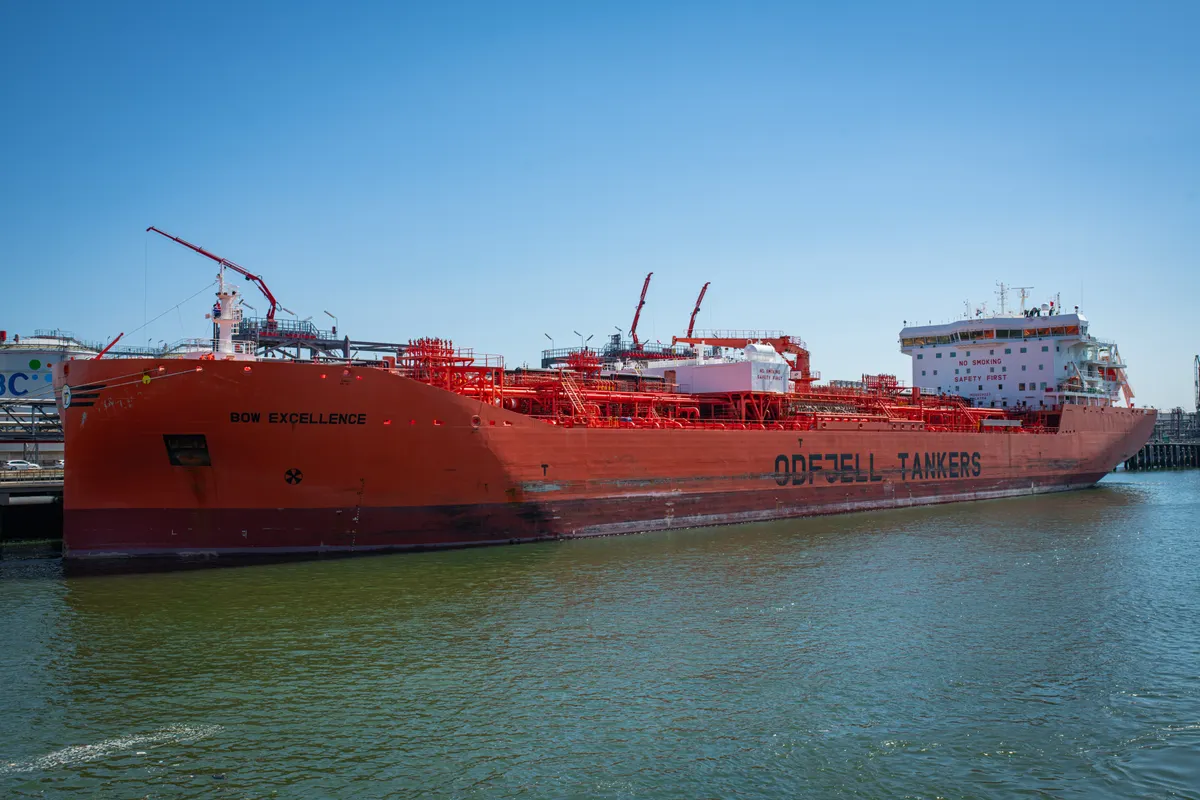
A third attack on Adnoc tanker attacks in the Strait of Hormuz within a week drew a firm response from Dubai on Friday, with Dr Anwar Gargash, Diplomatic Adviser to the President, saying repeated strikes on the company’s vessels would not alter the UAE’s course.
The UAE Ministry of Foreign Affairs confirmed the latest incident involved a two-drone strike targeting a national carrier affiliated with Adnoc as it transited the strait, with no injuries reported. The attack was condemned as a flagrant violation of UN Security Council Resolution 2817, adopted on 11 March 2026, which affirmed freedom of navigation and rejected the targeting of commercial vessels.
‘Repeated targeting of Adnoc company tankers will not deter the United Arab Emirates from moving forward with a balanced and rational policy, based on the triad of deterrence, diplomacy, and adherence to international law,’ Gargash said.
Eighteen Adnoc vessels attacked since February
Since the regional conflict began on 28 February, a total of 18 Adnoc vessels have been attacked. The scale of Iranian aggression against the UAE extends well beyond maritime incidents: a UAE Ministry of Foreign Affairs statement issued around 8 April 2026 recorded that unprovoked Iranian attacks in the first 40 days of the conflict included 2,819 ballistic and cruise missiles and drones, causing loss of life and property damage. The ministry has stressed the UAE is not a party to the war.
The ministry called on Iran to halt all unprovoked attacks, commit to an immediate end of hostilities, and reopen the Strait of Hormuz completely and unconditionally to protect regional security and global trade.
Gargash stated the UAE would safeguard its rights to ‘freedom of navigation and the use of the Strait of Hormuz in accordance with international law,’ reiterating that using the waterway ‘as a tool of economic coercion or blackmail represents acts of piracy by Iran’s Revolutionary Guard Corps.’
Regional and international condemnation mounts
The attacks have drawn broad condemnation across the region. The GCC Secretary-General Albudaiwi described the strikes on Adnoc tankers as ‘a dangerous and unacceptable escalation and a direct threat to security,’ according to the Emirates News Agency (WAM). Saudi Arabia and Qatar also issued strong condemnations of the targeting of the two Adnoc tankers transiting the strait.
At the international level, the International Maritime Organization (IMO) Council, at its 36th extraordinary session, adopted a decision strongly condemning Iranian threats and attacks against vessels, declaring Iran’s purported closure of the Strait of Hormuz contrary to IMO purposes and a grave danger to seafarers.
Iran, for its part, has asserted full control of the waterway and established a body to coordinate commercial traffic along a route near its coast. On 17 June 2026, the United States and Iran signed a Memorandum of Understanding committing to a halt in military operations, under which Iran agreed to arrange safe passage for commercial vessels at no charge for 60 days, according to a US Congressional Research Service report on the strait. Disputed claims over who controls the waterway persist: Iran’s military rejected US President Donald Trump’s assertion of American control as ‘lies and fabrications’, with spokesperson Ebrahim Zolfaghari saying ‘no commercial ship or tanker without the permission and supervision of the powerful Iranian armed forces has had and will have the possibility of safe passage through this strait.’
The UAE Ministry of Foreign Affairs has not indicated it considers the June MOU to have resolved the dispute. The ministry’s demand for a complete and unconditional reopening of the strait remains its stated position, and the 18th attack on an Adnoc vessel in under six months gives little sign the situation has stabilised. US Secretary of State Marco Rubio has said Washington will not accept any tolls or fees in the strait, describing Iran’s distinction between ‘service fees’ and ‘tolls’ as a matter of semantics, according to Al Jazeera.
