
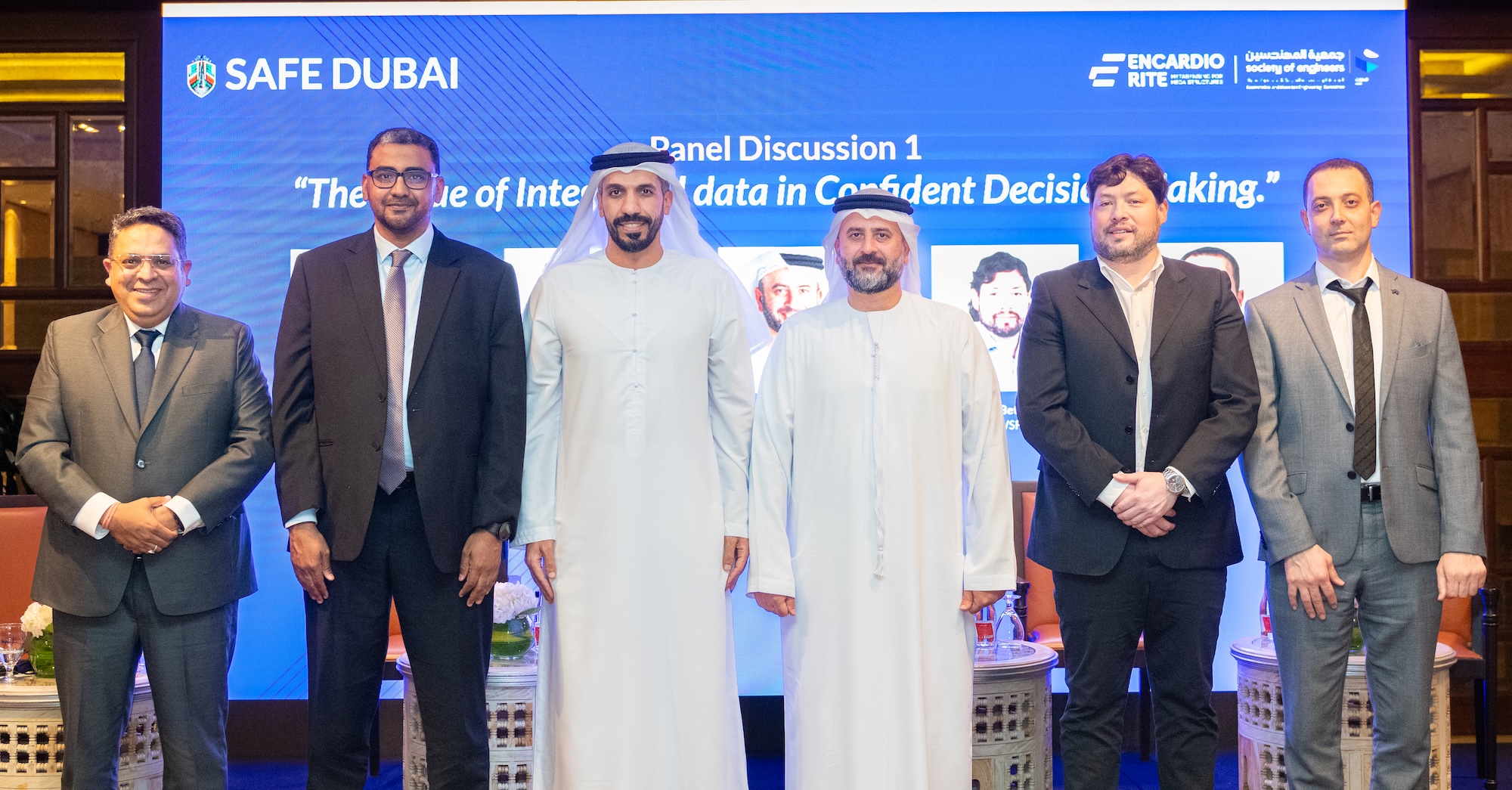
Kenichi Soga arrived in Dubai on 20 February 2026 with an inconvenient message for Middle East infrastructure leaders: your artificial intelligence and machine learning tools are worthless without proper foundations.
The University of California, Berkeley professor delivered the keynote address at Safe Dubai 2026, where his warning landed amid a region pouring billions into metro systems, high-speed rail, airports and urban megaprojects. Machine learning can only deliver value when grounded in robust instrumentation and coherent data, he told delegates. Without that? Dashboards showing nothing useful.
The forum marked a pivot.
Last year’s Safe Dubai event focused on integration and awareness—getting different monitoring technologies talking to each other. By 2026, conversations had shifted to what comes after integration: actual decision intelligence at asset and city scale. The distinction matters. One produces visual outputs. The other produces confident engineering judgements.
“Safe Dubai 2026 reflected the Middle East’s readiness to move beyond fragmented monitoring practices,” said Arushi Bhalla, Managing Director at Encardio Rite Group of Companies, which organised the forum. “The region is building infrastructure at an extraordinary scale, and that scale demands coordinated intelligence frameworks. Integration created awareness. The next step is embedding decision intelligence across assets and agencies so that infrastructure performance is managed proactively, not reactively.”
The scale Bhalla referenced is staggering. Across the Gulf states, governments continue investing heavily in tunnel networks, ports and large-scale urban developments that demand cross-domain intelligence spanning instrumentation, surveying, geospatial systems and remote sensing. When a metro tunnel shifts by millimetres, when subsidence threatens a new airport, when coastal development faces long-term resilience questions—fragmented data collection fails.
Soga’s keynote traced the evolution from isolated monitoring technologies toward multi-layered intelligence frameworks. Macro-scale remote sensing, geospatial intelligence, IoT-enabled sensor networks and precision instrumentation can work together, he explained, but only when unified within common frameworks that support engineering judgement rather than simply generating reports.
The Infinitus 2.0 platform emerged during technical sessions as a model for converting integrated data into structured decisions. Yet even that presentation reinforced Soga’s central thesis: technology follows discipline, not the other way round.
Panel discussions throughout the day revealed industry tensions around governance, ownership models and standards. Regulators, consultants and asset owners debated inter-agency workflows required to build region-wide monitoring ecosystems. The conversations were specific—delegates examined measurable benefits including risk reduction, improved operational efficiency and more predictable maintenance planning.
What became clear by afternoon sessions was that integration itself had become table stakes. Senior infrastructure leaders convened at the forum were now wrestling with what happens next: transitioning from project-based monitoring toward system-level intelligence that enables better prioritisation, resource allocation and long-term stewardship over the coming decade.
That shift reflects growing complexity. As infrastructure expands across the Middle East, the need for continuous monitoring and long-term data archives intensifies. Soga emphasised disciplined interpretation—the unglamorous work of maintaining coherent data foundations that machine learning algorithms can actually use.
The forum concluded with delegates acknowledging the region’s position to lead the next phase of engineering excellence by institutionalising unified monitoring frameworks. Whether that ambition translates into standardised regional practices remains uncertain.
For now, the message from Berkeley resonates: build the foundations properly, or artificial intelligence will simply automate confusion. In a region constructing infrastructure at extraordinary pace, that warning carries weight. The Middle East’s massive investment in physical assets demands equally serious investment in the intelligence systems that will manage them for decades.
By late afternoon in Dubai, the technical discussions had crystallised around a single question: would Middle East governments and asset owners commit resources to unglamorous data discipline, or chase dashboard aesthetics?
The answer will determine whether the region’s infrastructure boom becomes a monitoring success story or a cautionary tale about technology deployed without proper foundations. Soga’s warning suggested the outcome isn’t yet decided.
