
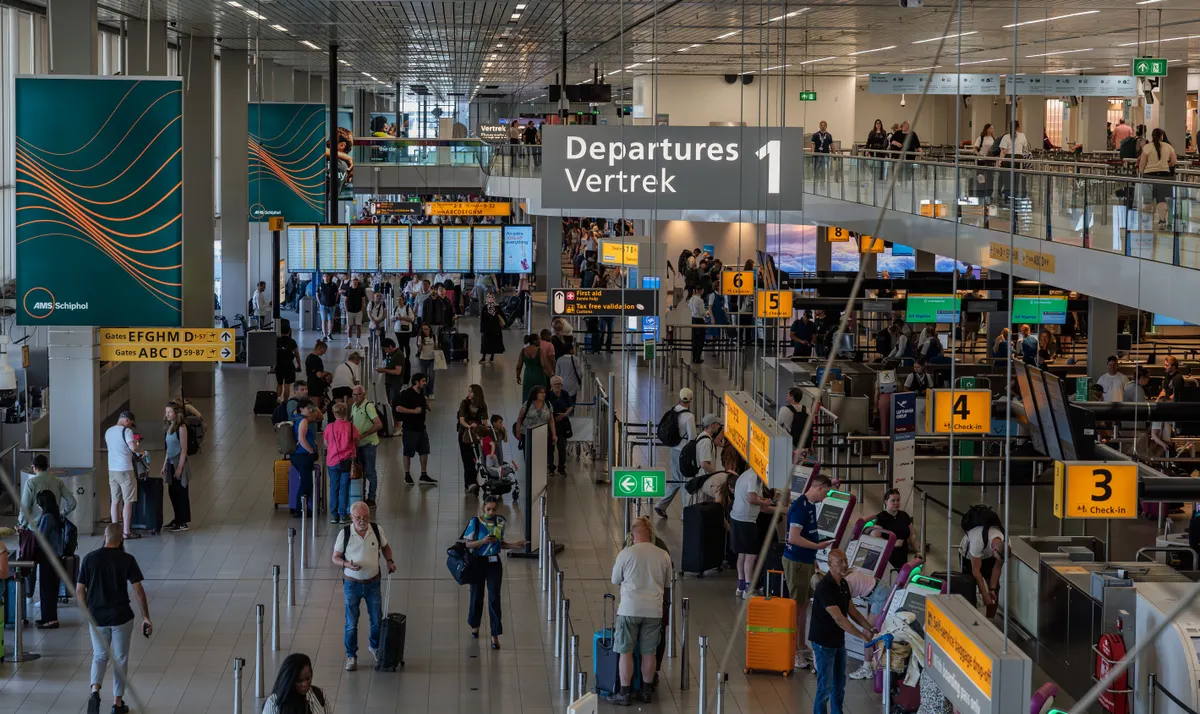
Dubai International Airport (DXB) absorbed 111 threat alerts and 17 ballistic missile strikes during the regional conflict earlier this year, with zero fatalities and all casualties now fully recovered, CEO Paul Griffiths said at a Dubai Media Office briefing.
Passenger traffic fell sharply during the conflict before rebounding. DXB began 2026 with 8.7 million passengers in January, one of its busiest months ever, according to Fortune. Numbers then dropped to 2.5 million in March at the height of the disruption, before climbing to 5 million in June and 6.3 million in July, a 26 per cent jump in a single month.
DXB handled 31.5 million passengers in the first half of 2026, down 31.3 per cent from 46 million in the same period in 2025, according to Reuters, which reported on Griffiths’s 10 September 2026 briefing. The airport closed 2025 with 95.2 million passengers, the highest annual international traffic ever recorded by any airport, ACI Asia-Pacific reported.
Dubai International Airport war recovery reaches 84% of pre-conflict capacity
As of the 10 September briefing, DXB capacity had recovered to 84 per cent of pre-war levels while passenger numbers stood at 78 per cent, Griffiths said. He projected full-year 2026 traffic at around 70 million and said the 100 million passenger target the airport had been chasing could now be reached by the end of 2027, Reuters reported.
Griffiths described the rebound as a ‘trampoline bounce’ rather than a ‘dead cat bounce.’ ‘We go down, we hit the trampoline, and then we bounced even higher than before,’ he said.
On safety during the strikes, Griffiths said injuries were minor and mostly occurred in the early days as people moved quickly to reach shelter. ‘Most of them were just falling over each other in the early stages when they actually were running too quickly to get to shelter, and we actually managed to calm things down after that to keep everything under control,’ he said.
‘The most satisfying statistics: there were zero deaths and very, very limited casualties. I’m very pleased to say that all of those people have now fully recovered,’ he added.
UAE air defences and government communication credited for limiting damage
Griffiths credited the UAE government’s communications during the crisis with enabling Dubai Airports to act quickly to protect staff and passengers. He also praised the country’s air defence systems for their interception rate.
The Emirates News Agency (WAM) reported that UAE air defences detected 1,305 Iranian drones during the conflict, intercepting 1,229 of them, while 76 fell within UAE territory. In one engagement alone, 15 ballistic missiles and 119 drones were intercepted.
‘I don’t think any of us felt anything but safe and secure throughout the crisis,’ Griffiths said.
Griffiths, who has led Dubai Airports since October 2007, pointed to the organisation’s record of recovering from previous shocks, including the global financial crisis and the Covid-19 pandemic, as context for his confidence in the current rebound.
The second-half 2026 traffic figures, due when Dubai Airports publishes its full-year results, will show whether the July surge has been sustained and how close the airport finishes to its revised 70 million target.
