
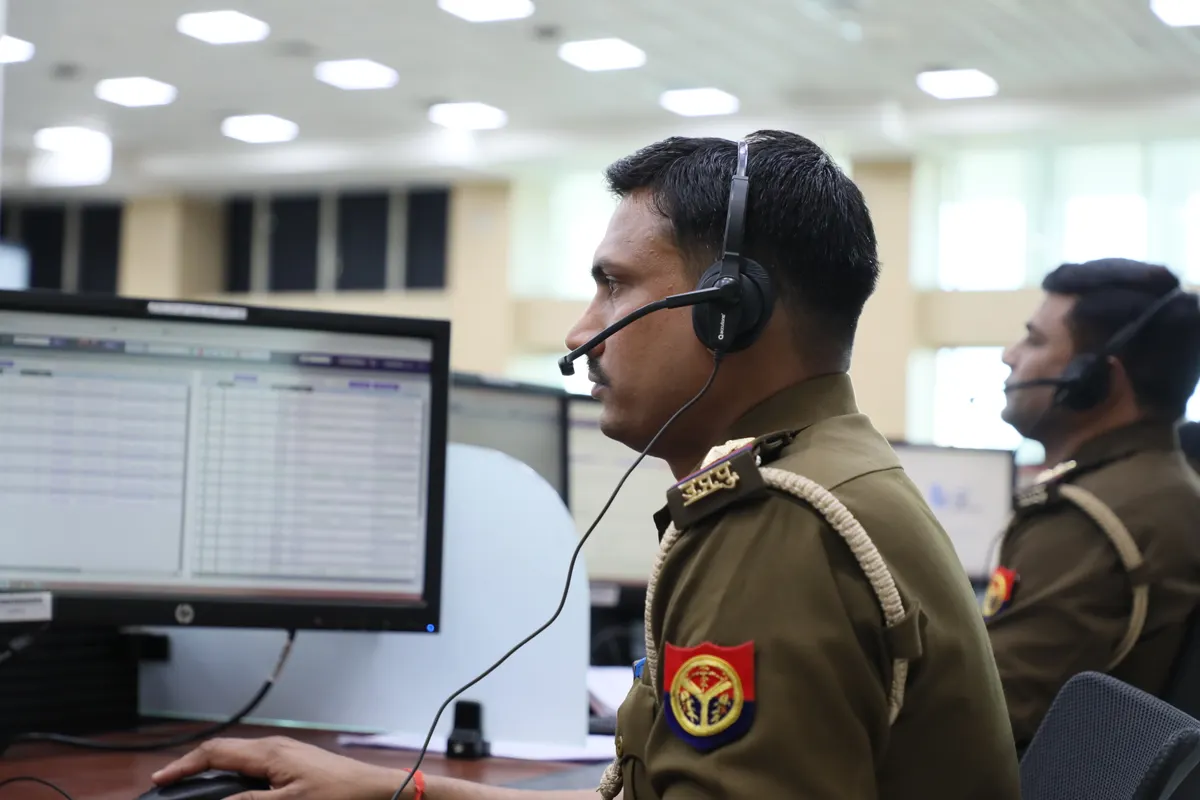
A Dubai Police emergency call trace led officers to an unconscious woman near Sheikh Mohammed bin Zayed Road in the early hours of the morning, after her distress call fell silent seconds after it connected.
The call came in to the Operations Room at 3.30am. The woman, speaking in Arabic, managed only a few words: ‘Brother, I’m at the intersection…’ Her voice was faint. Then the line went quiet.
The call handler picked up within three seconds.
How the Dubai Police emergency call trace worked
Using the emergency call location system, the operator pinpointed her phone to the Nad Al Sheba area. He then checked Dubai Police’s database of patients with critical medical conditions for her number. It returned no record.
He alerted all nearby patrols and instructed them to concentrate on entrances off Sheikh Mohammed bin Zayed Road, while keeping the emergency line open to monitor any sound from the caller.
Within minutes, the first patrol found a parked, locked vehicle. Through the open call, the operator could hear officers knocking on the car window. Inside, they found the woman unconscious.
A rescue team reached the scene quickly, even though the car was in a sandy area away from the main road network. Responders opened the vehicle and brought her out. She had suffered a severe drop in blood sugar, which had caused her to lose consciousness.
The incident is documented in the book Operations Management in Critical Incidents, Crises and Disasters by Lieutenant General Dhahi Khalfan Tamim. Lieutenant General Dhahi Khalfan followed up personally, calling to confirm she was safe after she reached hospital. The woman later told the police team: ‘You arrived so quickly and saved me from death.’
Registering with Dubai Police’s critical medical cases programme
Dubai Police used the case to urge people with serious medical conditions to register with the force’s critical medical cases programme. Registration lets emergency responders access vital health information immediately when a caller cannot communicate.
The Dubai Police Smart Police Station service catalogue lists a Critical Care Response service specifically for heart patients and others with critical medical conditions in Dubai. It allows priority response registration and is accessible through kiosk and iPad channels, as well as via the Smart Police Station app on the Apple Store, Google Play Store, and Huawei App Gallery.
A separate case shows the same emergency infrastructure operating across borders. Abdullah Bourguiba, based more than 3,600 kilometres away in Kazan, Russia, used Dubai Police’s ‘Your Security at the Touch of a Button’ emergency application to seek urgent help for an Al Wasl Sports Club player who required emergency surgery. Dubai Police coordinated with UAE authorities from overseas, and the player received immediate treatment.
The SOS feature built into the Dubai Police smart application sends a distress alert and precise GPS coordinates directly to the Command and Control Centre under the General Directorate of Operations. It is designed for situations where a person cannot explain their location or condition.
Dubai Police has not announced a deadline for registration with the critical medical cases programme, but the force’s advice following the Nad Al Sheba incident is clear: those with conditions that could cause sudden incapacitation should register before an emergency arises.
