
For Eman Al-Otaibi, the question stayed lodged in her mind for months: how do you support a student who exists nowhere in your data? On 24 June 2026, her answer completed its two-year trial.
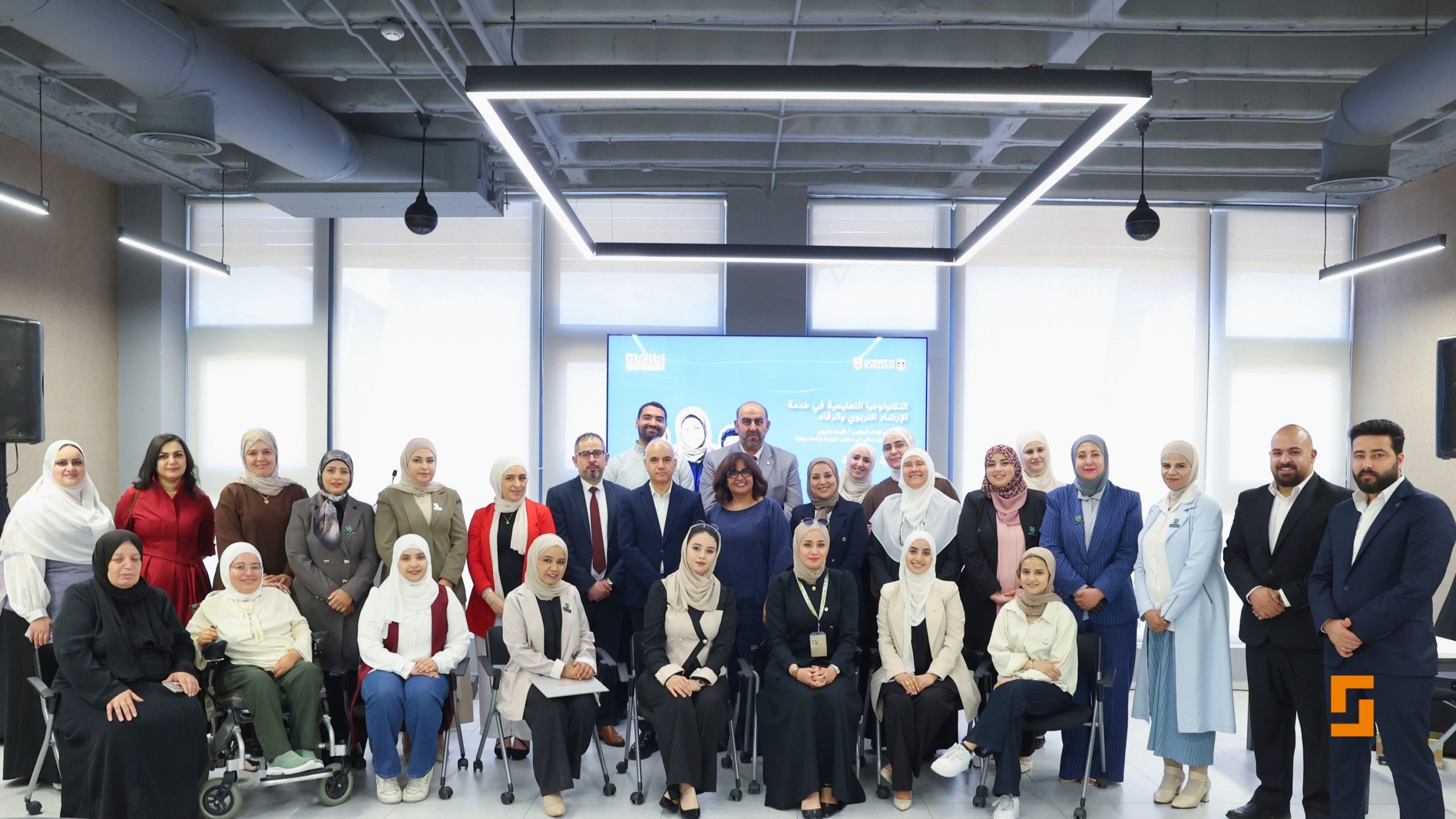
That Tuesday, educational leaders gathered in Amman for a milestone that didn’t involve test scores or graduation rates. Instead, the event at the University of Jordan marked the moment AnaAkhtar—a UAE-based platform built specifically for school counsellors—shifted from field validation to institutional adoption. Two years of implementation across private schools and nine public institutions had produced something increasingly rare in educational technology: evidence that focusing on counsellors, rather than replacing them, might actually work.
The platform tackles a problem most school systems acknowledge but struggle to address. Students in crisis, students withdrawing emotionally, students masking distress—they rarely trigger alerts in conventional school data systems. Grades might hold steady even as wellbeing collapses. Attendance records miss the student present in body but absent in every other sense.
“In education, we’ve mastered measuring a great deal – grades, attendance, averages,” Al-Otaibi, AnaAkhtar’s founder and CEO, told the gathering. “But the hardest thing about a student is what never appears in any table. We built AnaAkhtar in Arabic to give counsellors time, clarity, and the early signals they need to understand and support each student – within a context that reflects our own students and culture.”
The Arabic focus isn’t cosmetic. While learning management systems and academic platforms proliferate across the Middle East—most adapted from English-language products—tools purpose-built for counsellors remain scarce. AnaAkhtar constructed its approach on CASEL frameworks, the internationally recognised standards for social and emotional learning, but adapted the implementation for contexts where family structures, cultural expectations, and communication patterns differ markedly from Western models.
What emerged is a system connecting students, parents, counsellors, and administrators within a single framework. Student engagement converts into indicators. Patterns surface before they become crises. Counsellors gain follow-up tools that don’t require rebuilding workflows from scratch. Institutions can track trends at school, city, and network levels—not to surveil, but to allocate support where data suggests it’s needed.
The two-year validation took parallel tracks. Private schools adopted directly, integrating the platform into existing counselling operations. Public school deployment ran through a different mechanism: the University of Jordan partnership placed Higher Diploma candidates in nine schools, where they applied AnaAkhtar as part of their training in Teacher Preparation and Educational Counselling. For these candidates, implementation wasn’t theoretical. They worked directly with students, generating both thesis material and real-world counselling data simultaneously.
That dual approach—controlled private adoption and university-supervised public deployment—provided validation across different school types and socioeconomic contexts. By June, patterns had emerged. Not all of them appeared in Tuesday’s presentations, but the decision to proceed with broader adoption for the 2026-2027 academic year suggested the outcomes justified expansion.
Prof. Dr. Mohammad Al-Zyoud, Dean of the Faculty of Educational Sciences at the University of Jordan, used the event to emphasise a principle often acknowledged but rarely funded: attention to student growth and counsellor support matters as much as academic attainment. The collaboration between his faculty and AnaAkhtar operated under a formal memorandum of understanding, lending institutional weight to what might otherwise have remained a narrow pilot.
The event, held under Al-Zyoud’s patronage, drew school principals, counsellors, and diploma candidates. Remote participants joined from elsewhere in the Arab world—a signal that interest extends beyond Jordan’s borders. Certificates went to the Higher Diploma candidates who carried out the field work, along with supervisors and faculty members who guided the implementation. Recognition of labour that typically disappears into “pilot program” footnotes.
What the platform demonstrates, two years in, is less about technology than about centering the right person. Educational technology often seeks to automate, streamline, or replace human judgment. AnaAkhtar’s wager went the opposite direction: give counsellors better tools and earlier signals, then step back. The difference shows in architecture—this isn’t software that tries to counsel students. It’s software that equips counsellors to do their work more effectively within resource constraints that won’t disappear.
For institutions preparing to adopt in 2026-2027, the pitch isn’t transformation. It’s pragmatic. Counsellors already overwhelmed by caseloads gain time. Administrators trying to justify staffing decisions gain data showing where interventions make impact. Parents uncertain how to communicate concerns gain structured channels. Students who might otherwise slip through gaps get noticed earlier.
The Arabic context shapes all of it. Translation alone wouldn’t suffice—the platform reflects family communication norms, cultural attitudes toward mental health disclosure, and institutional hierarchies specific to the region. That localisation took time to build, which partly explains the two-year validation period before pushing toward wider adoption.
By the close of Tuesday’s event, the central tension had clarified. Schools across Jordan and the broader Arab world face counsellor shortages, rising student mental health needs, and data systems blind to everything except academic performance. AnaAkhtar spent two years demonstrating one approach to that problem. Now comes the harder test: whether institutions will adopt a tool that doesn’t promise quick fixes, only better visibility into students who’ve been there all along.
The platform’s expansion plans for 2026-2027 will determine if two years of field work translate into sustained adoption. For Al-Otaibi and her team, the question that started everything hasn’t changed. It’s just moved from hypothesis to implementation: once you can finally see the students who never appeared in your spreadsheets, what will you actually do for them?
