
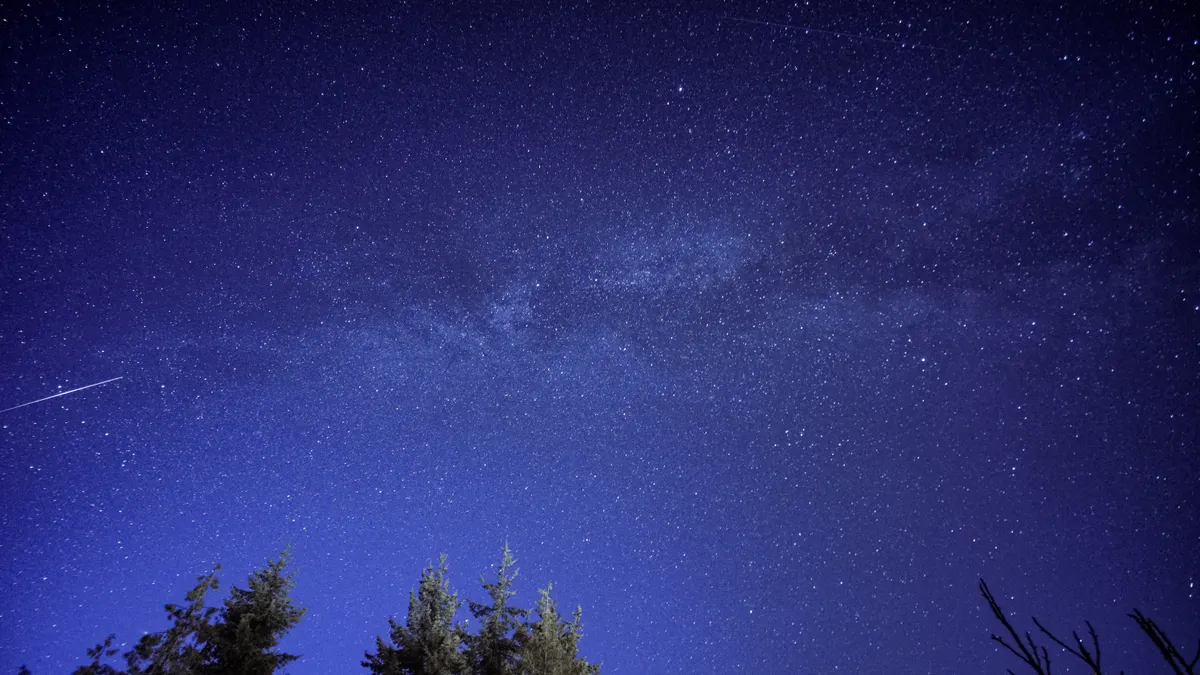
The International Astronomical Center (IAC), the UAE Astronomy Center, issued a corrective statement on 12 August 2026 pushing back against media reports it said had exaggerated or misrepresented four astronomical events occurring that day: a total solar eclipse, the Perseid meteor shower, a planetary alignment, and a new moon.
Total solar eclipse: real, but not visible from the UAE
The IAC confirmed the solar eclipse is genuine. According to NASA Goddard Space Flight Center, the maximum duration of totality reaches 2 minutes and 18 seconds, with the path of totality crossing Russia, Greenland, Iceland, Spain, and Portugal. Greatest eclipse occurs at 17:47 UTC.
The IAC said totality will be visible from Siberia, the North Pole, Greenland, Iceland, parts of the northeastern Atlantic Ocean, Spain, and the western Mediterranean Sea. North America, western and central Europe, Russia, and parts of western Africa, including Mauritania, Morocco, Algeria, Tunisia, and northwestern Libya, will see a partial eclipse.
According to NASA Science, totality begins in Iceland at 17:45 UTC and reaches Spain at 18:28 UTC. The path of totality is a distinct route: the previous total solar eclipse, in April 2024, swept across North America.
The IAC noted that during totality, observers in the path will be able to see the Sun’s chromosphere and corona, with the corona’s shape varying according to the intensity of the solar magnetic field.
UAE Astronomy Center on Perseids: favourable conditions, but city lights a factor
The IAC said conditions for viewing the Perseid meteor shower are particularly favourable in the Arab region this year. The absence of moonlight during the peak, caused by the coinciding new moon, improves visibility. The shower runs annually from 17 July to 24 August, with activity intensifying between 11 and 14 August. Meteors were visible Wednesday night through Thursday morning.
Outside estimates of the peak rate vary: EarthSky puts the rate at 50 to 100 meteors per hour at a dark site, while Royal Museums Greenwich gives a figure of up to 150 per hour. The Planetary Society estimates 50 to 75 per hour at a dark site. The IAC cautioned that from an urban location only a few meteors are likely to be visible because of light pollution.
The Perseids take their name from the Perseus constellation. The International Astronomical Center operates the UAE Astronomical Cameras Network (UACN), a series of sky-facing cameras at sites across the country that automatically record video when a meteor is detected.
Planetary alignment and new moon: IAC rejects the hype
The IAC was direct about the planetary alignment claims, calling them ‘exaggerations amounting to misinformation.’ It explained that planets are always aligned along the ecliptic, an imaginary line in the sky, and that Venus, Saturn, Mars, Mercury, and Jupiter simply appear above the horizon at different points during Wednesday night. The proximity of Mercury and Jupiter to the Sun makes both nearly invisible; of the remaining planets, only Venus is easily seen, appearing as a bright object on Wednesday evening.
The IAC dismissed the fourth event, the new moon, as an ordinary lunar phase with no special significance, saying social media reports attributing unusual features to it are false.
Further detail on the eclipse path is available via the NationalEclipse.com 2026 eclipse maps. The next phase of Perseid activity will taper off toward the shower’s end date of 24 August.
