
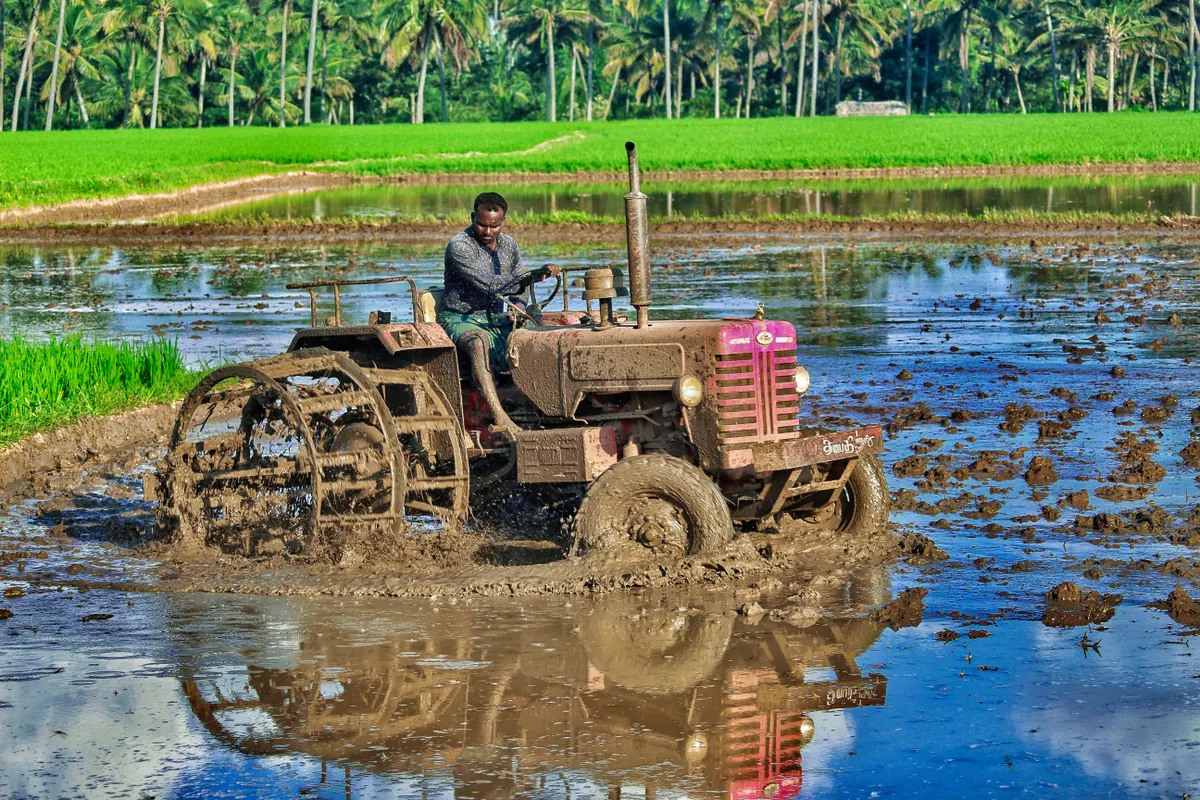
The UAE winter growing season calls for soil work, irrigation checks and nursery preparation in September, long before seeds go in the ground, according to Emirati farmer Ahmed Al Hafiti. Al Hafiti, who grows crops across varying terrain, said the groundwork laid now determines whether plants survive the months ahead.
‘Preparing the land and the soil is half of farming,’ he said. ‘Many people plant without paying enough attention to the condition of the soil and later wonder why their plants have died.’
Soil and land preparation for the UAE winter growing season
Al Hafiti said land should be improved at least a month before planting begins. That means clearing the area, pulling weeds and leftover vegetation, then ploughing and aerating the soil to let it breathe.
Crop rotation matters too. Al Hafiti said farmers should avoid planting the same crop in the same spot repeatedly. Where rotation is not possible, the land should be rested for a season.
For growers with limited space who could not rest the land during summer, he recommended exposing soil to the sun, ploughing it and clearing it of pests before applying fertiliser. Watering once or twice after fertilisation helps the material settle and supports soil enrichment.
Water efficiency is a parallel concern. The Ministry of Climate Change and Environment (MOCCAE) has noted that feed crops such as Rhodes grass were estimated to account for around 60% of agricultural water use and over 30% of total water consumption in the UAE, a pressure point that pushed the government to phase the crop out. Al Hafiti’s advice points in the same direction: drip irrigation, he said, is the better option because it conserves water. Irrigation systems, particularly older ones, should be checked for blockages and leaks before the season starts.
Soil conditions vary sharply across the country. Al Hafiti noted that the UAE has sandy desert soil, clay soil and mountainous terrain. Some parts of Fujairah can be around five to 10 degrees Celsius cooler than areas such as Dubai, which affects both timing and crop selection.
Increasing soil salinity adds to the challenge. The UAE’s submission to the United Nations Framework Convention on Climate Change flagged that higher evaporation rates are expected to raise salinity in UAE soils over time, narrowing the range of crops that can tolerate the already arid environment.
Starting small and choosing the right crops
As temperatures moderate, Al Hafiti said farmers can begin preparing nurseries and planting seedlings under shade. Tomatoes, for example, can start in a shaded area before being moved into direct sunlight once temperatures drop and the plants strengthen.
For first-time growers, he urged a different approach: start with a small plot and a limited number of varieties. Learn what each plant needs in terms of water, sunlight and soil. Do not expect immediate results.
Research by ICARDA on desert farming systems in the UAE has shown that net houses made from insect-proof mesh, combined with solar-powered root zone cooling, have allowed crops such as cucumbers to be grown through the hottest months when external temperatures climb above 42°C. For beginners, that level of infrastructure is not the starting point; Al Hafiti’s advice is simpler: master one small patch first.
MOCCAE’s own experiments, detailed in a December 2014 report on quinoa cultivation, showed that four of eight quinoa varieties grew successfully at UAE agricultural research centres using irrigation, fertilisation and pest-prevention systems, with productivity reaching 4.5 tonnes per hectare. The ministry expanded the cultivated area to six acres in the season studied. It is an illustration of what structured preparation can yield even in an arid climate.
‘Successful farming begins with proper preparation before the first seed is placed in the soil,’ Al Hafiti said. With September already under way, the window for that groundwork is now.
