
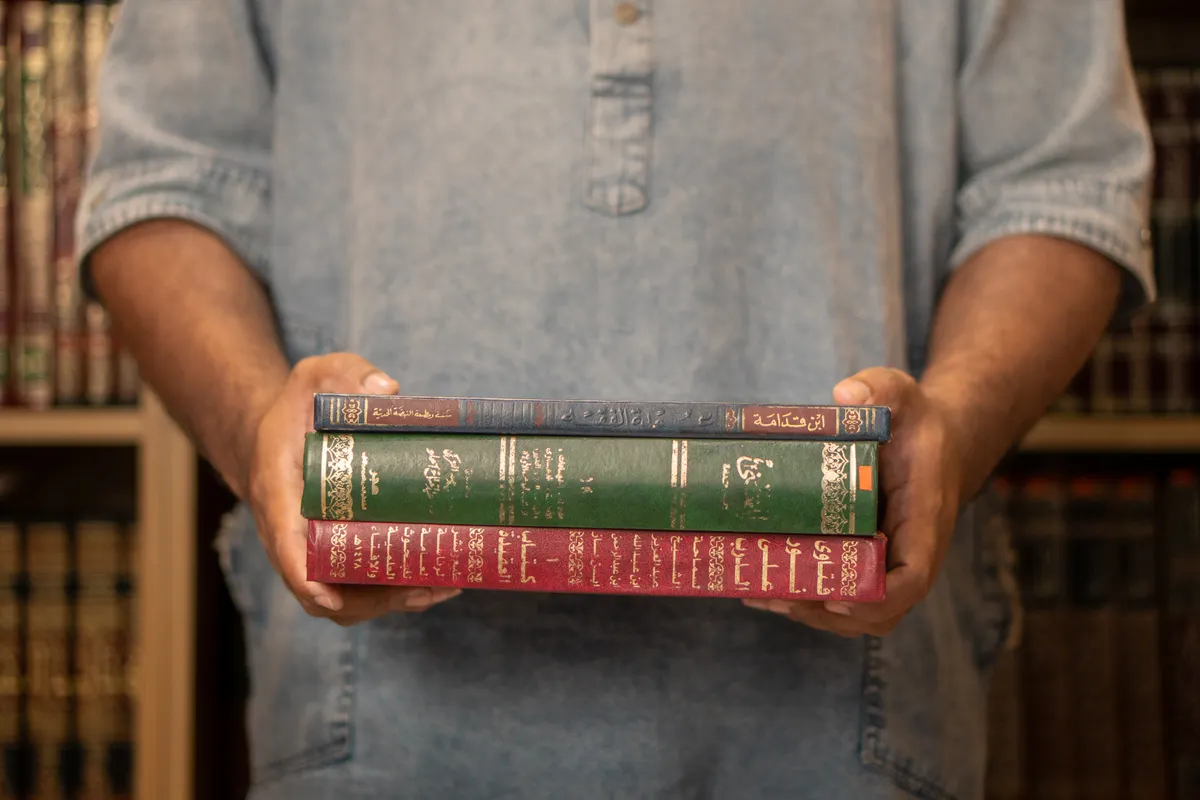
The Abu Dhabi Arabic Language Centre has launched the Digital Arabic Library on Amazon, a partnership targeting the digitisation of 100,000 Arabic books and already offering more than 38,000 titles to readers worldwide.
The storefront, live on Amazon, includes over 33,000 Kindle eBooks and 5,000 Audible audiobooks, with more than 1,000 titles available at no cost, according to the Amazon newsroom. The two partners said the programme will run over three years.
Digital Arabic Library: what is live and what comes next
Dr Ali bin Tmeem, chairman of the Abu Dhabi Arabic Language Centre, said 42,000 books have already been digitised, with the total expected to reach 62,000 by next year. The longer-term target of 100,000 titles is intended to connect what Amazon describes as more than 400 million Arabic speakers with their cultural heritage.
Bin Tmeem made the remarks at the Congress of Arabic and Creative Industries, held in its fifth edition on 20 September 2026 at Manarat Al Saadiyat in Abu Dhabi. He framed the initiative as part of a broader effort to “change the book and reading industry” and support technological development for the Arabic language.
The Abu Dhabi Arabic Language Centre sits within the Department of Culture and Tourism – Abu Dhabi as a decree-law establishment, according to the Institut du Monde Arabe.
Arabic online: a 1% share of AI training data
Bin Tmeem said Arabic accounts for roughly 1 per cent of the data used to train major large language models. Arabic text, he added, is often processed through intermediary languages before being analysed, which can alter meanings and affect how the Arab world is understood globally.
He drew on results from the Congress ACI Arab Youth Pulse Survey 2025, conducted in partnership with Ipsos and covering 4,092 young people aged 18 to 25 across 10 MENA countries. The survey found that while 91 per cent use Arabic at home, only 64 per cent use it at work or school, and 77 per cent regard English as essential to achieving their goals. Half called for greater investment in Arabic within technology and artificial intelligence. Separately, The National reported that 71 per cent of survey respondents prefer media in Arabic, while 67 per cent believe Arabic content needs to evolve.
The full survey methodology is detailed in the Ipsos ‘From Roots to Relevance’ report, produced in collaboration with the Congress and Strategy&.
Bin Tmeem also cited the Sama proficiency exam, developed with the Institut du Monde Arabe, as a complementary tool. The institute’s Arabic proficiency certificate, CIMA, was launched in 2018 and is recognised by international academic institutions; the Abu Dhabi Arabic Language Centre’s partnership with the institute includes collaboration with the Alliance Française, which oversees CIMA testing centres in the UAE.
Anne-Claire Legendre, president of the Institut du Monde Arabe, pointed to the scale of the Arabic content market: Arabic-language TV series have seen 300 per cent growth, driven by demand across a region of roughly 450 million speakers. She said growth was not being fully captured because regulations vary by country, cross-border book distribution is difficult, animation and film funding is limited, and piracy is widespread. French regulations requiring streaming platforms to carry 20 to 25 per cent French-produced content offered one model of state intervention, she said.
Professor Roberto Tottoli of the University of Naples L’Orientale argued that language demand can be built deliberately. Interest in Korean at his institution had grown from five students a year 15 years ago to hundreds today, he said, driven by political investment and cultural diffusion. He suggested a comparable push around Arabic content could replicate that trajectory.
The Abu Dhabi Media Office confirmed the initiative makes titles accessible to millions of readers worldwide. Details of the next phase of digitisation, and the timetable for reaching the 100,000-book target, are expected from the centre as the three-year programme proceeds.
