
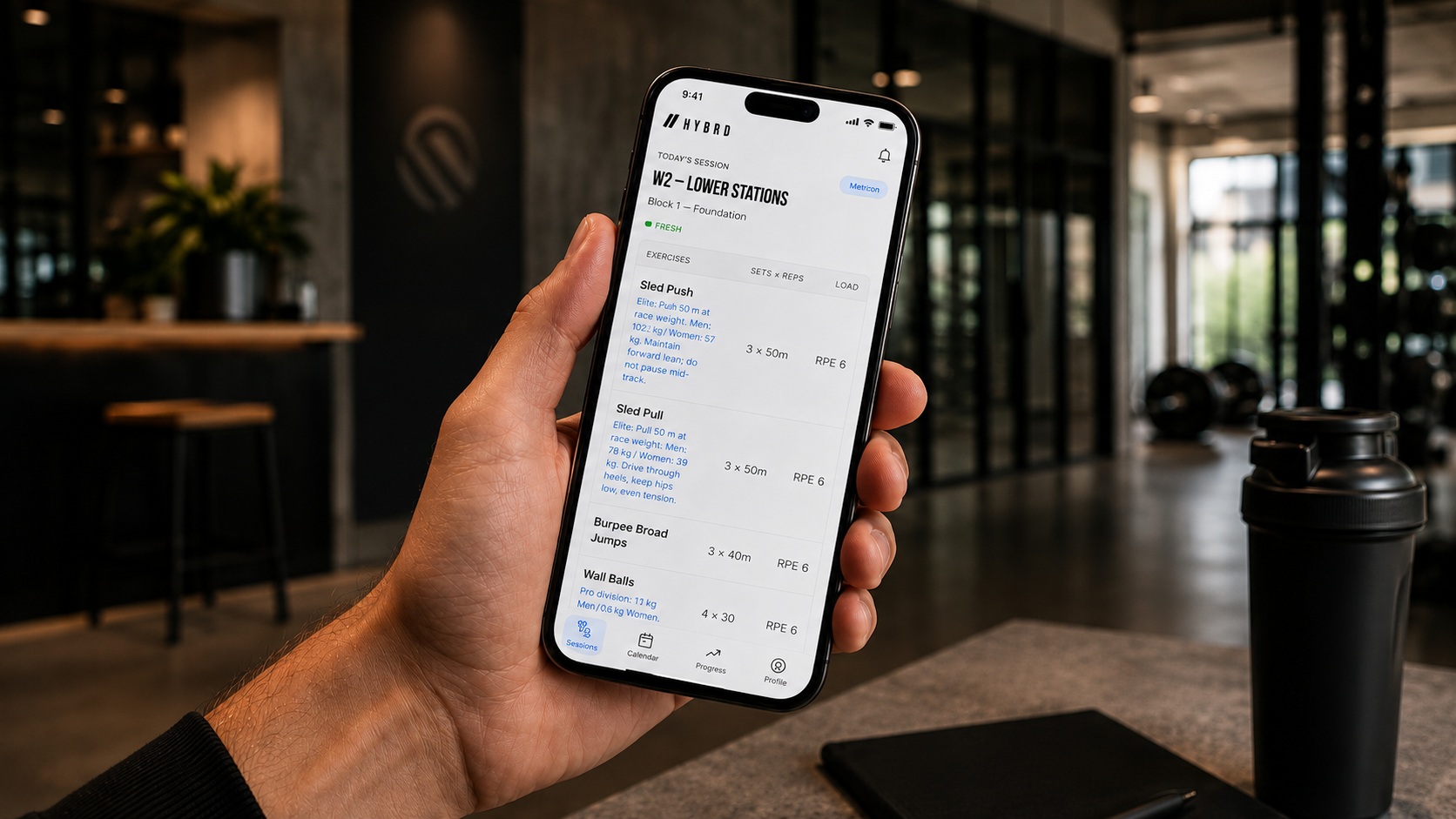
Body Unit Academy launched HYBRD on 10 June in Dubai, wagering that gym-goers crave structure over motivation. The UK-based fitness education organisation built the platform around a single premise: most people abandon training programmes within weeks not because the workouts are too easy, but because they lack a system worth following.
The timing matters. Fitness apps have multiplied over the past five years, yet completion rates remain stubbornly low across the industry. HYBRD takes the opposite approach to 30-day challenges and standalone workout libraries.
Instead, users commit to year-long training pathways. All 52 weeks. Pre-programmed.
“Most people do not need a harder workout. They need a system they can trust and follow consistently,” said Fouad Elfil, founder of Body Unit Academy. “HYBRD combines coaching expertise, structured programming, and intelligent automation to create a personalized training experience that evolves with the user. By removing guesswork and adapting to individual progress and recovery, the platform helps people stay focused on what matters most: showing up and making sustainable progress.”
Each session arrives with sets, repetitions, rest periods, and progression models already mapped. Recovery protocols adjust based on user data. The platform handles eight training disciplines: CrossFit, strength development, muscle building, fat loss and conditioning, general fitness, women’s toning, mobility and recovery, and HYROX preparation.
That last category reflects broader shifts in functional fitness. HYROX competitions—combining running with functional exercises—have grown rapidly since 2021, creating demand for specialised training programmes that existing apps haven’t addressed comprehensively.
Body Unit Academy developed HYBRD through its network of fitness educators and performance specialists, the same team that delivers professional courses for organisations including NSCA, NASM, AFAA, and ISSA. The academy holds official education provider status with those bodies, a credential that distinguishes it from consumer-focused fitness brands.
The platform’s architecture differs from competitors like Peloton or Apple Fitness+ in fundamental ways. Where those services emphasise instructor-led classes and workout variety, HYBRD prioritises long-term progression. Users aren’t selecting today’s session from a catalogue—they’re advancing through a predetermined annual plan that adapts to their recovery and performance data.
Whether that approach resonates with consumers accustomed to flexibility remains unclear. The fitness app market has historically rewarded variety and short-term engagement over structured annual commitments. HYBRD’s model assumes users will trade spontaneity for systematic progress.
Fouad Elfil built Body Unit Academy on science-based coaching methodologies, an approach that often conflicts with the quick-results messaging dominating fitness marketing. The decision to launch HYBRD in Dubai, rather than London where the academy is based, signals ambitions beyond the UK market.
The platform went live globally this week. New users can access a 30-day trial using the code HYBRD30, though the company hasn’t disclosed pricing beyond the trial period. That month-long window offers just enough time to test whether structured annual programming can break the dropout cycle that derails most fitness commitments.
By summer’s end, early adoption numbers will reveal whether the fitness industry’s consistency problem has found a viable solution—or whether year-long programmes prove too rigid for users who’ve grown accustomed to on-demand variety.
For Body Unit Academy, the launch represents a bet that coaching expertise and structured progression can compete with celebrity instructors and gamified challenges. The organisation spent years training fitness professionals on scientific principles. Now it’s testing whether those same principles translate to consumer technology.
What’s certain is this: HYBRD challenges the dominant model in fitness apps, where engagement metrics often prioritise workout completion over sustainable results. Whether users will commit to 52 weeks of pre-planned training—and whether the platform can retain them through the inevitable plateaus and motivation dips—will determine if this approach reshapes how digital fitness operates.
The platform is accessible now at www.hybridfitness.fit, where the real experiment begins.
