
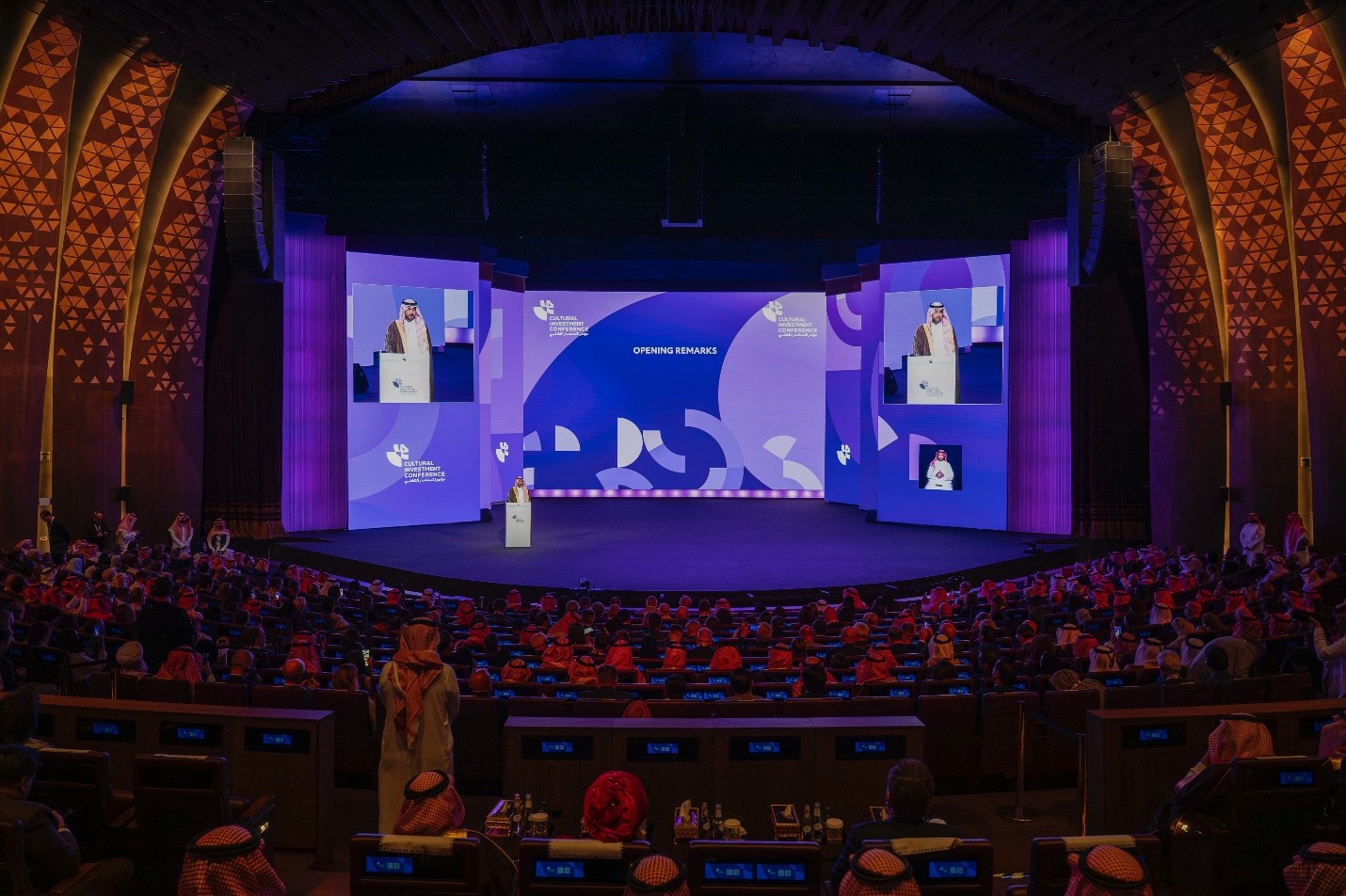
The two-day conference wrapped up with new initiatives and international dialogue that advanced cultural investment and set a course for long-term growth.
Riyadh – 2 October 2025: The Cultural Investment Conference 2025 has concluded in Riyadh, underscoring culture as both an economic asset and a catalyst for sustainable growth. Held on 29–30 September and organised by the Saudi Ministry of Culture under the patronage of His Royal Highness Prince Mohammed bin Salman bin Abdulaziz Al Saud, Crown Prince and Prime Minister, the event brought together more than 100 speakers and 1,500 participants, reinforcing Saudi Arabia’s role as a global hub for cultural investment.
The opening day commenced with a keynote address by His Highness Prince Bader bin Abdullah bin Farhan Al Saud, Saudi Minister of Culture. His remarks highlighted Saudi Arabia’s commitment to developing a vibrant cultural economy that empowers talent, supports innovation and elevates the Kingdom’s status on the global stage.
A key highlight of Day One was the ministerial plenary session titled “From Policy to Prosperity – Culture as a Strategic Investment,” featuring His Excellency Faisal F. Alibrahim, Minister of Economy and Planning, and His Excellency Khalid Al-Falih, Minister of Investment. The discussion set out a national framework designed to integrate cultural priorities into economic forecasts, invest in cultural infrastructure and heritage, and enhance creative skills through education and workforce development.
Throughout the day, international and local voices shared perspectives on building sustainable creative economies and embedding culture within global growth strategies. Discussions stressed the importance of finance and investment in transforming cultural ventures into credible, structured markets, while also spotlighting the expanding impact of cinema and entertainment as engines of cultural and economic influence.
The conference achieved tangible outcomes with the signing of 89 agreements worth SAR 4.3 billion. These included the launch of an investment fund by the Cultural Development Fund and the Cultural Assets Group; a dedicated investment fund in the film sector in partnership with BSF Capital; and another focused on the fashion industry in collaboration with Merak Capital, alongside other significant agreements spanning public, private and non-profit sectors.
New initiatives further underscored the conference’s impact in shaping Saudi Arabia’s cultural economy. Audi Capital unveiled the Kingdom’s—and the MENA region’s—first CMA-regulated art investment fund, opening up new opportunities for cultural financing. Colnaghi, one of the world’s oldest art galleries, announced a partnership with Sarat Investment Holding to establish its first Middle East gallery in Riyadh. A strategic agreement with the Royal Commission for AlUla will drive cultural and heritage development in AlUla, reinforcing its position as a global destination. Together, these initiatives highlight Saudi Arabia’s growing influence as a hub for cultural investment and innovation.
Breakout sessions in the Culture Studio explored leadership, entrepreneurship and cultural innovation, alongside discussions on philanthropy, heritage and storytelling that examined the role of capital, partnerships and technology in preserving authenticity and amplifying diverse voices. The day concluded with an exploration of investor priorities, showcasing how cultural initiatives can attract global capital through ventures in immersive experiences, heritage preservation and next-generation performance spaces.
Day Two opened with a keynote by Her Royal Highness Princess Reema bint Bandar Al-Saud, Ambassador of the Kingdom of Saudi Arabia to the United States of America. Under the theme “From the Kingdom to the World – Investing in Culture and Identity,” her address reflected on how culture shapes national identity, strengthens global partnerships and supports sustainable growth.
A milestone announcement followed as Google Arts & Culture revealed a partnership with Jeddah Historic District, a UNESCO World Heritage site. The collaboration will digitise the district using Street View technology, making its heritage accessible worldwide for the first time. This initiative highlights the Kingdom’s dedication to harnessing technology to share its cultural legacy with the world while preserving its historic landmarks.
The final day also focused on culture’s role as a catalyst for economic growth and global competitiveness, with national leaders discussing how policy, talent development and investment frameworks are embedding creativity into the Kingdom’s diversification strategy. Saudi Arabia’s giga-projects and creative industries were presented as international cultural showcases, featuring developments such as Qiddiya, New Murabba and NEOM—all rooted in cultural expression—while music, fashion, design and hospitality were highlighted as rapidly expanding cultural and economic sectors.
The Cultural Investment Conference 2025 reaffirmed Saudi Arabia’s leadership in positioning culture as a driver of global growth. The conference laid the foundations for long-term partnerships and innovative models that will shape the creative economy of the future.
