
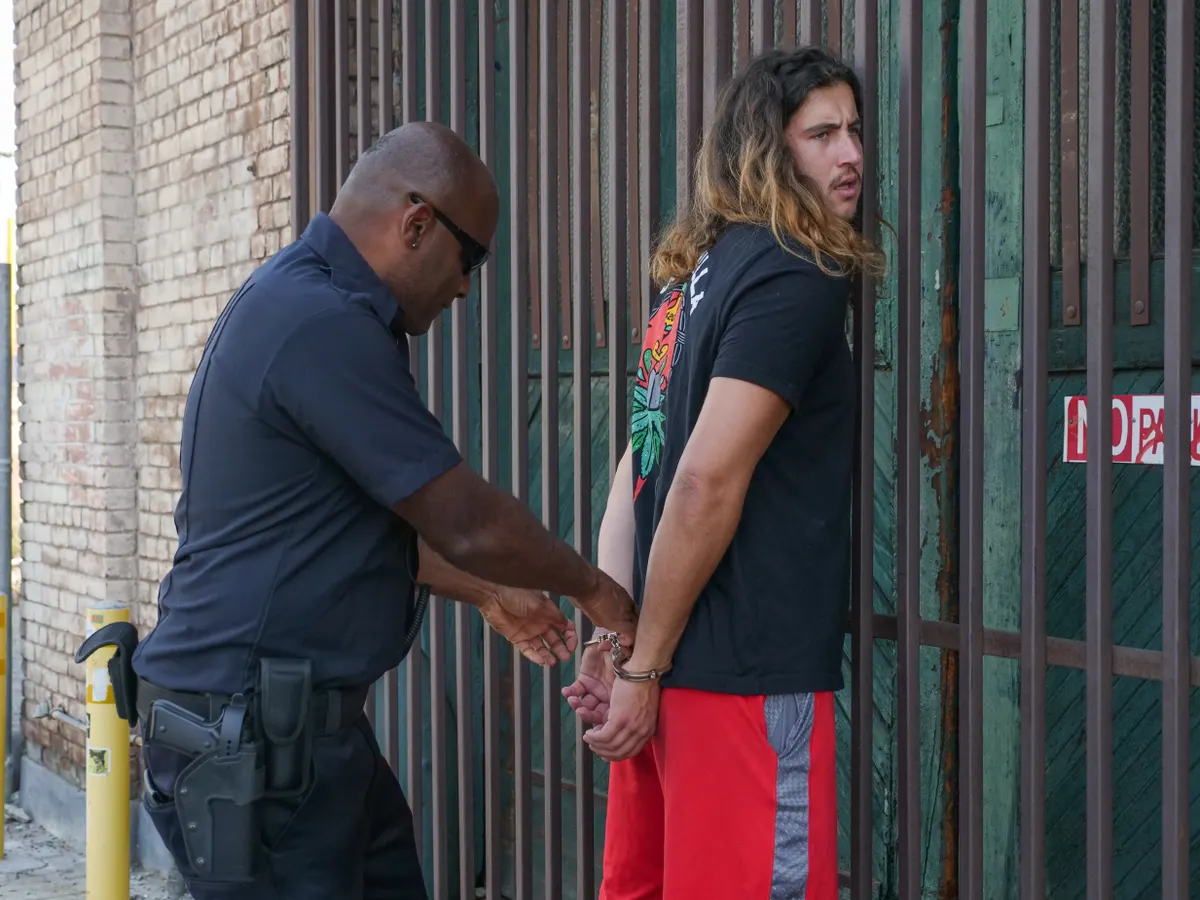
Irish fugitive Daniel Kinahan was extradited from the UAE and handed to Irish authorities on 9 August 2026, the latest in a sequence of high-profile criminal handovers coordinated between Dubai Police and international law enforcement agencies. Kinahan faces prosecution for leading a criminal organisation, murder, and illegal drug trafficking.
The United States named Kinahan in 2022 as one of three leaders of the Kinahan Organised Crime Group and offered a $5 million reward for information leading to arrests. He had fled to Dubai in 2016 following a shooting attack at a Dublin hotel involving a rival gang. The organisation began by distributing cocaine and heroin in Ireland before expanding operations across the UK and mainland Europe, and has been linked to money laundering and firearms trafficking.
A record of Daniel Kinahan UAE extradition cases and cartel arrests
The Kinahan handover follows several other significant extraditions carried out in recent years. Dubai Police data released in 2022 showed the force had arrested 432 international fugitives between 2020 and 2022 and extradited 379 of them to 30 countries over the same period.
Sean McGovern, another senior figure in the Kinahan network, was arrested by Dubai Police in 2024 after Interpol issued a Red Notice against him. For several years prior, he had been subject to a Blue Notice, which is used to gather information on a person’s location and activities. Dubai Police detained McGovern within an hour of the Red Notice being published on 10 October 2024, following joint work between Interpol, Dubai Police, and Irish police in a cooperation effort known as Operation Harvest.
Belgian-Moroccan national Othman El Ballouti, known as the ‘Cocaine King’ and listed on both Interpol and Europol wanted lists, was arrested in Dubai following a request from Belgian authorities. Dubai Police confirmed on 9 December that El Ballouti had been referred to the Dubai Public Prosecution for extradition proceedings. Belgium and the UAE had signed an extradition agreement in 2021. El Ballouti was extradited alongside two others: Matthias Akyazili and Georgi Faes.
Raffaele Imperiale, a member of the Camorra organised crime group and then Italy’s most-wanted criminal, was arrested by Dubai Police on 30 July 2021. He had been living under the false name ‘Antonio Rocco’ and had deliberately avoided registering an address to evade detection. Dubai Police used their Oyoon smart camera network to track his movements for a week before the arrest. Brigadier Jamal Salem Al Jallaf, director of the Criminal Investigation Department, said at the time: ‘Backed with the latest artificial intelligence technology, our officers kept track of Imperiale’s movements and revealed his deceptive methods in evading detection. At the zero hour, a team raided the house and arrested Imperiale.’ His associate, Raffaele Mauriello, was arrested on 14 August 2021 and carried two Interpol Red Notices for separate murder cases.
UK drug trafficker Michael Paul Moogan was arrested in Dubai in 2021 after eight years as a fugitive, as part of Operation Captura. He had been wanted in connection with a large-scale plot to bring substantial quantities of cocaine into the UK weekly, with logistics traced to meetings at a Rotterdam cafe. Investigators identified him despite his use of a different name and nationality when entering the UAE.
How the UAE’s extradition framework operates
The UAE has steadily expanded the legal architecture supporting these arrests. The UAE Ministry of Foreign Affairs signed a comprehensive judicial cooperation agreement with Poland in September 2022, covering extradition, the transfer of convicts, and assistance in criminal matters.
In July 2025, the Ministry of Foreign Affairs and the Ministry of Justice jointly launched an International Judicial Cooperation Service, a unified digital system enabling the swift exchange of judicial requests and supporting documents between UAE diplomatic missions abroad, foreign missions accredited to the UAE, and the two ministries. The service was introduced under Phase Two of the UAE’s Zero Government Bureaucracy Programme and operates through a centralised digital channel in three steps.
Arrests in the UAE following a Red Notice are typically processed through the Dubai Public Prosecution before extradition requests are formally transferred. El Ballouti’s case illustrated this route: Dubai Police made the arrest, referred the case to prosecutors, and Belgium’s extradition request was handled through the UAE Ministry of Foreign Affairs and Ministry of Justice’s International Cooperation Department.
Kinahan’s prosecution in Ireland is the next concrete stage in the case, following his formal handover on 9 August 2026.
