
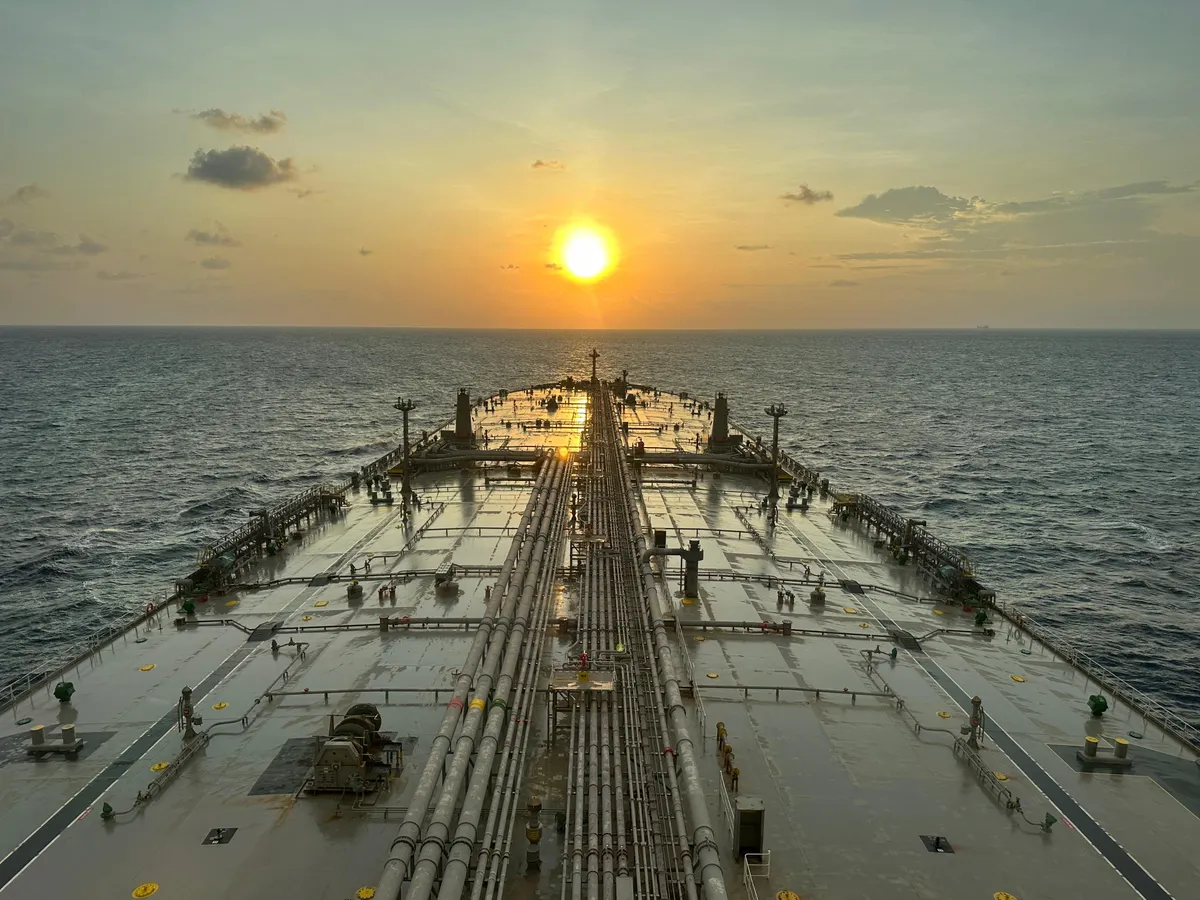
An ADNOC tanker came under missile attack while crossing the Strait of Hormuz in the early hours of 8 August, bringing to 16 the total number of the company’s vessels struck since the start of the regional conflict. No injuries were reported from the latest incident, and the situation was brought under control, ADNOC said.
The UAE Ministry of Foreign Affairs condemned what it described as an Iranian attack on the vessel, calling it a ‘blatant violation’ of UN Security Council Resolution 2817. The ministry said targeting commercial shipping and using the Strait as a ‘tool for economic pressure or blackmail constitutes an act of piracy by the Iranian Revolutionary Guard Corps’.
In its statement, the ministry said Resolution 2817 ‘affirmed the importance of freedom of navigation, and rejected the targeting of commercial vessels or the obstruction of international maritime routes’, and characterised Iran’s actions as a threat to ‘regional stability, its populations, and global energy security’. The UAE called on Iran to cease attacks and ensure full, unconditional reopening of the waterway.
Sixteen vessels attacked since conflict began
Prior to the 8 August strike, ADNOC had reported that 15 of its vessels had been attacked by missiles and drones while transiting the Strait of Hormuz. Three of those attacks occurred in the week of 7 August alone, according to Al Jazeera. ADNOC did not identify those three vessels or provide details on damage.
In a statement issued on 7 August, ADNOC said the attacks since the start of the war had resulted in one fatality and 20 injuries to crew members. The company said it continues to be ‘significantly impacted by unprovoked attacks on our people and our assets’ and is navigating an ‘exceptionally challenging environment’, but remains focused on meeting customer demands.
July 14 attack: cruise missiles, one killed, crew evacuated
The fatality occurred on 14 July, when two ADNOC crude oil tankers, Al Bahyah and Mombasa B, were struck by Iranian cruise missiles while transiting the southern shipping lane of the Strait of Hormuz, within Omani territorial waters. The crew member who died was aboard the Mombasa B. Eight others were wounded, four of them seriously, Reuters reported, citing the UAE Defence Ministry.
Oman’s maritime security centre said 18 crew members of Al Bahyah, which was struck off the coast of Musandam, were evacuated from the vessel. Three others remained missing after that attack.
Regional condemnation
Several Gulf states and Arab governments condemned the 8 August strike. Qatar’s Foreign Ministry rejected use of the Strait ‘as a tool of pressure’ and demanded that ‘unjustified Iranian attacks’ cease immediately, affirming Doha’s solidarity with the UAE, The National reported.
Saudi Arabia condemned the targeting of the ADNOC tanker ‘in the strongest terms’, stating that Iran’s continued attacks constituted a grave breach of international law and Resolution 2817, and demanded an immediate halt to the strikes. Jordan condemned the attack as a flagrant violation of international law and affirmed its full support for the UAE.
Bahrain’s Foreign Ministry called the attack a threat to maritime navigation and global energy supplies, urged the UN Security Council to protect shipping, and called on the international community to press Iran to reopen the Strait and halt attacks on commercial vessels, Iran International reported.
Wider stakes for global energy supply
The Strait of Hormuz carried roughly a fifth of the world’s oil and gas before the regional conflict began. It has been mostly closed since Iran mined and militarised the waterway in response to US and Israeli strikes, according to The National.
ADNOC said it is taking measures to protect its people, assets and operations, and called for the protection of freedom of navigation and safe passage through international waterways. The UAE Ministry of Foreign Affairs has demanded Iran’s full commitment to the complete and unconditional reopening of the Strait.
