
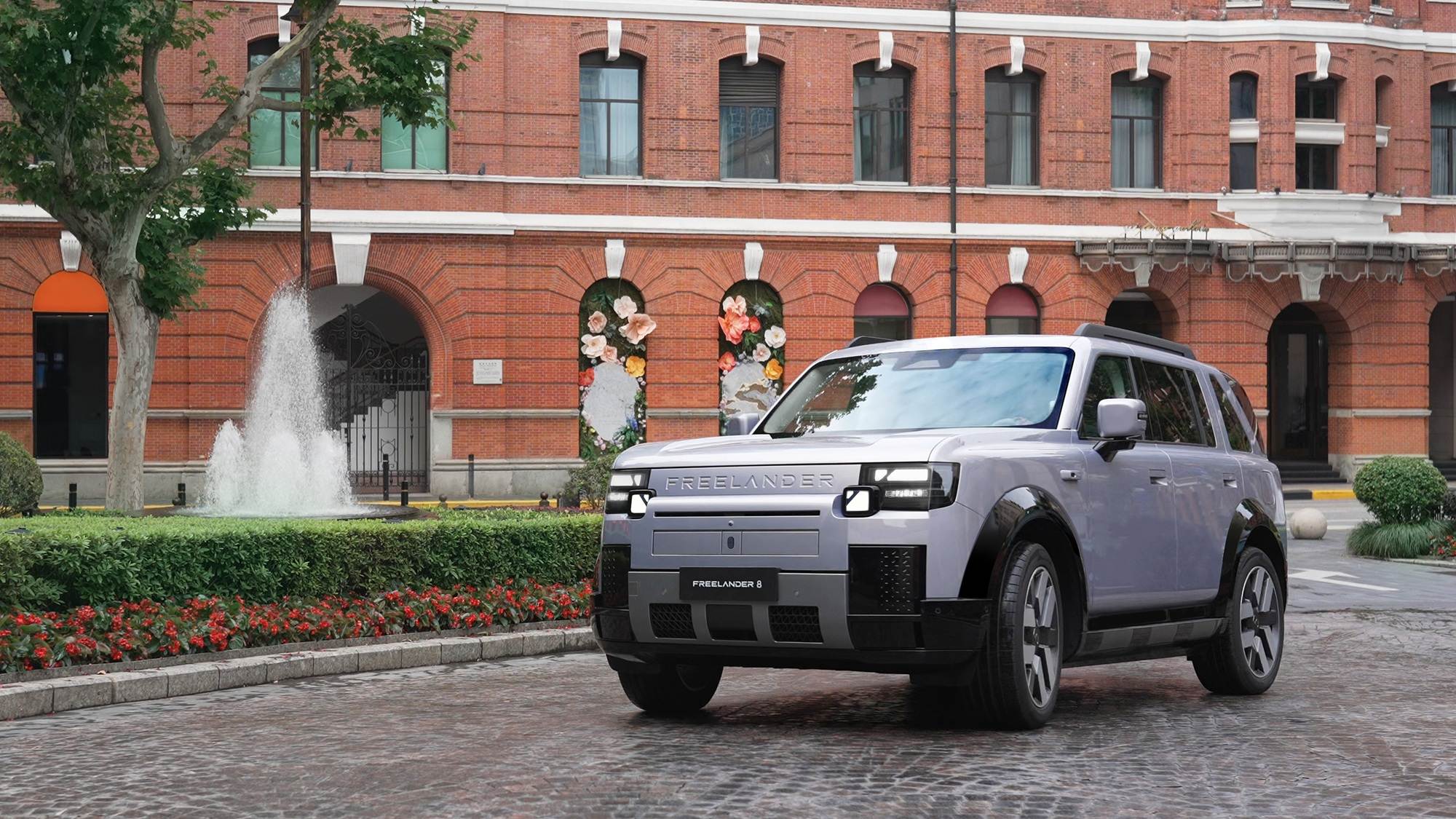
Senior officials from Abu Dhabi gathered at The Peninsula Shanghai on 11th June for a closed-door session that doubled as a vehicle showcase. The Freelander 8 sat in the hotel’s event space, marking the first public appearance of a nameplate that vanished from showrooms years ago.
Now it’s back. Sort of.
The revived Freelander emerges not from Jaguar Land Rover alone, but from an partnership between the British marque and Chinese manufacturer Chery. JLR handles design. Chery supplies the electric powertrain technology and manages supply chain integration. The result positions itself as what executives call a “British Premium Intelligent All-Terrain brand”—though the engineering tells a more complex globalisation story.
Lucia Mao, chief executive of FREELANDER International, addressed the investment forum attendees during the 11th June session. She outlined plans to launch the brand in Abu Dhabi before expanding to 90 countries and establishing 1,100 retail touchpoints within five years. The Middle East gets first access, ahead of European or Chinese launches—a sequencing decision that reflects where premium SUV demand and economic growth currently align.
The original Freelander badge first appeared in 1997 as Land Rover’s entry-level offering. That version was discontinued as JLR repositioned its portfolio around Range Rover variants and the Discovery family. This 2026 iteration carries the same name but represents an entirely different proposition: electric propulsion, Chinese manufacturing expertise, and a target market that begins in the Gulf Cooperation Council states rather than the Home Counties.
H.E. Hussain Bin Ibrahim Al Hammadi, the UAE’s ambassador to China, attended the Peninsula Shanghai event alongside H.E. Rashed Al Blooshi, chief executive of the Abu Dhabi Global Market Registration Authority, and H.E. Badr Al-Olama, director general at Abu Dhabi Investment Office. Their presence signals governmental interest in the venture beyond typical automotive product launches.
Mao explained the Middle East selection during her presentation. The region shows strong affinity for premium SUVs—a category where petrol-powered models have long dominated. Economic conditions remain robust. Geographic position offers access to surrounding markets. Whether electric all-terrain vehicles will replicate that petrol SUV success remains an open question, particularly given infrastructure and climate considerations.
The collaboration structure is unusual. Jaguar Land Rover, owned by India’s Tata Motors, contributes design language and brand heritage. Chery, one of China’s largest automotive groups, provides what the partnership terms “leading new energy technologies” and handles global supply chain coordination. Neither company disclosed financial arrangements, manufacturing locations, or how intellectual property splits between the partners.
Forum participants—primarily business leaders and investors attending the Abu Dhabi Investment Forum’s Shanghai session—expressed interest in the vehicle, according to company statements. The response matters because FREELANDER International is positioning the brand to compete in the premium electric SUV segment, where Tesla, BYD, and established European manufacturers already operate.
The five-year expansion timeline is aggressive. Ninety countries and 1,100 touchpoints would require an average of 18 new markets annually and roughly 220 retail locations per year. For context, that pace exceeds the international rollout speeds of most recent electric vehicle marques, though it remains below the targets set by several Chinese manufacturers now pushing into European and Asian markets.
Abu Dhabi’s selection as launch city—rather than London, Shanghai, or another major automotive market—reflects broader shifts in where premium vehicle brands see growth potential. The GCC states have historically embraced large SUVs and luxury segments. Whether that translates to electric variants is less proven, though several manufacturers have begun testing the proposition.
The Freelander name itself carries recognition in markets where the original model sold between 1997 and 2014. Reviving discontinued nameplates has produced mixed results across the industry—success depends on whether heritage value outweighs any negative associations from previous iterations or confusion about brand ownership.
Jaguar Land Rover’s involvement comes as the company executes its own electrification strategy, having announced plans to transform Jaguar into an electric-only brand while Range Rover and Defender models transition gradually. The Freelander collaboration sits outside that core portfolio, suggesting JLR sees value in leveraging its design capabilities across multiple partnerships rather than purely in-house development.
Chery’s participation aligns with its ambitions to move upmarket and expand internationally. The manufacturer has historically focused on volume segments and emerging markets. Partnering with an established premium nameplate potentially accelerates access to customers and markets that might otherwise take years to cultivate independently.
No specifications, pricing, or exact launch dates have been confirmed. The Abu Dhabi debut is scheduled for later this year, though FREELANDER International has not specified which month. Details on battery capacity, range, performance figures, and how the vehicle differentiates from competitors remain undisclosed.
The investment forum setting for the first public showing is deliberate. Rather than a motor show or press event, FREELANDER chose a venue filled with potential investors and government officials—signalling that capital and political support matter as much as consumer interest at this stage.
By the time the Abu Dhabi launch arrives, the regional electric vehicle landscape may look different. Several manufacturers have announced Middle East expansion plans for 2026. Infrastructure development continues, though charging networks remain far less developed than in Europe or China. Summer temperatures present thermal management challenges for battery systems.
What’s certain is the timeline. Five years to reach 90 countries. Abu Dhabi within months. The Peninsula Shanghai event on 11th June marked the starting point. Whether the revived Freelander can match the global footprint ambitions of its leadership now depends on execution, market reception, and whether blending British heritage with Chinese technology produces the premium all-terrain credentials that Mao’s team promises.
For now, the vehicle that sat in Shanghai has generated interest. Converting that into committed orders, functional dealer networks, and sustained market presence across nearly 100 countries will require rather more than a successful forum appearance.
