
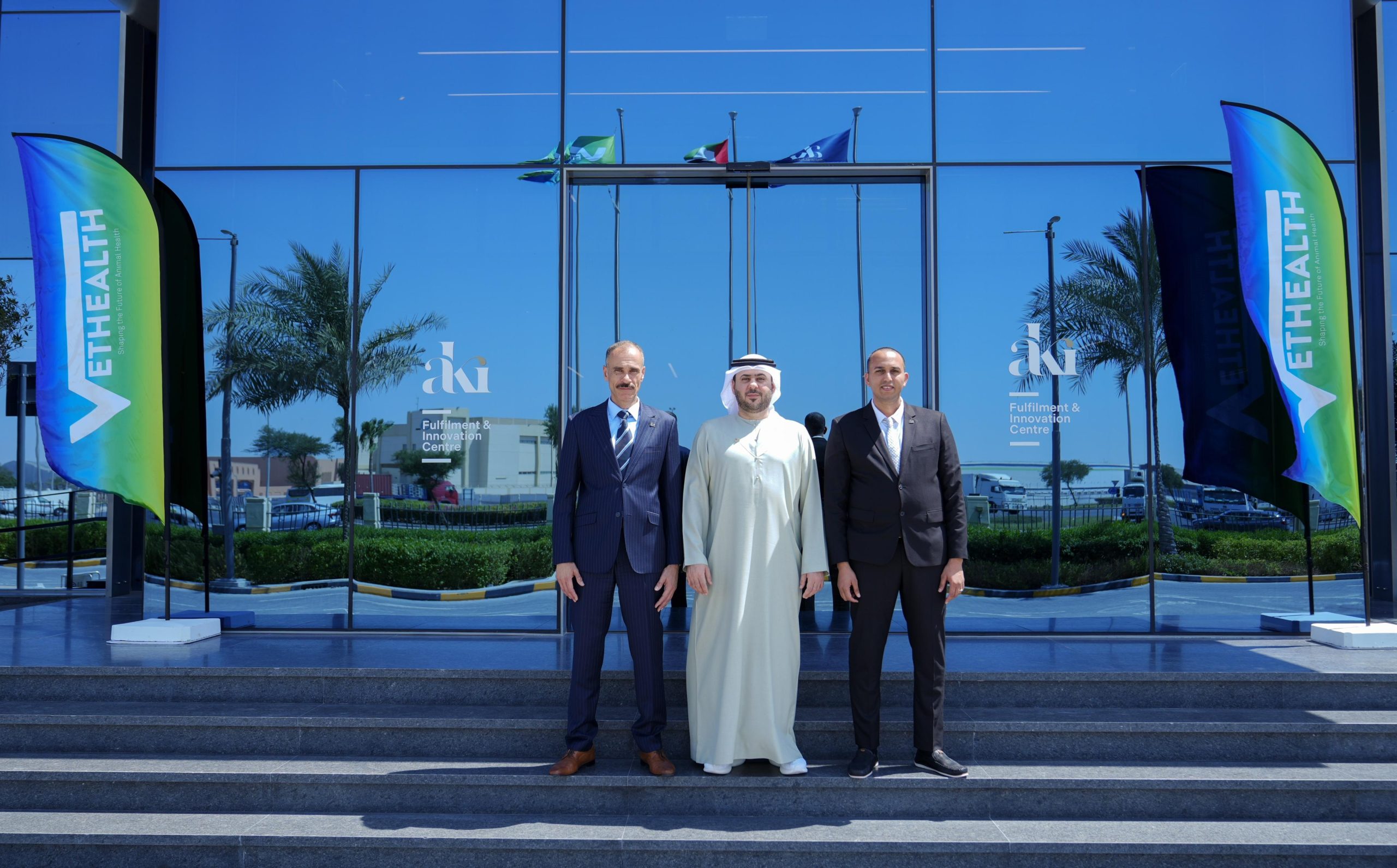
Al Khayyat Investments committed $100 million on June 18 to build VetHealth, a veterinary business spanning pharmaceuticals, biologicals, biosecurity, nutrition and diagnostics across the Middle East. The Emirati family-owned conglomerate is making its first major move into animal health after six decades in human healthcare.
The investment targets both commercial livestock operations and the region’s booming companion animal market. VetHealth will operate from Dubai with reach across the UAE, wider GCC states, Iraq, Jordan and Egypt—territories where Al Khayyat Investments already employs 12,000 people through its existing healthcare and distribution arms.
For the Al Khayyat family, the move connects directly to food security.
The UAE’s National Food Security Strategy 2051 has elevated animal health from a niche veterinary concern to a pillar of national resilience. Healthy livestock means stable food supply. Biosecurity prevents disease outbreaks that can devastate production. VetHealth positions itself as the infrastructure play behind those objectives, serving farms, feed mills, veterinary clinics and government agencies tasked with safeguarding food-producing animals.
The Middle East and Africa veterinary healthcare market is projected to reach $6.91 billion by 2033, according to industry analysis. Two forces drive that growth: demand for livestock productivity as regional populations expand, and a surge in pet ownership among urban middle classes. VetHealth is entering at the inflection point—early enough to shape the market, late enough that demand is proven.
Zaid S. Al Khayyat, Managing Director at Al Khayyat Investments, framed the investment in systems terms. “Animal health is a strategic enabler of food security, public health, and long-term economic resilience. Through this investment, we are building VetHealth as a regional platform that connects governments, producers, veterinary professionals, and global partners with trusted, world-class solutions. This is a long-term commitment to strengthening the systems that protect animals, people, and communities across the region.”
The platform launched with five divisions already operational. Pharmaceuticals and biologicals cover vaccines and therapeutics. Biosecurity addresses disease prevention protocols. Nutrition targets feed optimisation for commercial animal production. Diagnostics provides testing infrastructure for disease surveillance and herd health monitoring. Each division will partner with regional and international suppliers rather than manufacturing in-house initially, leveraging Al Khayyat’s established distribution network built over decades in human pharmaceuticals.
That network matters. The family firm, founded by Dr. Saad F. Al Khayyat in 1982, built its reputation importing and distributing medical equipment and pharmaceuticals across markets where supply chains are complex and regulatory environments vary widely. VetHealth inherits that logistical backbone—warehousing, cold chain capabilities, regulatory expertise, government relationships.
Forbes Middle East ranked Al Khayyat Investments among the top 100 Arab family businesses in 2026. The conglomerate spans pharmaceuticals, medical equipment, retail, consumer goods, fitness, automotive, environmental services, logistics, manufacturing and contracting. Revenue figures weren’t disclosed, but the $100 million commitment to VetHealth represents a substantial reallocation of capital toward a sector the firm hadn’t previously prioritised.
Malik Hassan, General Manager of AKI Environmental overseeing VetHealth, emphasised the continuity with existing values. “At AKI, we invest in sectors that create real, lasting value for society. VetHealth reflects our belief in the power of compassionate care. We are committed to supporting the professionals, the institutions, and other industry stakeholders that improve animal wellbeing and ensure the sustainability of food production in the region.”
The launch comes as Middle Eastern governments reassess food security vulnerabilities exposed during recent global supply shocks. Import dependency for meat, dairy and eggs remains high across the Gulf states. Domestic livestock production faces constraints—climate, water scarcity, disease management. Animal health infrastructure becomes a strategic asset in that context, not an afterthought.
VetHealth’s biosecurity division will likely draw particular government attention. Transboundary animal diseases—avian influenza, foot-and-mouth disease, peste des petits ruminants—pose recurring threats to regional livestock industries. Effective surveillance, rapid diagnostics and coordinated vaccination campaigns require the kind of integrated platform VetHealth aims to provide.
The companion animal side presents different economics. Pet ownership has accelerated across Gulf cities as disposable incomes rise and cultural attitudes shift. Veterinary clinics proliferate. Demand for premium pet food, diagnostics and specialty pharmaceuticals grows. That market operates on different margins than livestock—higher prices, more fragmented customers, brand loyalty dynamics.
Whether VetHealth can serve both livestock and companion animal markets under one structure remains an open question. The customer bases overlap minimally. A government veterinary department managing camel herds has different procurement processes than a private clinic treating Salukis. The economics, sales cycles and regulatory pathways diverge.
What’s clear is that Al Khayyat Investments sees animal health as infrastructure, not discretionary spending. The $100 million commitment signals a long-term view—building market position before competitors consolidate, establishing relationships with government agencies setting procurement standards, locking in distribution partnerships while terms remain negotiable.
For regional veterinary professionals and livestock producers, the question becomes whether VetHealth delivers differentiated value or simply repackages existing imports under new branding. The five-division structure suggests ambition to be comprehensive rather than specialised. Comprehensive can mean one-stop convenience. It can also mean mediocrity across multiple domains.
By 2033, when the MEA veterinary market reaches that projected $6.91 billion valuation, the bet will be clearer. Either VetHealth establishes itself as the regional platform Al Khayyat envisions—connecting supply chains, government policy and veterinary practice—or the market fragments among specialists who do biosecurity, diagnostics or nutrition better individually.
The Al Khayyat family is betting that integration wins. A century from now, the firm’s third and fourth generations will know if $100 million bought strategic position in a sector critical to feeding the region—or simply funded an expensive education in veterinary market complexity.
