
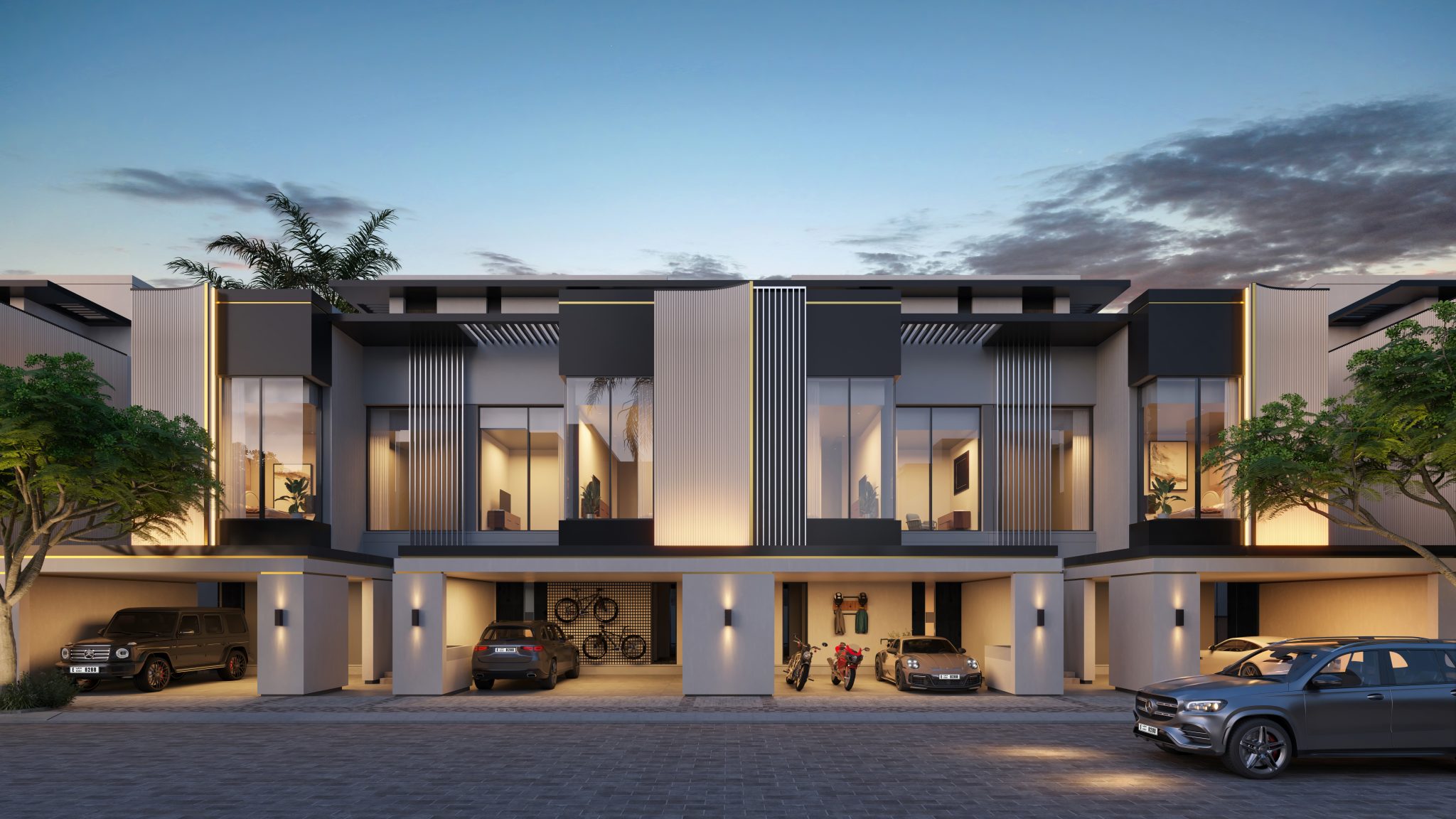
When someone shops for a townhouse in Dubai, most of the attention goes to the unit itself: the layout, the plot size, the finishes, the view from the terrace. Fewer buyers ask a simpler but more consequential question: how old is this community, and where is it in its life cycle? That single factor shapes resale value more than most people expect, sometimes more than the condition of the unit itself.
Dubai's townhouse market is unusual in how visibly a community changes over its first several years. A cluster of townhouses that felt half finished at handover can look completely different five years later, with mature trees, active retail, and a settled resident base. That transformation is not cosmetic. It shows up directly in how buyers and appraisers price a resale unit.
Why “Age” Means More Than a Handover Date
A community's age in real estate terms is not simply how many years have passed since the first keys were handed over. It is a combination of factors:
- Occupancy rate, meaning what share of homes are actually lived in rather than sitting empty or mid-fit-out.
- Amenity completion, meaning whether the parks, pools, and retail promised at launch are open and functioning, not still under construction.
- Landscaping maturity, meaning young saplings versus established trees and shaded walkways.
- Resale history, meaning whether the community has a track record of units actually changing hands at stable or rising prices.
A five-year-old community that is still only partly occupied, with a shopping strip half empty, behaves very differently in the resale market than a five-year-old community that filled up quickly and has a steady stream of transactions behind it.
The Premium Buyers Pay for a Settled Community
Once a community reaches a point where most of its promises have been delivered, something changes in how buyers approach it. The guesswork is gone. A buyer looking at a resale townhouse in an established community can see, rather than imagine, what daily life looks like: whether the pool is actually maintained, whether the school run is easy, whether the retail street has real footfall or empty units.
That certainty tends to command a premium. Buyers, and the mortgage valuers who assess these deals, are generally more comfortable pricing an asset when there is a visible pattern of comparable sales to point to. A community with several years of resale transactions behind it gives everyone in the deal, buyer, seller, bank, and agent, a much clearer reference point than a community still filling in its first phase.
This is part of why townhouses in long-established Dubai communities routinely trade at a premium over comparable specifications in newer, still developing ones, even when the newer product has more contemporary finishes or a fresher layout.
Where New Communities Can Catch Up, and Sometimes Overtake
None of this means a new community is a poor choice. It means the value case is different. Early buyers in a community that is still filling out are typically paying below what that same location will likely command once occupancy, amenities, and reputation catch up. The community's age at the point of purchase is low, but so is the price relative to where it is likely to land once it matures.
The risk sits in the uncertainty of that maturing process. Occupancy can lag projections. Retail units can stay vacant longer than planned. Amenities can open later than expected. None of these outcomes are common with an established, well-run developer, but they are the reason a still-developing community usually needs to be priced at a discount to a settled one with a similar specification. Buyers are effectively being compensated for carrying that uncertainty for a few years.
A community that ages well and fills quickly can outperform a mature comparable over time. One that struggles to occupy can lag for years. Age on its own is not the whole story. Age combined with occupancy and amenity delivery is what actually moves resale value.
What This Looks Like in Practice
A useful way to think about it is that a Dubai townhouse community's resale trajectory tends to move through recognisable stages.
In the first year or two after handover, transactions are thin, and pricing is volatile because there is little to compare against. As occupancy climbs and amenities open, typically over the following few years for most well-managed communities, resale activity tends to pick up and price discovery becomes more reliable. Once a community is largely built out and occupied, pricing tends to stabilise around a narrower band, moving mostly with the wider market rather than with community-specific uncertainty.
These stages are not guaranteed to follow a fixed timeline. Some communities settle faster, others take longer, and broader conditions in Dubai's property market always play a role too. But the general pattern, thin and volatile early trading giving way to steadier, more comparable-driven pricing later on, is consistent enough to be worth factoring into any resale-focused purchase decision.
What Buyers Should Actually Check
Anyone weighing resale value, rather than just moving-in appeal, has a short list of things worth verifying before buying into a community, whether new or established.
- Current occupancy rate, not the projected figure from marketing materials.
- Whether retail and community amenities are operational, rather than simply planned or under construction.
- How many resale transactions have closed in that community recently, and how prices have moved.
- The service charge history, and whether it has been stable or needed sharp adjustments.
- Whether the owners' association or community management has fully transitioned from developer control, which usually signals a community has reached a more settled operational phase.
None of this requires insider access. Most of it is available through a broker with recent transaction history in that community, or through publicly available transaction data.
Apartments as the Lower Uncertainty Alternative
For buyers who want strong long-term value but would rather sidestep the years it takes a townhouse community to mature, apartments in established, well-located Dubai towers offer a different risk profile. A finished, occupied building has none of the multi-year community build-out timeline that townhouse developments go through. Once amenities are built, they do not need years of landscaping or retail activation to feel complete.
For buyers browsing apartments for sale in Dubai, that shorter path to a settled asset is often the appeal, alongside the flexibility of entry price points across a wider range of locations.
Final Thoughts on Dubai Townhouse Resale Value
A Dubai townhouse's resale value is never just about the unit. The community around it, how occupied it is, how complete its amenities are, and how much of a transaction history it has built, plays an outsized role in what that unit is actually worth to the next buyer. Buying early in a community's life can pay off, but it comes with a period of uncertainty that the market prices accordingly. Buying into a settled, established community costs more upfront but comes with a clearer, more predictable resale picture. Neither approach is wrong. What matters is going in with a clear sense of which trade-off is being made.
